Snapple cofounder Hyman Golden's 11,000 sq ft Long Island waterfront estate lists at $15 million, offering Asia-Pacific family offices a benchmark for provenance-driven real estate versus competing hard asset classes including whisky casks, where 10-year CAGRs of 12–16% and lower holding costs present a compelling alternative.
Why Trophy Real Estate Still Commands Attention From Alternative Asset Allocators
When a single-owner, custom-built waterfront mansion hits the market at $15 million, the number alone is not the story — the provenance is. The Long Island estate of the late Hyman Golden, cofounder of the Snapple beverage empire, has been listed publicly for the first time since it was constructed in the early 1990s. At roughly 11,000 square feet, the property represents one of the larger single-family residential listings on Long Island's North Shore this year, a market where median luxury sale prices have climbed approximately 18% since 2020 according to regional brokerage data. For Asian family offices already allocating to hard assets, the listing is a useful benchmark for understanding how founder-provenance real estate is priced relative to comparable trophy collectibles.
Hyman Golden co-founded Snapple Beverage Corporation alongside Arnold Greenberg and Leonard Marsh, building the brand from a small New York health-food operation into a national icon before Quaker Oats acquired it in 1994 for $1.7 billion — a deal that remains one of the most analysed brand-value transactions in consumer goods history. Golden commissioned the Long Island estate shortly after that exit, making the property a direct artefact of one of the most celebrated liquidity events of the early 1990s. That founder narrative adds a scarcity premium that pure square-footage analysis cannot capture, a dynamic that Asian collectors of provenance-driven assets — from single-malt whisky casks to watches once owned by industry figures — will recognise immediately.
How Provenance Pricing Works Across Alternative Asset Classes
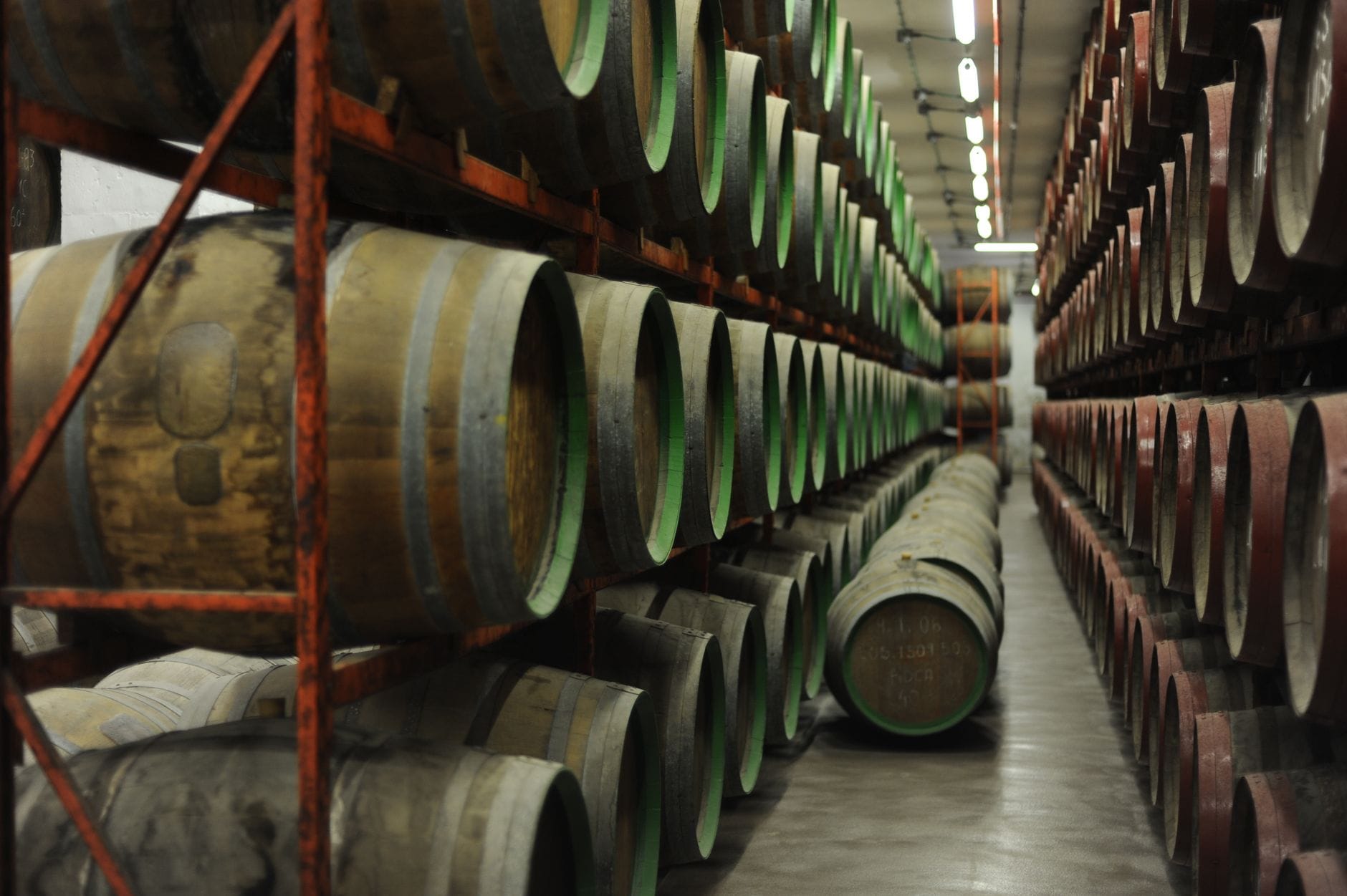
The $15 million ask translates to approximately $1,360 per square foot, a figure that sits well above the Long Island luxury average of roughly $900 per square foot but below comparable waterfront estates in the Hamptons, where per-foot pricing routinely exceeds $2,500. The gap is instructive: provenance adds value, but location liquidity remains the dominant pricing variable. This mirrors dynamics seen in the whisky cask market, where a single cask of 1990s-distilled Macallan or Springbank commands a meaningful premium over equivalent age-statement casks from lesser-known distilleries — often 40% to 60% above benchmark, according to Rare Whisky 101 index data from 2023. The principle is consistent: scarcity of origin story amplifies base asset value, but the underlying asset category must itself carry institutional demand.
Asian ultra-high-net-worth buyers have been among the most active acquirers of provenance-linked hard assets over the past five years. Knight Frank's 2024 Wealth Report recorded a 34% increase in trophy real estate inquiries from Hong Kong and Singapore-based family offices targeting North American properties priced between $10 million and $25 million. Meanwhile, Sotheby's and Christie's combined wine and spirits auction revenues in Asia reached $180 million in 2023, up from $112 million in 2019, underscoring the region's appetite for tangible, story-driven assets. The Golden estate, with its documented entrepreneurial lineage and waterfront positioning, sits squarely in the category of assets that generate cross-border interest from buyers who treat provenance as a return-enhancing variable rather than an aesthetic preference.
What the Listing Signals for Hard Asset Allocation Strategy
For private bankers and family office CIOs in Singapore, Hong Kong, and Bangkok, the Golden estate listing raises a practical allocation question: at what point does trophy real estate compete directly with other illiquid alternative assets for portfolio space? Real estate of this type typically carries a 3% to 5% annual carrying cost when factoring in property taxes, maintenance, and insurance, compared to whisky cask storage costs that average £15 to £25 per cask per year in bonded Scottish warehouses. The return profiles differ substantially — Scottish whisky cask indices have recorded compound annual growth rates of 12% to 16% over the past decade per the Knight Frank Luxury Investment Index, while comparable North American trophy real estate has delivered 6% to 9% CAGR over the same period. Liquidity timelines also diverge: a whisky cask can typically be sold within 30 to 90 days through specialist brokers, while a $15 million waterfront estate may require 12 to 24 months to close.
The estate's listing also arrives at a moment when North American luxury real estate is experiencing a supply correction. Mortgage rate pressure has reduced discretionary listing volumes, meaning fewer comparable properties are competing for the same buyer pool — a supply-demand dynamic that structurally supports the ask price. Asian buyers with USD-denominated liquidity, particularly those holding proceeds from recent Southeast Asian IPOs or regional private equity exits, are well-positioned to move on assets of this type without the financing constraints affecting domestic US buyers. Singapore-based family offices, in particular, have been increasing their direct real estate allocations outside Asia, with the Monetary Authority of Singapore reporting a 22% uptick in outbound real estate investment from accredited investors in 2023.
Asia-Pacific Outlook: Founder Assets as a Distinct Allocation Category
The broader takeaway for Asia-Pacific allocators is that founder-provenance assets — whether a waterfront estate, a vintage wristwatch, a whisky cask from a landmark distillation year, or a classic automobile from a historically significant owner — are increasingly being treated as a distinct sub-category within alternative portfolios. The Golden estate is a $15 million data point in that thesis. As the first generation of Asian technology and consumer entrepreneurs begins transitioning wealth to the next generation, regional advisors should expect to see similar provenance-driven listings emerge from within Asia itself, creating both acquisition opportunities and comparable benchmarks for valuation. The discipline required to evaluate the Golden estate — separating the provenance premium from the underlying asset value, stress-testing liquidity assumptions, and benchmarking against competing asset classes — is precisely the discipline that separates institutional alternative asset allocation from discretionary luxury spending.
- Listing price: $15,000,000 (approx. $1,360 per sq ft)
- Property size: 11,000 square feet, waterfront, Long Island
- Original owner: Hyman Golden, Snapple cofounder (Quaker Oats exit: $1.7B, 1994)
- Whisky cask CAGR benchmark: 12–16% (Knight Frank Luxury Investment Index, 10-year)
- Trophy real estate CAGR benchmark: 6–9% (North American, 10-year)
- Asia outbound real estate growth: +22% (MAS accredited investors, 2023)
Property Reference
📍 Long Island, New York, United States
💰 Listed at $15,000,000
📐 Approx. 11,000 sq ft, waterfront
🗺 View region on Google Maps
Frequently Asked Questions
Who was Hyman Golden and why does his estate carry a provenance premium?
Hyman Golden co-founded Snapple Beverage Corporation with Arnold Greenberg and Leonard Marsh, growing it from a New York health-food operation into a nationally recognised brand before selling to Quaker Oats in 1994 for $1.7 billion. He commissioned the Long Island estate shortly after that exit, making it a direct artefact of one of the defining consumer brand liquidity events of the early 1990s. That founder narrative creates a scarcity premium above and beyond the property's physical attributes.
How does trophy real estate compare to whisky cask investment on a risk-adjusted basis?
Over the past decade, Scottish whisky casks have delivered compound annual growth rates of 12% to 16% per the Knight Frank Luxury Investment Index, compared to 6% to 9% for comparable North American trophy real estate. Whisky casks also carry significantly lower annual holding costs — approximately £15 to £25 per cask in bonded warehouse storage — versus 3% to 5% of asset value for luxury real estate. Liquidity timelines favour casks as well, with typical sale windows of 30 to 90 days versus 12 to 24 months for high-value residential property.
Are Asian family offices actively buying North American trophy real estate?
Yes. Knight Frank's 2024 Wealth Report recorded a 34% increase in trophy real estate inquiries from Hong Kong and Singapore-based family offices targeting North American properties priced between $10 million and $25 million. The Monetary Authority of Singapore also reported a 22% uptick in outbound real estate investment from accredited investors in 2023, reflecting a broader diversification trend among regional wealth managers.
What is the investment case for provenance-linked alternative assets more broadly?
Provenance-linked assets — including founder-owned real estate, historically significant watches, vintage whisky casks from landmark distillation years, and classic automobiles with documented ownership histories — have consistently outperformed generic equivalents within their respective asset classes. The premium is driven by verifiable scarcity, documented chain of custody, and the narrative value that institutional and private collectors increasingly price into hard assets. For family offices, these assets also offer non-correlation with public equity markets, providing genuine portfolio diversification.
How should Asia-Pacific allocators evaluate the Golden estate listing relative to other alternatives?
Allocators should stress-test the liquidity timeline, carrying cost burden, and provenance premium against competing asset classes before committing capital. At $15 million, the estate requires a long hold horizon and significant ongoing expenditure to maintain value. By contrast, a diversified portfolio of Scottish whisky casks at equivalent capital deployment would offer higher historical CAGR, lower holding costs, and substantially faster liquidity — though without the singular narrative of a founder-built waterfront estate. The optimal approach depends on the family office's liquidity requirements, USD exposure strategy, and appetite for illiquid flagship assets.
💼 Exploring alternative asset allocation? Speak to Whisky Cask Club — Singapore's leading specialists in Scottish whisky cask investment.