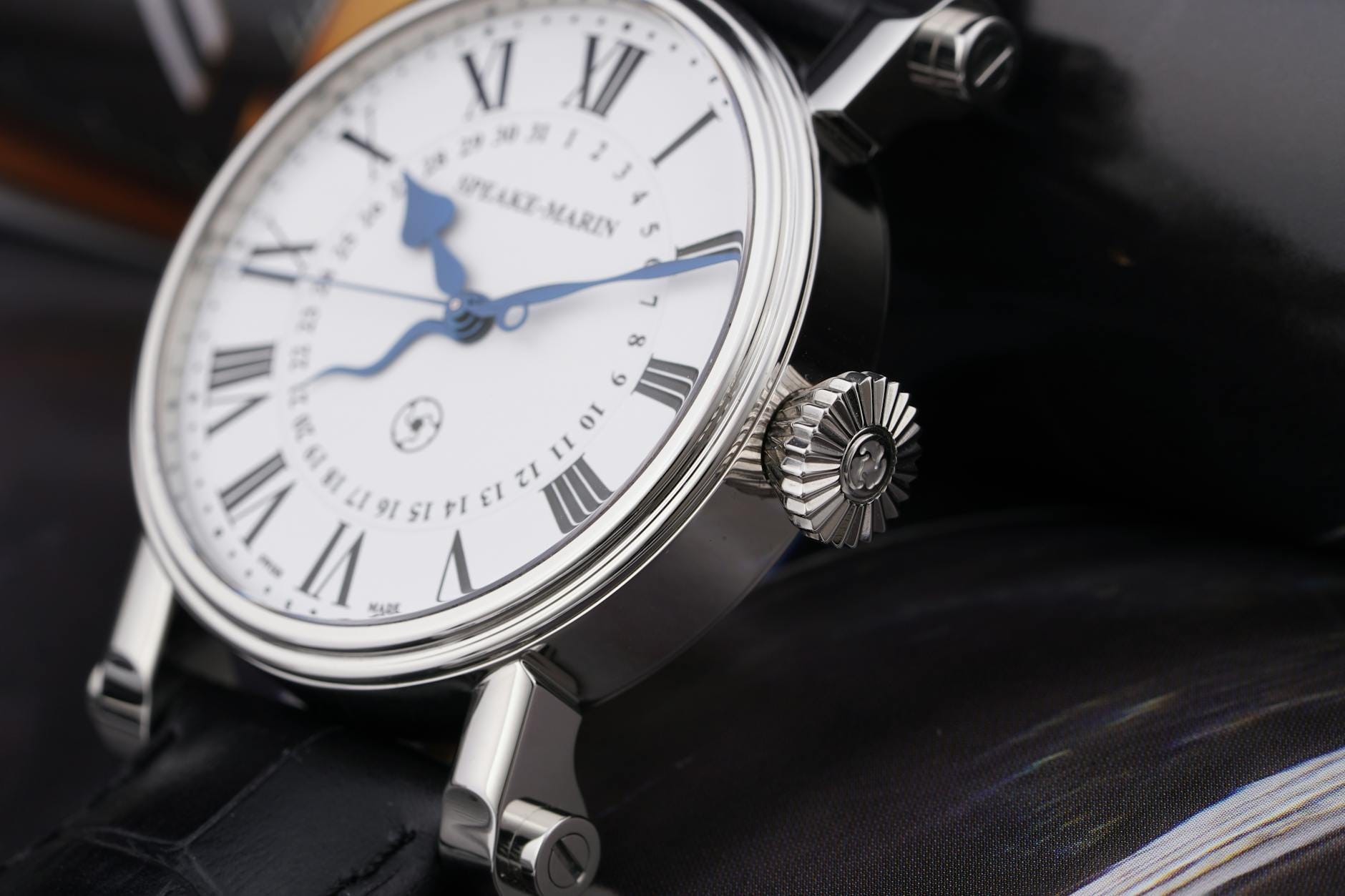
A Movado Polyplan, a rare Rolex 1680 variant, and a full-set Patek 3970 illustrate three distinct risk tiers in vintage watch investment. Asia-Pacific buyers now represent 35-40% of global auction demand, with Singapore and Hong Kong infrastructure supporting formal alternative allocations.
Vintage Watch Investment: Three Lots That Reveal Where the Collector Market Is Heading
Vintage watch investment continues to outperform broad luxury indices, with the Knight Frank Luxury Investment Index recording a 147% ten-year appreciation for rare timepieces as of its most recent annual report. Against that backdrop, three lots circulating in the current secondary market deserve close attention from Asia-Pacific family offices and private bankers who allocate a sleeve of their alternative asset portfolios to horological collectibles: a Movado Polyplan in exceptional condition, a near-impossible Rolex reference 1680 variant, and a full-set Patek Philippe reference 3970. Each piece illustrates a distinct investment thesis, and together they map the risk-return spectrum within the watch category with unusual clarity.
The Movado Polyplan: Scarcity Premium in the Pre-Vintage Segment
The Movado Polyplan is one of the most architecturally distinctive wristwatches produced in the early twentieth century, featuring a curved, three-plane case designed to conform to the wrist — a feat of mechanical engineering that most contemporaries never attempted. Surviving examples in wearable condition are exceptionally rare, and those retaining original dials command premiums that can reach multiples of their estimate at auction. Recent comparable sales at Phillips and Antiquorum have placed strong Polyplan examples in the CHF 15,000 to CHF 60,000 range depending on case metal, dial condition, and movement originality, with outliers breaching CHF 100,000 for platinum variants.
For Asian buyers, the Polyplan represents an entry point into pre-vintage Swiss horology that remains underweighted in regional collections relative to its European collector base. Hong Kong and Singapore auction specialists report growing inquiry from mainland Chinese collectors seeking differentiated assets beyond the Rolex-Patek duopoly, and early twentieth-century complications from independent maisons are increasingly featuring on want lists submitted to specialist dealers in both cities. The liquidity window is narrowing as European private collectors absorb available supply, making current pricing look attractive on a three-to-five-year horizon.
The Impossible Rolex 1680: Why Variant Rarity Drives Exponential Value
The Rolex Submariner reference 1680 was produced from 1966 through to approximately 1980, but within that production run sit numerous sub-variants — dial configurations, bezel inserts, and transitional case details — that transform what appears to be a single reference into dozens of distinct collectibles. Certain 1680 configurations, particularly those featuring the red "Submariner" text on the dial (the so-called "Red Sub") combined with specific service histories and unpolished cases, are described by specialist dealers as functionally impossible to source in the open market. Auction records reflect this scarcity: a pristine Red Sub 1680 achieved USD 223,000 at a major Geneva sale in 2022, against a pre-sale estimate of USD 80,000 to USD 160,000.
The investment case for the 1680 variant market is underpinned by a structural supply constraint that no amount of collector enthusiasm can resolve — these watches simply cannot be made again. Rolex's own certified pre-owned programme, launched in 2022, has paradoxically increased demand for vintage references outside its scope by validating the brand's resale narrative to a new generation of buyers. Asia-Pacific demand for Rolex vintage references has been particularly robust in Japan, where a mature grey-market infrastructure and deep horological culture have produced some of the world's best-preserved examples. Tokyo dealers regularly export stock to Singapore and Hong Kong for resale at meaningful premiums, a regional arbitrage that sophisticated buyers are beginning to close.
The Full-Set Patek Philippe 3970: Completeness as a Multiplier
The Patek Philippe reference 3970 is a perpetual calendar chronograph produced between 1986 and 2004, and it occupies a foundational position in any serious horological collection. What distinguishes the lot currently in circulation is its full-set status: original box, papers, hang tags, and service documentation intact. In the Patek market, completeness is not merely a preference — it is a quantifiable premium. Data from the Patek secondary market tracked by Watches of Switzerland Group and independent auction analytics platforms suggests that a full-set 3970 commands between 25% and 45% more than an equivalent watch presented without its original documentation, depending on reference variant and case metal.
Yellow gold 3970 examples have historically been the most liquid, but white gold and platinum variants have shown stronger appreciation in recent auction cycles, reflecting shifting aesthetic preferences among younger Asian collectors who favour cooler metal tones. The 3970 also benefits from Patek's decision to discontinue the reference in favour of the 5970, creating a closed production universe that underpins long-term value. For a Singapore or Hong Kong family office constructing a watch allocation, the full-set 3970 functions as a core holding — lower volatility than speculative sports references, meaningful appreciation potential, and genuine cross-border liquidity at Christie's, Phillips, and Sotheby's Geneva, Hong Kong, and New York salerooms.
Portfolio Implications for Asia-Pacific Alternative Allocators
These three lots collectively illustrate how a disciplined watch allocation can be structured across risk tiers. The Polyplan represents the higher-risk, higher-reward pre-vintage segment where specialist knowledge creates alpha. The 1680 variant sits in the mid-tier: a globally recognised brand with a documented appreciation trajectory, but requiring deep reference knowledge to avoid overpaying for common configurations. The full-set 3970 anchors the conservative end — a blue-chip horological asset with institutional-grade liquidity and a clear provenance chain.
Asia-Pacific buyers currently represent an estimated 35% to 40% of global vintage watch auction demand by hammer value, according to data aggregated from the major Geneva and Hong Kong sales. Regional free ports in Singapore and the expansion of bonded storage facilities in Hong Kong provide practical infrastructure for holding physical assets without triggering import duties, a structural advantage that European and American collectors do not share. As family offices in the region formalise their alternative asset frameworks, watches — particularly documented, condition-graded, and provenance-supported examples — are moving from discretionary passion assets into recognised allocation categories with dedicated mandates.
Frequently Asked Questions
What makes a vintage watch a credible alternative investment rather than a luxury purchase?
Credibility as an investment asset depends on documented provenance, verifiable condition, reference scarcity, and cross-border liquidity. Watches that satisfy all four criteria — such as full-set Patek complications or rare Rolex variants — have demonstrated consistent appreciation over ten-year periods and can be liquidated through multiple international auction houses, meeting the basic requirements of an allocatable asset class.
How do Asia-Pacific buyers access vintage watch markets efficiently?
The primary access points are the Hong Kong salerooms of Christie's, Phillips, and Sotheby's, which hold dedicated watch auctions twice yearly, as well as specialist dealers in Tokyo, Singapore, and Taipei. A growing number of Singapore-based multi-family offices now retain specialist advisers who source and authenticate watches on a fee basis, separating the investment function from the retail experience.
What premium does full-set documentation add to a Patek Philippe reference?
Independent auction analytics consistently show a 25% to 45% premium for full-set Patek Philippe references versus equivalent watches lacking original box and papers. For high-value references such as the 3970 perpetual calendar chronograph, this premium can represent tens of thousands of US dollars in absolute terms, making documentation preservation a material financial consideration.
Is the Rolex vintage market liquid enough for institutional allocation?
The most sought-after Rolex vintage references — including the 1680 Submariner variants, the Daytona reference 6263, and the GMT-Master reference 1675 — turn over regularly at the major Geneva and Hong Kong salerooms, with hammer totals frequently exceeding USD 100,000. While the market is smaller in aggregate than equities or real estate, liquidity for blue-chip references is sufficient for family office sleeve allocations in the USD 500,000 to USD 5 million range.
How should an investor evaluate condition when buying vintage watches?
Case condition — specifically whether the case has been polished — is the single most important factor after reference rarity. Unpolished cases retain original surface geometry and command significant premiums. Dial originality, movement service history, and the presence of original crown, pushers, and bracelet components are secondary but material factors. Independent authentication from specialists such as Rolex-certified watchmakers or recognised auction house specialists is strongly advised before any significant purchase.
💼 Exploring alternative asset allocation? Speak to Whisky Cask Club — Singapore's leading specialists in Scottish whisky cask investment.