
TL;DR
MAPS Singapore brought fund selection, venture capital, direct lending, asset allocation and Singapore's VCC into one programme at Marina Bay Sands on 21 July 2026. Rather than treating the summit as evidence of market performance or investor demand, allocators can use its agenda as a five-question due-diligence checklist for private-market managers.
Use the programme as a question set, not an endorsement
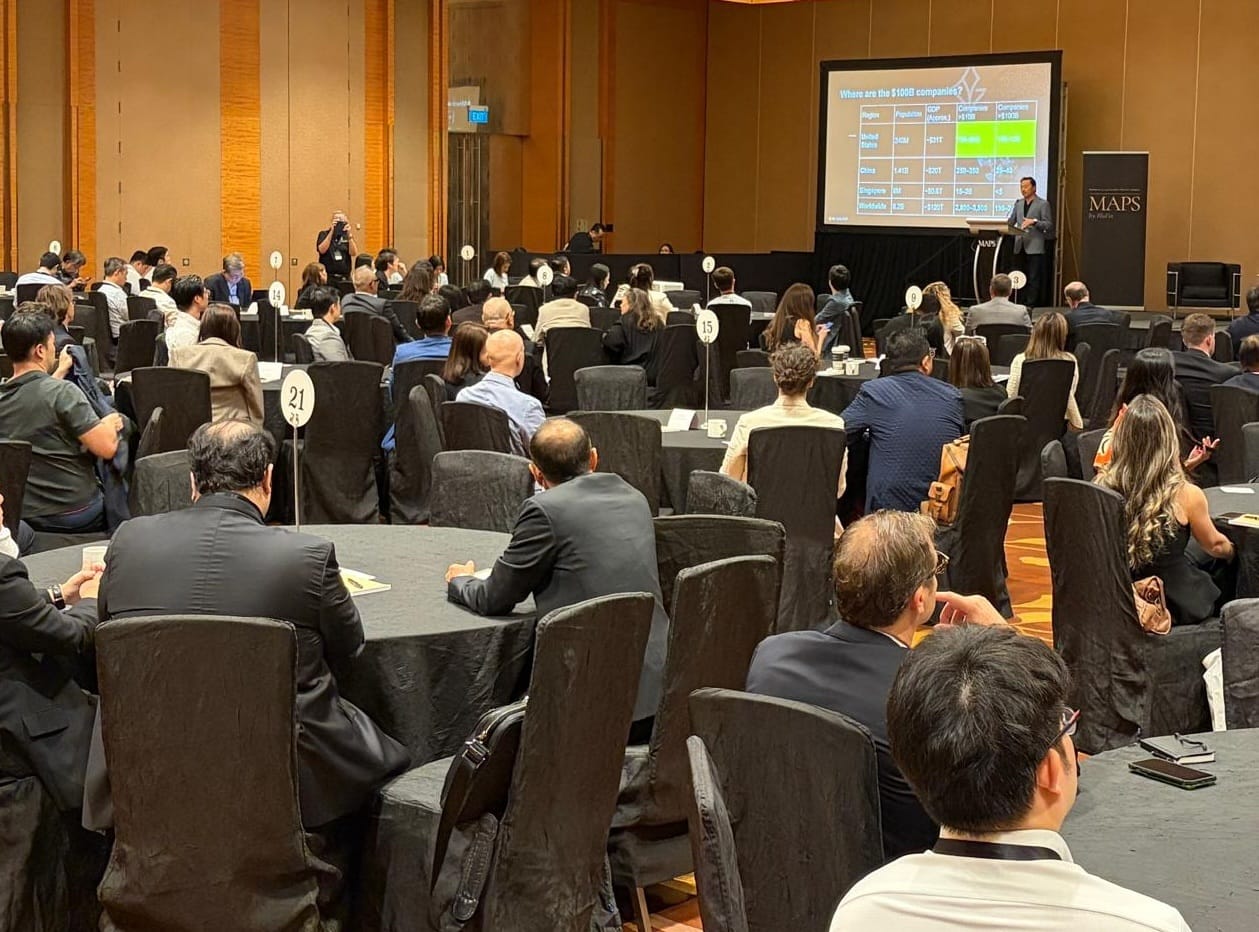
The Markets & Allocators Private Summit, or MAPS, was held at Marina Bay Sands in Singapore on 21 July 2026. The organiser's public programme brought together sessions on fund selection, venture capital, private credit, real estate, asset allocation, Singapore's Variable Capital Company structure and niche alternatives.
That programme does not prove that a manager will outperform, that a strategy is suitable or that capital should be allocated. Its practical value is narrower: it provides a useful map of the questions allocators should resolve before committing to a private-market manager.
1. What supports a manager's fund-selection claim?
Sean Low, CEO and CIO of Golden Vision Capital, led a session titled “Inside the Playbook of an LP Veteran: How to Spot Top-Quartile Funds”. For an allocator, the follow-up should begin with definitions. Which vintage years, peer universe and cash-flow data support a quartile claim? Are results gross or net of fees, and how much depends on unrealised valuations?
References should be sought from investors across more than one fund cycle. Allocators should also separate repeatable sourcing or operating capability from a result driven by one exceptional asset.
2. How is venture opportunity translated into underwriting?
PR Yu, Founder and Managing Partner of YU Galaxy, was listed for a session on identifying startups with the potential to build global-scale businesses. Mia Mai, Partner at HashKey Capital, addressed full-cycle asset-management solutions.
Those topics point to distinct diligence questions: what evidence supports the market-size assumption; which milestones release follow-on capital; how are governance rights structured; and what happens when the expected exit window lengthens? A large addressable market is not itself an underwriting case.
3. Where does private credit earn its return?
Henry Chang and Gregory Budetti of Colbeck appeared on the programme for middle-market direct lending. Benjamin Choo, CIO of GOCI, joined a later panel on where private-credit managers may seek an edge as the sector matures.
An allocator should identify whether the proposed return comes from base rates, illiquidity, structural complexity, origination access, leverage or genuine downside protection. Documentation should show covenant packages, recovery assumptions, concentration limits and the manager's workout capability rather than relying on a broad “private credit” label.
4. How does a specialist strategy fit the whole portfolio?
Stefano Chao, Head of Asia and CEO Singapore at Azimut, was listed for sessions on asset allocation and niche strategies. Phil Chew, CEO of Conduit Securities, addressed Singapore's VCC framework as a bridge for global capital.
Vehicle structure and specialist access matter, but they do not replace portfolio construction. Allocators should map liquidity, currency, valuation frequency, leverage and underlying factor exposure across the total portfolio before adding another private allocation.
5. What evidence remains outstanding after the meeting?
A summit can introduce people and sharpen questions; it cannot complete diligence. A disciplined next step is an evidence register covering track record, attribution, fees, liquidity, valuation policy, service providers, conflicts, legal terms, references and unresolved assumptions. Each item needs an owner and deadline before an investment committee treats the opportunity as decision-ready.
Frequently Asked Questions
What was MAPS Singapore 2026?
The Markets & Allocators Private Summit was an invitation-only private-markets event held at Marina Bay Sands, Singapore, on 21 July 2026. Its official programme covered fund selection, venture capital, direct lending, real estate, asset allocation and niche strategies.
Which MAPS session addressed fund selection?
Sean Low, CEO and CIO of Golden Vision Capital, led a session titled “Inside the Playbook of an LP Veteran: How to Spot Top-Quartile Funds”. The programme records the topic but does not publish a performance claim or endorse a particular fund.
Which private-credit topics appeared on the programme?
Henry Chang and Gregory Budetti of Colbeck were listed for a session on middle-market direct lending, while Benjamin Choo of GOCI joined a later panel on where private credit managers may seek an edge as the market matures.
How should allocators use an event agenda in due diligence?
An agenda can identify questions and areas for follow-up, but it is not evidence of manager performance. Allocators still need independently verified track records, fee and liquidity terms, portfolio-level data, references and legal documentation.