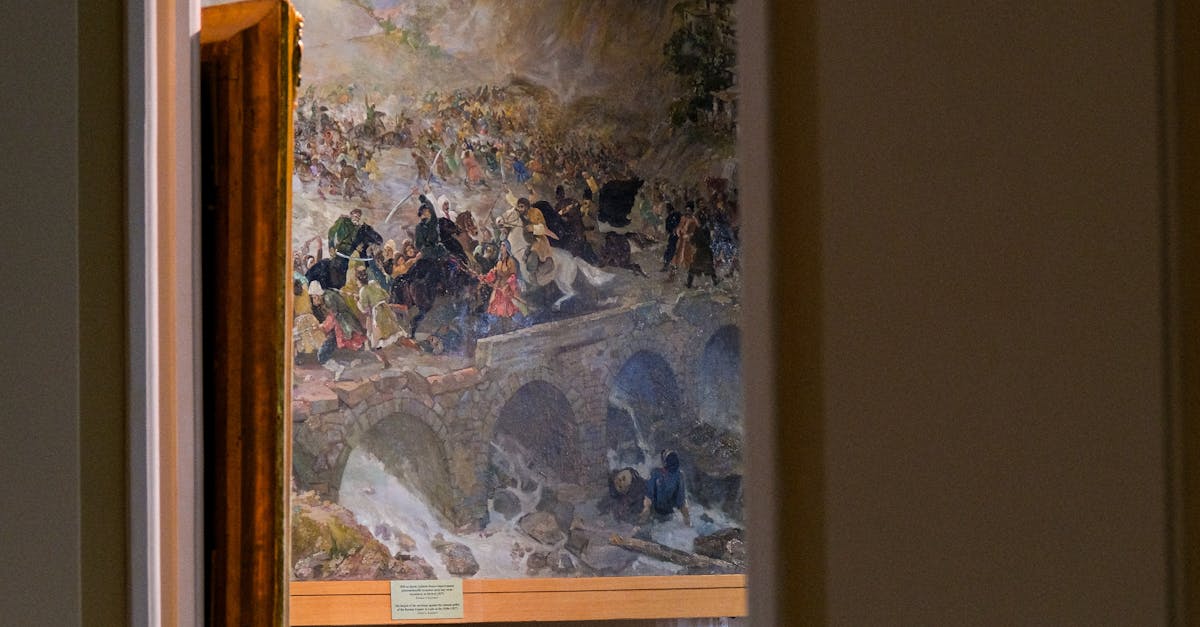
France passed a law to streamline restitution of Nazi-looted art. This creates legal and financial risks for Asian art investors, as works with French provenance face new scrutiny, potentially affecting billions in auctions and private collections.
Why Does France's Looted Art Restitution Law Matter to Asian Art Investors?
France has passed a restitution law covering looted art, a legislative shift that arrives precisely as approximately $1.8 billion worth of art heads to auction in New York — creating a confluence of legal, ethical, and financial pressures that every serious art investor in Asia-Pacific should be tracking. Provenance risk is now a quantifiable financial liability, not merely a reputational footnote. For family offices in Singapore, Hong Kong, and Tokyo that have quietly built seven- and eight-figure art allocations over the past decade, the French legislation signals that Western governments are prepared to act unilaterally on restitution, potentially freezing or seizing works mid-auction or mid-transfer without prior judicial review.
The reason this matters personally to any Asian private banker or family office CIO is straightforward: art acquired through European auction houses or private dealers over the past three decades may carry provenance gaps that were previously tolerated but are now legally actionable under French law, with similar frameworks advancing in Germany, the Netherlands, and the United Kingdom. A collection valued at $50 million today could face a contested claim that renders it unsaleable tomorrow. The Washington Principles on Nazi-Confiscated Art, signed in 1998, provided moral guidance; France's new law provides enforcement teeth. That distinction is worth understanding before the next acquisition is signed.
What Is France's Looted Art Restitution Law and How Does It Work?
France's restitution law is a legislative framework that empowers the French government to return cultural property — primarily works looted from Jewish families during the Nazi occupation between 1940 and 1944 — without requiring individual parliamentary approval for each restitution case. Previously, every return required a bespoke act of parliament, a process so cumbersome that fewer than 100 works had been formally restituted over seven decades. The new law creates a standing administrative mechanism, dramatically accelerating the pace at which claims can be processed and resolved. Estimates from French cultural ministry briefings suggest the law could affect hundreds of works currently held in public and private collections across Europe.
The law applies directly to works in French national collections, but its secondary market implications extend globally. Any work that passed through French hands — a Paris dealer, a French estate, a French auction house — between 1933 and 1945 now carries elevated scrutiny. Galerie Bernheim-Jeune, one of Paris's most historically significant dealers, handled transactions during that period that are now under renewed examination. For collectors who purchased works with French auction provenance through houses such as Artcurial or Drouot, the law creates a new due diligence obligation that did not formally exist before. Asian buyers who acquired European Modernist works through Paris in the 1980s and 1990s — a peak period of Japanese and Taiwanese corporate collecting — face the most direct exposure.
"Provenance is no longer a box-ticking exercise — it is a material risk factor that belongs in every art investment memorandum alongside condition reports and market comparables."
Why Are Asian Investors Buying Art as an Alternative Asset Class?
Asian family offices are buying art for three converging reasons: portfolio diversification, store-of-value characteristics during currency volatility, and cultural capital that reinforces relationships with clients and governments. According to the Art Basel and UBS Global Art Market Report 2024, Asia accounted for 36% of global high-value art sales by value in 2023, with Hong Kong maintaining its position as the third-largest art market globally after New York and London. Singapore's emergence as a freeport storage hub — the Le Freeport facility holds an estimated $10 billion in stored art and collectibles — reflects the region's appetite for art as a hard asset rather than a decorative purchase.
The allocation logic is increasingly institutional. Multi-family offices in Singapore such as those affiliated with Temasek-linked wealth structures typically allocate between 3% and 8% of total AUM to alternative assets including art, with art specifically representing 1% to 3% of total portfolio value in more sophisticated mandates. Japanese institutional collectors, including corporate foundations linked to companies such as Mori Building and Idemitsu, have maintained art holdings for decades as balance sheet assets with depreciation advantages under Japanese accounting standards. The key investment thesis is low correlation to public equities: the Mei Moses All Art Index has historically shown a correlation of approximately 0.04 to the S&P 500 over rolling 20-year periods.
What Returns Do Art Investments Generate and How Does Provenance Risk Affect Them?
Art investments generate returns that vary dramatically by category, artist, and market cycle. Post-war and Contemporary art — the category most actively traded in New York's current $1.8 billion auction season — has delivered compound annual returns of approximately 7.5% over the past 25 years according to data from the Artprice Global Index, outperforming gold over the same period but underperforming global equities in the post-2010 bull market. The critical variable that France's restitution law introduces is a new form of downside risk: a work with unresolved provenance can lose 40% to 60% of its auction estimate instantly once a claim is filed, as buyers discount for litigation uncertainty.
The $1.8 billion New York auction season — spanning major sales at Christie's, Sotheby's, and Phillips — provides a live stress test of how the market is pricing provenance risk post-legislation. Early indications from pre-sale catalogues suggest that houses are now including expanded provenance disclosures as standard, and that works with documented gaps between 1933 and 1945 are being either withdrawn or offered with reduced estimates. David Zwirner's recent announcement that it now represents the estate of Robert Therrien — an American sculptor whose work carries no wartime provenance complications — is a reminder that galleries and estates are actively positioning clean provenance as a commercial differentiator. For Asian buyers, this creates a bifurcated market: works with airtight provenance will command premiums, while contested works will trade at discounts that may or may not reflect the true legal risk.
- $1.8 billion — estimated value of art heading to New York auction houses in the current spring sale season.
- 36% — Asia's share of global high-value art sales by value in 2023, per Art Basel/UBS.
- $10 billion — estimated value of art and collectibles stored at Singapore's Le Freeport facility.
- 7.5% — approximate compound annual return for Post-war and Contemporary art over 25 years, per Artprice Global Index.
- 0.04 — historical correlation between the Mei Moses All Art Index and the S&P 500 over rolling 20-year periods.
- 40-60% — typical auction estimate discount applied to works once a formal restitution claim is filed.
How Should Asian Family Offices Respond to the New Provenance Risk Environment?
Asian family offices should treat France's restitution law as a prompt to conduct immediate provenance audits on existing European Modernist and Impressionist holdings, particularly works acquired through Paris or Amsterdam before 2000. The audit should focus on any gap in ownership history between 1933 and 1945, cross-referenced against databases including the Commission for Looted Art in Europe and the Art Loss Register, which holds records of over 700,000 objects reported stolen or looted. Family offices that acquired works through Japanese corporate collections liquidated in the 1990s — a wave of distressed selling following the Nikkei crash — face a specific risk, as those works often entered Japan in the 1980s with incomplete European provenance documentation.
Forward-looking allocation strategy should weight new acquisitions toward categories with structurally clean provenance: post-1945 American art, Asian contemporary works, and 20th-century works by artists who remained outside occupied Europe. Galleries such as David Zwirner, Hauser and Wirth, and Pace Gallery are increasingly offering provenance guarantees as part of primary market transactions — a development that sophisticated buyers should negotiate into secondary market purchases as well. The broader implication for alternative asset allocation is that art's low-correlation advantage is only realised when the underlying asset is liquid, and provenance risk is now the single largest structural threat to art liquidity in the European Modernist category.
What to Watch: Key Dates and Signals for Art Investors in Asia-Pacific
The next 90 days will be decisive for understanding how France's law reshapes the global art market. Christie's and Sotheby's New York spring sales will serve as the first major auction test, with results expected to show measurable provenance-related estimate adjustments. Germany's Beratende Kommission — the advisory commission on Nazi-looted art — is expected to issue updated guidance on cross-border claims by Q3 2025, which could extend restitution pressure to works held in Swiss and Austrian collections. Singapore's National Heritage Board has not yet issued formal guidance on how the French law affects works held in Singapore freeports, but advisers expect a policy statement before year-end.
Asian collectors attending Art Basel Hong Kong in March 2026 should expect provenance documentation requirements to be significantly more rigorous than in previous years, with major galleries pre-screening buyers for collection due diligence capacity. The family offices best positioned to benefit from this environment are those that treat provenance infrastructure — legal counsel, database access, conservation records — as a core part of their art investment operation rather than an afterthought. Those that do will be able to acquire discounted works with resolvable provenance gaps at favourable prices, while less-prepared buyers exit the market. The actionable step today is to retain a specialist art law firm — Withers, Boodle Hatfield, and Fasken all have Asia-Pacific art practices — and commission a provenance audit of any European work acquired before 2005.
Frequently Asked Questions
What is France's looted art restitution law and who does it affect?
France's looted art restitution law is legislation that allows the French government to return cultural property looted from Jewish families during the Nazi occupation without requiring individual parliamentary approval for each case. It affects works in French national collections and raises due diligence obligations for any collector worldwide holding works that passed through French hands between 1933 and 1945.
Why are Asian investors buying art as an alternative asset class?
Asian investors buy art for portfolio diversification, store-of-value characteristics, and cultural capital. Asia accounted for 36% of global high-value art sales by value in 2023, and Singapore's Le Freeport holds an estimated $10 billion in stored art, reflecting the region's institutional approach to art as a hard asset with low correlation to public equities.
What returns do art investments generate?
Post-war and Contemporary art has delivered compound annual returns of approximately 7.5% over 25 years per the Artprice Global Index. Returns vary significantly by category and artist, and provenance risk can reduce a work's auction estimate by 40% to 60% once a formal claim is filed, making due diligence a direct return driver.
How does provenance risk affect art investment liquidity?
Provenance risk directly threatens art liquidity by making contested works unsaleable at full market value. A formal restitution claim can freeze a transaction mid-auction and reduce buyer interest to near zero. The Art Loss Register holds records of over 700,000 looted or stolen objects, and cross-referencing acquisitions against this database is now considered minimum due diligence for institutional collectors.
Which art categories carry the lowest provenance risk for Asian buyers?
Post-1945 American art, Asian contemporary works, and works by artists who remained outside Nazi-occupied Europe carry structurally lower provenance risk. Galleries including David Zwirner, Hauser and Wirth, and Pace Gallery are increasingly offering provenance guarantees on primary market transactions, which sophisticated buyers should seek to replicate in secondary market purchases.
💼 Exploring alternative asset allocation? Speak to Whisky Cask Club — Singapore's leading specialists in Scottish whisky cask investment.