Franck Muller CEO Nicholas Rudaz outlines the brand's strategy, balancing mechanical complexity with cultural relevance to appeal to collectors. Asia-Pacific drives growth, with complicated pieces seeing high auction premiums. The brand is diversifying into lifestyle extensions while focusing on regional exclusives.
Collectible Watchmaking as an Asset Class: Franck Muller's Strategic Position
The global collectible watch market was valued at approximately USD 22 billion in 2023, with secondary market platforms such as Chrono24 and WatchBox reporting double-digit growth in transaction volumes across Asia-Pacific buyers. Against that backdrop, Franck Muller CEO Nicholas Rudaz is articulating a brand direction that speaks directly to the concerns of collectors who treat horological acquisitions as balance sheet items rather than wrist adornments. In a recent interview, Rudaz outlined how the Geneva-based manufacture intends to balance mechanical complexity with cultural relevance — a combination that increasingly determines long-term resale premiums in Asian auction rooms.
Complexity Meets Commercial Discipline
Franck Muller built its reputation on complications: tourbillons, perpetual calendars, and the iconic Crazy Hours display that scrambles numeral placement while maintaining perfect timekeeping. These are not merely aesthetic choices — complications are among the most reliable drivers of secondary market appreciation. According to data from Phillips and Christie's watch departments, highly complicated independent-brand pieces sold in Hong Kong have averaged 18–34% above pre-sale estimates over the past three auction cycles. Rudaz has been deliberate in ensuring that the brand's complications remain proprietary and difficult to replicate, which sustains scarcity premiums that generic luxury cannot command.
What distinguishes Rudaz's current strategy is his insistence that technical mastery alone is insufficient for the next generation of high-net-worth collectors across Asia. He has spoken openly about the brand needing to project a sense of cultural currency — what he describes simply as being "cool" — alongside its mechanical credentials. For family offices allocating to watches, this dual positioning matters: a piece that resonates culturally in Tokyo, Singapore, and Shanghai tends to hold liquidity far better than one that appeals only to specialist horologists in Geneva or New York.
Diversification Beyond the Dial
One of the more striking elements of Rudaz's strategic narrative is Franck Muller's expansion into adjacent luxury categories, most notably artisanal chocolate under the brand umbrella. While this may appear tangential, it reflects a broader pattern seen across heritage luxury houses — brand equity monetisation through lifestyle extensions that reinforce desirability without diluting core watchmaking prestige. Richemont, LVMH, and Kering have all pursued analogous strategies to varying degrees of success. For investors, the relevant question is whether such extensions strengthen or dilute the scarcity logic that underpins watch valuations; Rudaz's position appears to be that controlled diversification deepens brand loyalty without flooding the primary market.
Asia-Pacific Demand and Regional Allocation Signals
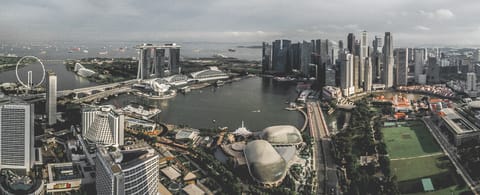
Asia-Pacific remains the single most important growth region for Franck Muller, with Greater China, Japan, and Southeast Asia collectively accounting for an estimated 40–45% of global sell-through. Singapore and Hong Kong function as the brand's regional anchors, both for retail and for the authorised dealer networks that feed pre-owned liquidity into platforms like Watches of Switzerland and local grey-market specialists. Thai and Indonesian ultra-high-net-worth buyers have also emerged as increasingly active participants in watch auctions, with Bangkok-based collectors notably active at Christie's Hong Kong's recent sale cycles. Rudaz's emphasis on regional boutique expansion and limited Asia-exclusive references is a direct response to this demand concentration.
- Secondary market premium: Complicated FM pieces averaging 18–34% above estimate at HK auctions
- Asia-Pacific share: Estimated 40–45% of global Franck Muller sell-through
- Market size: Global collectible watch market approximately USD 22 billion (2023)
- Key regional hubs: Singapore, Hong Kong, Tokyo, Bangkok
The Investment Thesis in Plain Terms
For a private banker or family office investment committee reviewing alternative asset allocation, Franck Muller occupies a specific and defensible niche: an independent manufacture with genuine in-house complications, strong brand recognition across Asia, and a CEO actively managing both the scarcity narrative and the cultural positioning that sustains secondary market demand. The brand is not Patek Philippe in terms of auction dominance, but it offers meaningful exposure to the independent watchmaking segment at price points — typically CHF 20,000 to CHF 250,000 for core complications — that remain accessible relative to the top-tier independents. Rudaz's forward guidance suggests continued investment in limited production runs and regional exclusives, both of which are structural supports for collector premiums over a three-to-five-year holding horizon.
Forward Outlook for Asian Collectors and Allocators
As Asian family offices continue to professionalise their alternative asset sleeves, watches are transitioning from discretionary purchases to tracked positions with defined entry and exit strategies. Franck Muller's trajectory under Rudaz — technically rigorous, culturally aware, and regionally engaged — positions it well for sustained demand from precisely this buyer cohort. The brand's willingness to experiment with adjacent categories while protecting core production scarcity suggests a management team that understands the asset logic as well as the craft. Allocators monitoring the independent watch segment should treat Franck Muller as a mid-tier conviction position with asymmetric upside should any single complication reference break through at a major Hong Kong or Singapore auction in the next twelve to eighteen months.
💼 Exploring alternative asset allocation? Speak to Whisky Cask Club — Singapore's leading specialists in Scottish whisky cask investment.