
Gong cha’s six-year expansion is evidence—not a private-credit return
Gong cha nearly doubled its markets and more than doubled its stores while Partners Group was sole lender and a minority shareholder. The realised operating expansion is useful evidence—but the public record still cannot separate credit protection from equity upside or calculate either return.
TL;DR
Partners Group says it supplied more than US$200 million as sole lender in 2019 and also bought minority equity. Gong cha then grew from about 1,000 to nearly 2,200 stores and from 17 to 33 markets. That supports an operating-growth case; it does not disclose the lender’s coupon, leverage, protections or return, nor the equity stake’s gain.
Gong cha offers a rare public glimpse of an Asian private-credit investment after a six-year operating expansion. Partners Group said on 24 August that it had agreed to exit both the private-credit and minority-equity positions it took alongside TA Associates’ 2019 acquisition of the tea chain. The manager disclosed a financing package of more than US$200 million and described itself as the sole lender.
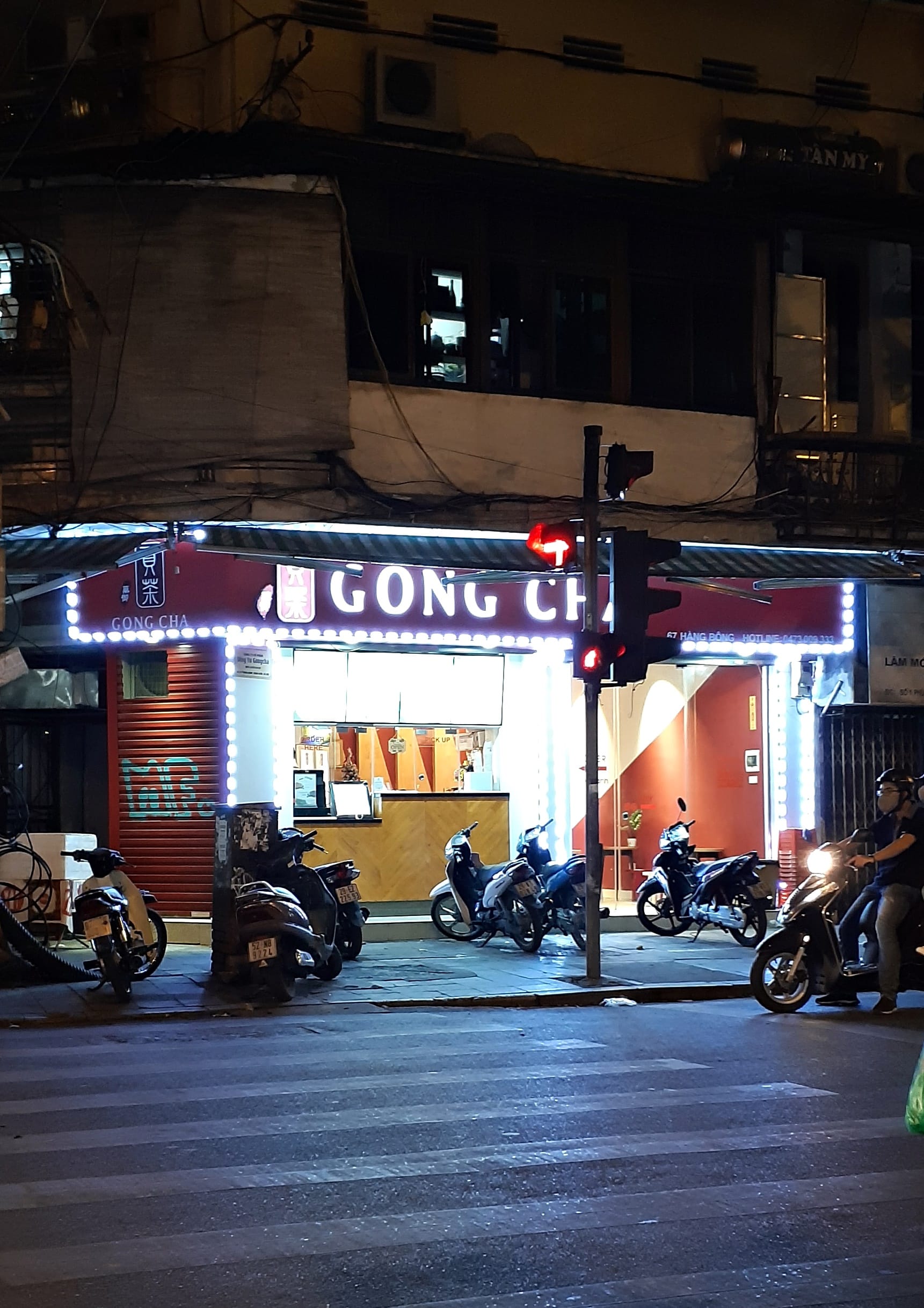
The same release supplies an unusually tangible operating record. Gong cha’s estate grew from around 1,000 stores to nearly 2,200, while its geographic footprint expanded from 17 to 33 markets. The company now serves more than 150 million beverages a year, according to Partners Group. It also acquired the master-franchise rights for 170 US stores and introduced a “Digital Kitchen” operating model with automated beverage dispensing.
Those facts matter. They show that the borrower became a much larger operating network during the holding period. They do not, however, turn a successful expansion narrative into a disclosed private-credit return. For allocators, the useful reading is to keep three ledgers separate: operating growth, credit protection and minority-equity optionality.
Ledger one: operating growth became visible
Store count, market reach and annual beverages are measures of scale and activity. Taken together, they support the proposition that Gong cha broadened its franchise system and customer-facing footprint. The move from 17 to 33 markets also indicates that expansion was not confined to adding outlets inside an unchanged geography.
The figures are especially relevant to a lender because a growing operating base can widen the sources from which a borrower may generate cash. Yet the public disclosures stop short of the evidence required to test that inference. They do not provide system sales, same-store sales, franchisee economics, margins, free cash flow, debt-service coverage or the portion of the estate contributing cash to the borrowing entity.
Even the figure of more than 150 million beverages annually should be used with care. It is a strong brand-activity signal, not a revenue or earnings line. Without average ticket, mix, royalty structure, store ownership and cost data, beverage volume cannot be converted into cash available for debt service.
Ledger two: credit protection remains mostly undisclosed
The disclosed financing structure is notable in two respects: Partners Group supplied more than US$200 million and was the sole lender. Sole-lender status can simplify negotiation and monitoring because one creditor is not required to coordinate with a syndicate. It does not, on its own, reveal the quality of the lender’s protection.
The public material does not disclose the debt’s coupon, leverage, seniority, collateral, guarantees, amortisation, maintenance covenants, incurrence covenants, information rights, amendment history or repayment premium. It also gives no record of covenant headroom, waivers, payment-in-kind interest, cash sweeps or restructuring. None should be assumed.
Bloomberg reporting carried by The Business Times adds one important point: Partners Group had entered an agreement to be fully repaid. The manager’s own announcement says it had entered an agreement to exit. That is encouraging evidence about the intended repayment outcome, but the wording is prospective. It should not be upgraded into proof of completed settlement unless a later source confirms closing and receipt of funds.
Even completed repayment would answer only part of the investment question. It would establish principal recovery under the eventual transaction, not the annualised debt return. Timing, interest, fees and any premium would still be needed. A loan can repay in full after a smooth path, after amendments, or after periods of elevated risk; the current sources do not distinguish among those paths.
Ledger three: minority equity supplied separate optionality
Partners Group also invested in Gong cha’s equity in 2019. TA Associates’ agreement to sell the company to Bain Capital therefore creates an exit route for both the loan and the minority shareholding. That dual exposure is central to the case: the lender did not rely solely on contracted credit economics for its total potential upside.
But “equity upside” is a structure, not a return figure. The public record does not state the size of Partners Group’s stake, its entry valuation, subsequent dilution, distributions, exit proceeds or the price Bain agreed to pay for Gong cha. There is no sound basis for calculating an equity multiple or internal rate of return.
The distinction also prevents a common analytical error. Strong company growth may have supported the value of the minority stake while also improving the borrower’s capacity to refinance or repay. Those channels can reinforce one another, but they are not interchangeable. Contractual credit protection belongs to the debt ledger; residual value belongs to the equity ledger.
What six years did—and did not—prove
On the evidence disclosed, the operating thesis was realised in a narrow but meaningful sense: Gong cha became larger by stores and markets, continued serving customers at scale and completed operational initiatives. The transaction also created an agreed exit route for the lender and minority shareholder.
What remains unproved is equally important. The disclosures do not show whether growth was profitable, how much cash reached the borrowing entity, how much downside protection the loan carried, or what return either instrument generated. Nor do they show whether the expansion itself caused the repayment outcome; the sale to Bain Capital is the transaction connecting the investment to an exit.
Alternative Credit Investor’s current report covers the financing amount, sole-lender role, minority equity and footprint expansion. The editorial gap is not another deal recap. It is the separation of the three ledgers, so readers can see which public facts support the operating case and which underwriting questions remain unanswered.
A practical allocator checklist
- Operating evidence: request system sales, same-store growth, store openings and closures, franchisee unit economics, margins and free cash flow—not store count alone.
- Credit evidence: ask for instrument seniority, security, covenants, leverage, debt-service history, amendments, fees and the exact timing of repayments.
- Equity evidence: separate stake size, entry and exit values, dilution and distributions from contractual debt cash flows.
- Exit evidence: distinguish an announced agreement from completed repayment and realised proceeds.
- Attribution: do not infer that operating expansion, credit protection or minority equity alone produced the outcome without instrument-level records.
That approach is less glamorous than announcing an attractive private-credit track record. It is also more useful. Gong cha shows that operating expansion can make a credit case more legible. It does not make undisclosed economics calculable.
This article is a source-led case study, not investment advice. No undisclosed coupon, leverage, covenant, premium, exit price or return has been estimated.
Frequently Asked Questions
What did Gong cha’s six years of expansion prove?
The disclosed store, market and beverage figures show a much larger operating footprint and continuing customer activity. They do not, by themselves, show store-level profitability, cash conversion, debt-service capacity or an investor return.
Did Partners Group disclose its private-credit return?
No. The cited disclosures do not provide the coupon, leverage, security package, covenants, fees, repayment premium, timing of cash flows or realised debt return needed to calculate it.
Why does the minority-equity position matter?
It created a separate route to potential upside when TA Associates agreed to sell Gong cha to Bain Capital. The stake size, entry valuation, dilution, exit proceeds and equity return were not disclosed, so the optionality cannot be valued from the public record.
Was Partners Group repaid when Gong cha was sold?
Bloomberg reporting carried by The Business Times said Partners Group had entered an agreement to be fully repaid; Partners Group’s own release said it had entered an agreement to exit. Those formulations should not be rewritten as a completed settlement without later evidence.