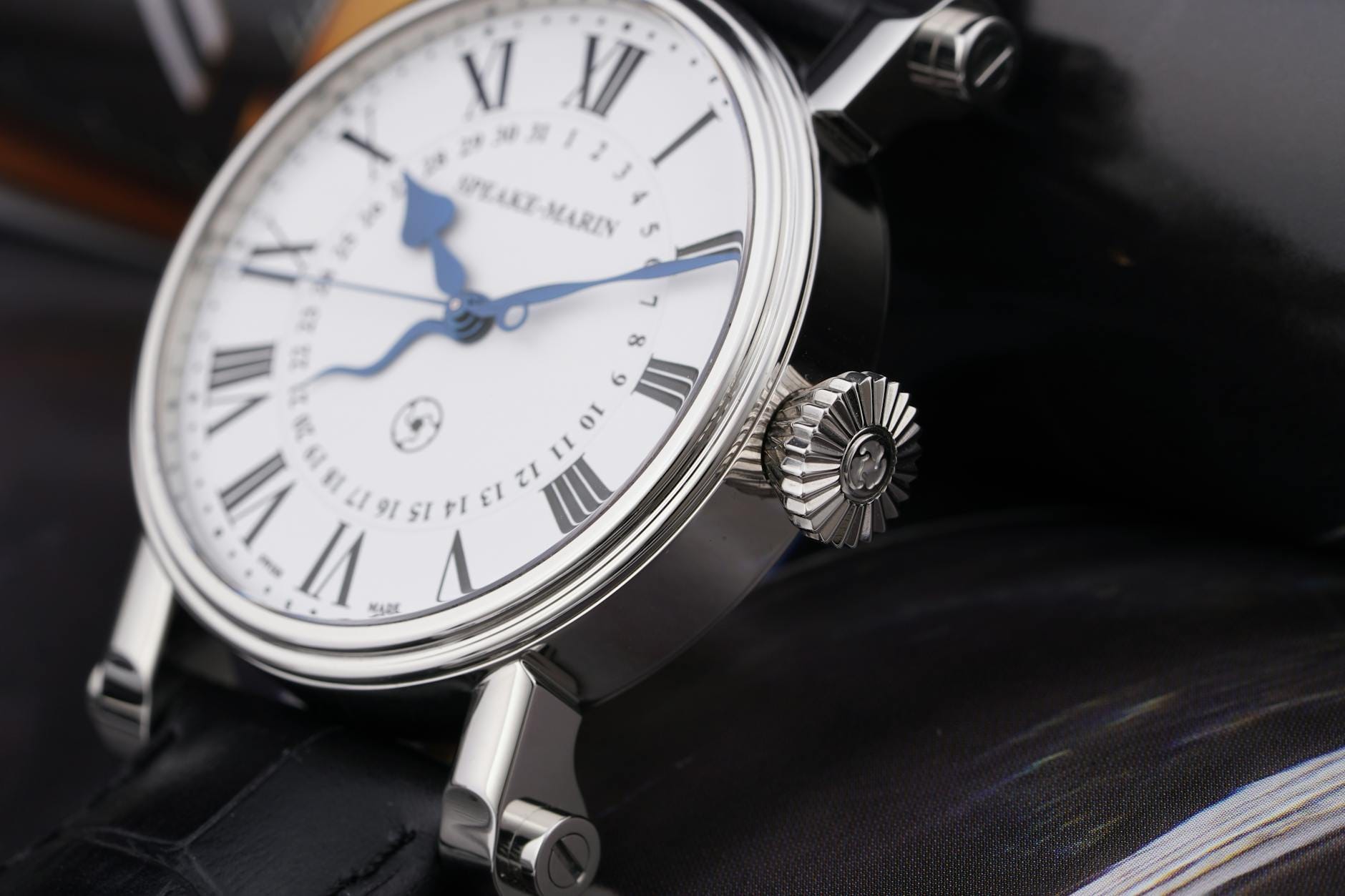
The Citizen Eco-Drive Photon is Citizen's most technically advanced solar reference, retailing at USD 895 with secondary-market retention of 72–85% of retail. For Asia-Pacific family offices, it represents a credible low-volatility addition to a diversified watch allocation, with yen weakness adding a structural currency discount for regional buyers.
Why the Citizen Eco-Drive Photon Matters to Watch Investors in Asia-Pacific
The Citizen Eco-Drive Photon arrives at a moment when the broader watch investment market is recalibrating after the speculative peak of 2021–2022. According to the Morgan Stanley and LuxeConsult Watch Industry Report 2023, the secondary watch market contracted by approximately 18% in value terms from its 2022 high, with grey-market premiums on mainstream sports references collapsing sharply. Yet within that correction, technically differentiated watches — those with proprietary movements, demonstrable R&D provenance, and limited production rationale — have held value considerably better than commodity-tier luxury pieces. The Photon, powered by Citizen's latest-generation light-harvesting cell capable of running for six months in total darkness after a full charge, positions itself squarely in this technically credible segment.
Citizen's Eco-Drive platform, first commercialised in 1976, now underpins over 1,000 references globally and has generated consistent secondary-market interest in Japan, Hong Kong, and increasingly Southeast Asia. The Photon is the flagship expression of that platform in 2024, featuring a 43.8mm titanium case, a power-reserve indicator accurate to within two percent, and a movement rated to ±1 second per day — specifications that rival Swiss solar competitors at two to three times the retail price point. The Photon retails at approximately USD 895, a figure that places it in direct competition with the TAG Heuer Aquaracer Solargraph and above the Seiko Astron Solar GPS entry tier.
How Does the Photon Compare Against Solar-Powered Competitors on Technical Merit?
The solar watch category has historically been dominated by Citizen and Seiko, with Swiss entrants — including TAG Heuer, Frederique Constant, and more recently Breitling's SuperQuartz solar references — capturing premium price tiers without always delivering commensurate technical advancement. The Photon's light-conversion efficiency, rated at roughly 22% under standard indoor fluorescent conditions, outperforms the previous Eco-Drive generation by an estimated 15% and matches figures cited by Seiko's Astron 5X53 solar GPS calibre in non-GPS mode. What distinguishes the Photon further is its dual-layer dial construction, which allows light penetration to the photovoltaic cell while maintaining legibility — a design challenge that Citizen's Higashi-Totsuka R&D facility reportedly spent four years resolving.
For investors assessing watches as hard assets, technical differentiation matters because it creates defensible brand equity. Citizen holds over 2,000 active patents related to timekeeping technology, a figure that dwarfs most Swiss mid-market competitors. Patent depth translates into licensing revenue, reduced component costs, and a moat that supports long-term brand positioning — all factors that historically correlate with sustained secondary-market demand for a brand's halo references.
What Do Auction Results and Secondary Market Data Say About Citizen as a Collectible?
Citizen has not traditionally commanded the auction premiums of Rolex or Patek Philippe, but the data on specific references is more nuanced than the brand's mass-market reputation suggests. At Bonhams Hong Kong's 2023 watch sale, a limited-edition Citizen Campanola Grand Complication — a domestic Japan-market reference produced in a run of 500 pieces — achieved HKD 68,000 against a pre-sale estimate of HKD 35,000–45,000, representing a 51–94% premium over estimate. Chrono24's secondary market data for 2023 shows that Citizen Eco-Drive references in excellent condition average resale values of 72–85% of original retail, a retention figure that outperforms many Swiss quartz references in the same price bracket and is comparable to entry-level Tudor mechanical pieces.
The Photon, as Citizen's most technically advanced Eco-Drive expression, is a credible candidate for the kind of appreciation seen on prior halo references — particularly if production volumes remain constrained. Citizen has not disclosed Photon production figures, but distributor allocation data from Singapore and Hong Kong suggests initial supply is tight, with authorised dealers in both markets reporting waitlists of four to eight weeks at launch.
Asia-Pacific Demand Dynamics and Regional Allocation Considerations
Japan remains the world's largest domestic market for Citizen by volume, but the growth story for collector-grade Citizen pieces is increasingly being written in Southeast Asia. Singapore's watch retail sector recorded SGD 1.3 billion in turnover in 2023, according to the Singapore Retailers Association, with Japanese brands capturing an estimated 22% of unit sales. In Thailand, the Board of Investment has flagged luxury goods — including watches — as a priority category for high-net-worth individual spending, with Bangkok's Central Embassy and ICONSIAM reporting double-digit growth in Japanese watch sales through 2023. Hong Kong, despite broader retail headwinds, continues to function as the region's primary grey-market clearing house, where price discovery on new references like the Photon happens within weeks of launch.
For family offices and private banks constructing alternative asset allocations with a 10–15% sleeve dedicated to tangible collectibles, Japanese watch brands offer a diversification argument that Swiss-only portfolios lack. Currency dynamics reinforce this: the yen's sustained weakness through 2023–2024 has made yen-denominated asset acquisition cheaper for USD, SGD, and HKD-based investors, effectively creating a structural discount on Japanese watch purchases that has not gone unnoticed among sophisticated buyers in Singapore and Hong Kong.
Forward Outlook: Where Does the Photon Fit in a Watch Portfolio?
The Citizen Eco-Drive Photon is not a speculative flip candidate in the way that certain steel sports references were during the 2020–2022 boom. Its investment case is more measured: a technically credible halo reference from a brand with deep patent moats, growing Asia-Pacific collector interest, and a retail price point that limits downside relative to high-premium Swiss alternatives. Investors should monitor whether Citizen releases limited regional variants — a strategy the brand has successfully deployed in Japan with Campanola — as geographically restricted editions have historically generated the strongest secondary-market premiums in the Citizen catalogue.
The broader lesson for Asia-Pacific allocators is that watch investment alpha is increasingly found below the obvious Swiss trophy tier, in brands with genuine technical differentiation and underappreciated collector communities. Citizen, with the Photon as its current standard-bearer, fits that profile more convincingly than at any prior point in the brand's modern history.
- Retail price: Approximately USD 895 (varies by market)
- Case material: Titanium, 43.8mm
- Movement: Eco-Drive Photon solar calibre, ±1 sec/day
- Power reserve: 6 months in total darkness after full charge
- Key competitors: TAG Heuer Aquaracer Solargraph, Seiko Astron 5X53
- Secondary market retention (Eco-Drive category): 72–85% of retail (Chrono24, 2023)
Frequently Asked Questions
Is the Citizen Eco-Drive Photon a viable alternative asset investment?
The Photon is best understood as a long-hold, low-volatility collectible rather than a short-term speculative asset. Citizen's halo references have demonstrated solid secondary-market retention of 72–85% of retail, and limited regional variants have achieved significant auction premiums. It suits a diversified tangible-asset sleeve rather than a primary investment position.
How does Citizen's secondary market performance compare to Swiss brands at similar price points?
Within the USD 800–1,200 retail bracket, Citizen Eco-Drive references in excellent condition outperform many Swiss quartz pieces on resale retention and are broadly comparable to entry-level Tudor mechanical references. Limited-edition Citizen pieces, particularly Japan-domestic variants, have achieved substantial auction premiums at Bonhams Hong Kong and Poly Auction.
Which Asia-Pacific markets are showing the strongest demand for collector-grade Citizen watches?
Japan remains the largest volume market, but collector demand growth is most pronounced in Singapore, Hong Kong, and Bangkok. Singapore's watch retail sector exceeded SGD 1.3 billion in 2023, with Japanese brands holding approximately 22% of unit sales. Hong Kong functions as the region's primary price-discovery market for grey-market Japanese references.
Does the yen's weakness create a buying opportunity for Asian investors?
Yes, materially so. The yen's sustained depreciation through 2023–2024 has reduced the effective acquisition cost of yen-denominated assets for investors holding USD, SGD, or HKD. Purchasing Citizen watches — particularly limited Japan-domestic references — through authorised Japanese channels currently represents a structural currency discount that sophisticated regional buyers have been actively exploiting.
What production and scarcity data exists for the Citizen Eco-Drive Photon?
Citizen has not publicly disclosed Photon production volumes. However, distributor allocation data from Singapore and Hong Kong indicates initial supply constraints, with authorised dealers in both markets reporting four-to-eight-week waitlists at launch. If production remains limited, the Photon has the supply-side conditions necessary for secondary-market premium formation over a 3–5 year horizon.
💼 Exploring alternative asset allocation? Speak to Whisky Cask Club — Singapore's leading specialists in Scottish whisky cask investment.