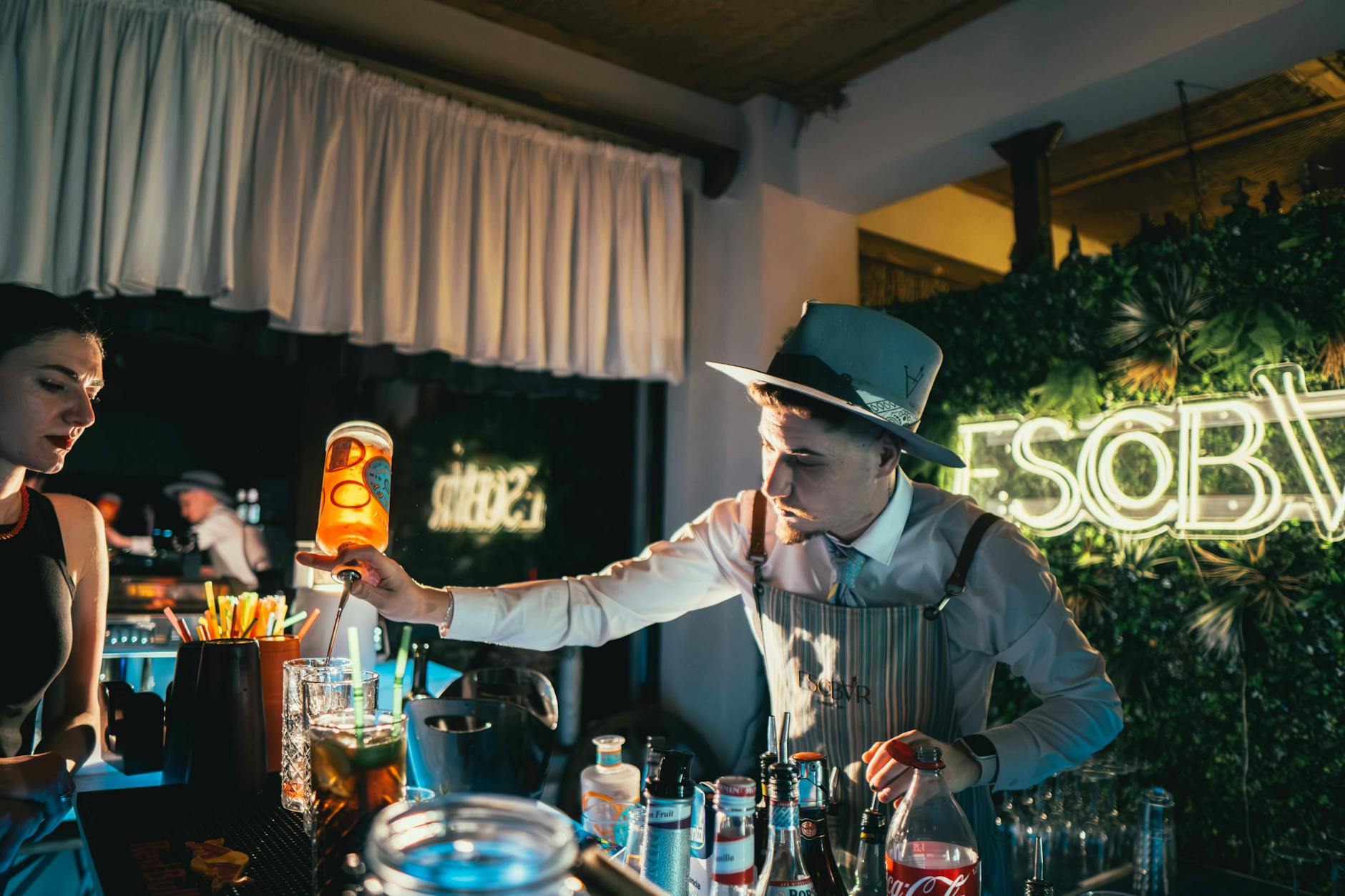
The Left Hand cocktail combines bourbon, vermouth, Campari, and mole bitters. The article uses it as a metaphor for the strong investment potential of aged bourbon, highlighting growing demand and high auction prices in the Asia-Pacific market.
When Cocktail Craft Meets Cask Intelligence: The Left Hand as an Investment Metaphor
The global premium spirits market crossed USD 120 billion in retail value in 2023, with aged American whiskey — bourbon in particular — posting compound annual growth rates of 8.4% over the preceding five years according to IWSR data. For Asia-Pacific family offices increasingly rotating capital into tangible, consumable assets, that trajectory is not incidental. It is the backdrop against which a cocktail like the Left Hand deserves serious attention — not merely as a bartender's flourish, but as a lens through which to understand the bourbon investment thesis that is quietly reshaping allocations from Singapore to Seoul.
What Is the Left Hand, and Why Does It Matter to Spirits Investors?
The Left Hand is a neo-classic cocktail built on bourbon, sweet vermouth, Campari, and a dash of mole bitters — a construction that places it firmly in the orbit of both the Negroni and the Manhattan, while carving its own identity. Conceived by bartender Michael McIlroy at Attaboy in New York, it is often described as the spiritual sibling of the Boulevardier, which itself substitutes bourbon for gin in a Negroni framework. What distinguishes the Left Hand is the mole bitters: a complex, chocolate-and-spice modifier that deepens the bourbon's inherent vanilla and caramel notes, producing a drink with layered bitterness that rewards patience — much like the casks that produce its base spirit.
For investors, the significance lies in what the Left Hand demands of its bourbon: age, character, and provenance. Bartenders at the craft level consistently reach for expressions with a minimum of six to eight years of barrel maturation, where the interaction between spirit and American white oak has produced the congener profile that mole bitters can amplify rather than overwhelm. Those are precisely the age statements now commanding the steepest premiums at secondary market auction. Rare Whisky 101's April 2024 index showed American whiskey lots at London auction averaging 34% above their 2021 hammer prices, with aged bourbon leading that appreciation curve.
The Asia-Pacific Demand Signal
Bourbon's footprint in Asia-Pacific is expanding faster than most allocation committees have priced in. Japan has long been a sophisticated bourbon market — Buffalo Trace and Heaven Hill both cite Japan among their top-five export destinations by volume — but the more consequential shift is occurring in Singapore and Hong Kong, where private banking clients are treating allocated bourbon releases as store-of-value positions rather than consumption purchases. Pappy Van Winkle 23-Year lots at Bonhams Hong Kong in late 2023 cleared at HKD 28,000 per bottle, a 19% premium over the same expression's 2022 result. Thailand's duty-free retail premiums on allocated American whiskey have widened to 40–60% above US MSRP, reflecting genuine scarcity rather than speculative froth.
The Recipe: Building the Left Hand
Constructing a Left Hand correctly is an exercise in proportion and temperature discipline — principles that translate directly into cask selection methodology. The recipe below reflects the standard as codified at Attaboy and replicated by leading bars across Singapore's Keong Saik corridor and Hong Kong's Wyndham Street strip.
- Bourbon: 45ml — seek a high-rye mash bill, minimum six years, for structural backbone
- Sweet vermouth: 22ml — Carpano Antica or Cocchi Storico for depth without excessive sweetness
- Campari: 22ml — the bitter anchor that links this drink to its Negroni lineage
- Mole bitters: 2 dashes — the differentiating element; Bittermens Xocolatl is the industry benchmark
- Method: Stir over large ice for 30–40 rotations; strain into a chilled coupe; no garnish
- Estimated bar price in Singapore: SGD 28–36 at craft venues
The stirring discipline matters: over-dilution collapses the bitters architecture, while under-dilution leaves the Campari's bitterness unintegrated. The same patience applies to cask investment — premature liquidation before optimal maturation destroys the value that time and oak were building.
Allocation Implications for Asia-Pacific Investors
Scottish single malt casks remain the dominant vehicle for spirits-as-asset allocation in the region, with Whisky Cask Club and comparable Singapore-based specialists reporting 15–22% annualised returns on well-selected Speyside and Highland casks held over five-to-ten-year horizons. American whiskey casks present a structurally different proposition: US federal law mandates new charred oak for bourbon maturation, meaning distilleries cannot reuse barrels, and the secondary market for ex-bourbon casks flows directly into Scotch and Irish maturation — creating a cross-asset linkage that sophisticated allocators are beginning to model explicitly. The Left Hand cocktail, in this context, is almost an accidental diagram of that relationship: bourbon and vermouth, American and European, bitter and sweet, each component amplifying the other's best qualities under the right conditions.
The Forward View
As ultra-high-net-worth capital in Southeast Asia continues rotating toward tangible alternatives — driven by currency diversification mandates and a generational shift toward experience-adjacent assets — premium bourbon and the craft culture surrounding it will function as both a direct investment category and a demand signal for Scottish cask appreciation. The Left Hand is a cocktail worth ordering at your next Singapore client dinner. More importantly, the bourbon inside it is worth understanding as an asset class before the next allocation window closes.
💼 Exploring alternative asset allocation? Speak to Whisky Cask Club — Singapore's leading specialists in Scottish whisky cask investment.