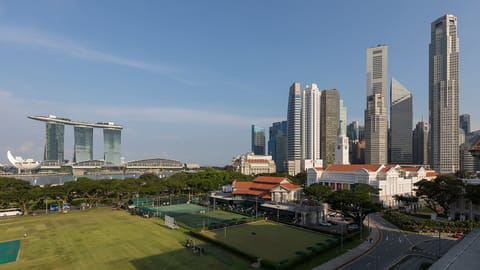
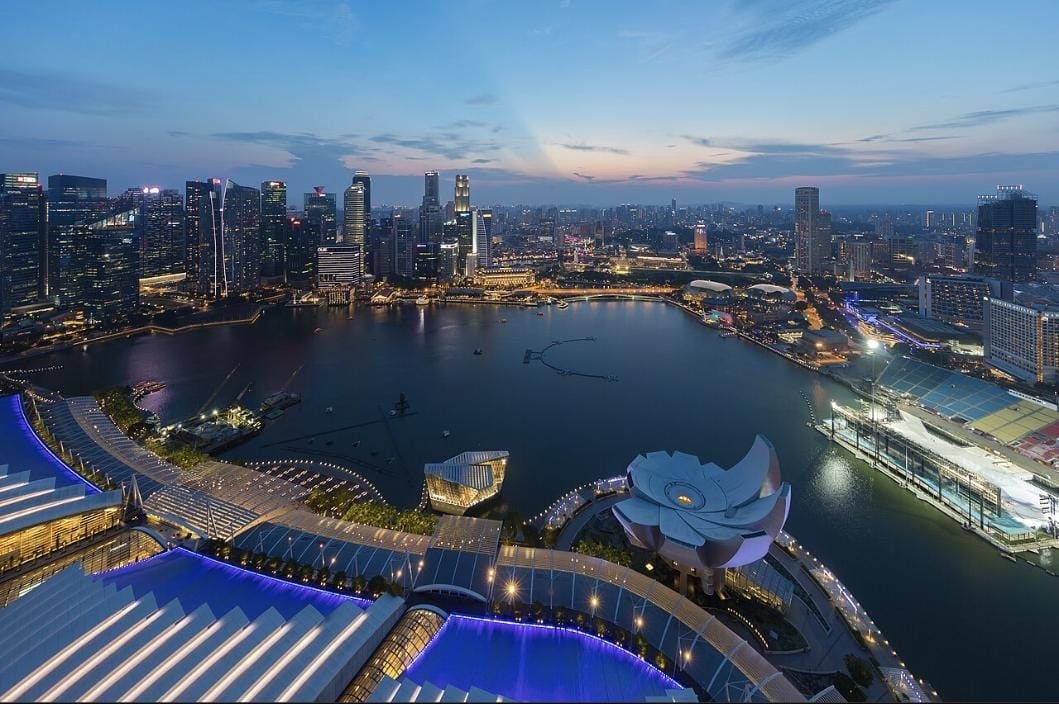
IFM Investors has opened its fourth APAC office, in Singapore, and plans to deploy up to half a billion dollars of a private credit fund across Asia. The Australian pension giant frames it as backing an asset class at an inflection point, joining Partners Group, KKR and others already building Asia private credit books.
TL;DR
- IFM Investors, an A$291.6bn (about US$204.8bn) Australian pension capital investor, opened a Singapore office this month, its fourth in APAC after Hong Kong, Seoul and Tokyo
- IFM plans to deploy up to half of a roughly $1 billion private credit fund into Asia, with 25-35% earmarked for Southeast and South Asia
- The push is backed by a A$175 million Export Finance Australia commitment and follows similar recent moves by Partners Group and KKR into Asia private credit
What did IFM Investors just announce?
IFM Investors is an A$291.6 billion (roughly US$204.8 billion) global pension capital investor, owned by 15 Australian industry superannuation funds and one UK pension fund. It has opened an office in Singapore, its fourth in the Asia-Pacific region after Hong Kong, Seoul and Tokyo.
The new office is meant to expand IFM's private market capabilities across Asia, particularly in diversified credit, by supporting local origination and execution rather than running deals out of its Melbourne base or other regional offices.
How much capital, and where in Asia?
Hiran Wanigasekera, IFM's executive director and co-head of APAC diversified credit, told Bloomberg the firm will deploy up to half of a roughly $1 billion private credit fund into Asian markets. Of that, 25-35% is earmarked specifically for Southeast Asia and South Asia.
Most of IFM's existing private credit book is still focused on Australia and New Zealand. The Asia allocation is a diversification move, giving IFM exposure to industries less common in developed markets, such as manufacturing.
Why is IFM calling this an inflection point?
Wanigasekera said Asia Pacific private credit has grown nearly fourfold from a low base over the past 15 years, which he expects will keep bringing what he called structural benefits to global portfolios during a volatile period in markets.
The Singapore push is also backed by government money. Export Finance Australia, an Australian government agency, has committed A$175 million to IFM's Asia-Pacific private credit capabilities, under the Southeast Asia Investment Financing Facility, part of Australia's Invested: Southeast Asia Economic Strategy to 2040.
How does this fit with other global capital moving into Asia private credit?
IFM is not the only large global name doing this. Partners Group has a $1 billion open-ended evergreen mandate for Asia private credit from a single institutional investor, a deal this site covered on 3 September (altassetasia.com/partners-group-secures-1-billion-evergreen-mandate-from-a-single-asia-institutional-investor). KKR runs a $1.8 billion Asia Credit Opportunities Fund II.
Asia-based managers are moving too. Granite Asia and Temasek's SeaTown have both launched private credit vehicles targeting the region, part of the same broader shift toward Asia private credit this site has been tracking, including the wider pivot toward AI infrastructure and direct family office deals (altassetasia.com/why-asias-150b-private-credit-market-is-pivoting-to-ai-infrastructure-and-direct-family-office-deals) and the decade-low fundraising environment Asia-regional funds are now clawing back from (altassetasia.com/apac-private-markets-hit-a-decade-low-in-2025-fundraising-asia-regional-funds-are-already-clawing-it-back).
Notably, Asia private credit has largely avoided the reputational damage that has hit US and European private credit following the unraveling of investments at Ares and Blue Owl Capital.
What does it mean for Asian allocators and family offices?
For allocators, the signal is less about any single deal and more about the accumulation of them. When a pension giant of IFM's scale, alongside Partners Group and KKR, all point to Asia private credit within weeks of each other, the diversification case is being made by multiple large, independent institutions rather than one manager's marketing.
The underlying opportunity, per IFM and others, rests on Asian borrowers being locked out of bank debt by stringent regulations, leaving room for private lenders. The open question for allocators is how much that opportunity narrows, in terms of pricing and terms, as more global capital competes for the same deals.
FAQs
How much money is IFM Investors putting into Asia?
Up to half of its roughly $1 billion private credit fund, with 25-35% specifically earmarked for Southeast Asia and South Asia, according to IFM's co-head of APAC diversified credit, Hiran Wanigasekera.
Why is IFM opening an office in Singapore now?
To support local origination and execution for diversified credit deals across Asia. It is IFM's fourth APAC office, after Hong Kong, Seoul and Tokyo, and coincides with a A$175 million Export Finance Australia-backed push into Southeast Asian private credit under Australia's SEAIFF program.
Is IFM the only big global investor doing this?
No. Partners Group has a $1 billion evergreen Asia private credit mandate, KKR runs a $1.8 billion Asia Credit Opportunities Fund II, and Asia-based managers like Granite Asia and Temasek's SeaTown have also launched private credit vehicles targeting the region.
Sources and Method
This article draws on Hubbis, which reported IFM Investors' own statement on the Singapore office opening and quoted co-head Hiran Wanigasekera (4 September 2026), and PitchBook's independent report by Kristie Neo (5 September 2026), which added detail on fund deployment and competitor activity via a Bloomberg-sourced quote. Figures not attributed to these two outlets have been left out. Drafted and fact-checked by Hsu Myat San.