South Korea is adding two routes for project-finance and construction-company funding difficulties. The useful investor question is not whether a “relief centre” exists, but what record appears after a case enters it.
TL;DR
South Korea’s new FSS and KDB finance difficulty centres create two escalation routes from 1 September. They do not themselves prove funding, guarantees or project rescue. Investors should keep intake, referral, lender decision and evidenced outcome as four separate records.
A joint South Korean government policy briefing says the Financial Supervisory Service (FSS) and Korea Development Bank (KDB) will operate dedicated finance difficulty centres from 1 September. The announcement is current and material for property project finance, public guarantees, KAMCO fund matching and the wider funding chain around housing supply.
It is not evidence that any named project has received money. The centres are escalation and coordination mechanisms. An allocator, lender or sponsor should therefore separate four records: a case was received; it was handled or referred; a financial institution made a decision; and a project-level outcome was evidenced.
Two centres mean two intake perimeters
The FSS will expand and reorganise its existing real-estate PF support centre into a PF finance difficulty relief centre. The official briefing describes a central team and field-specific units for matters including evaluation management, syndicated loans and institutional improvement. Cases may be handled by the FSS or passed to institutions such as the Korea Housing Finance Corporation, Korea Asset Management Corporation (KAMCO) and financial-sector associations.
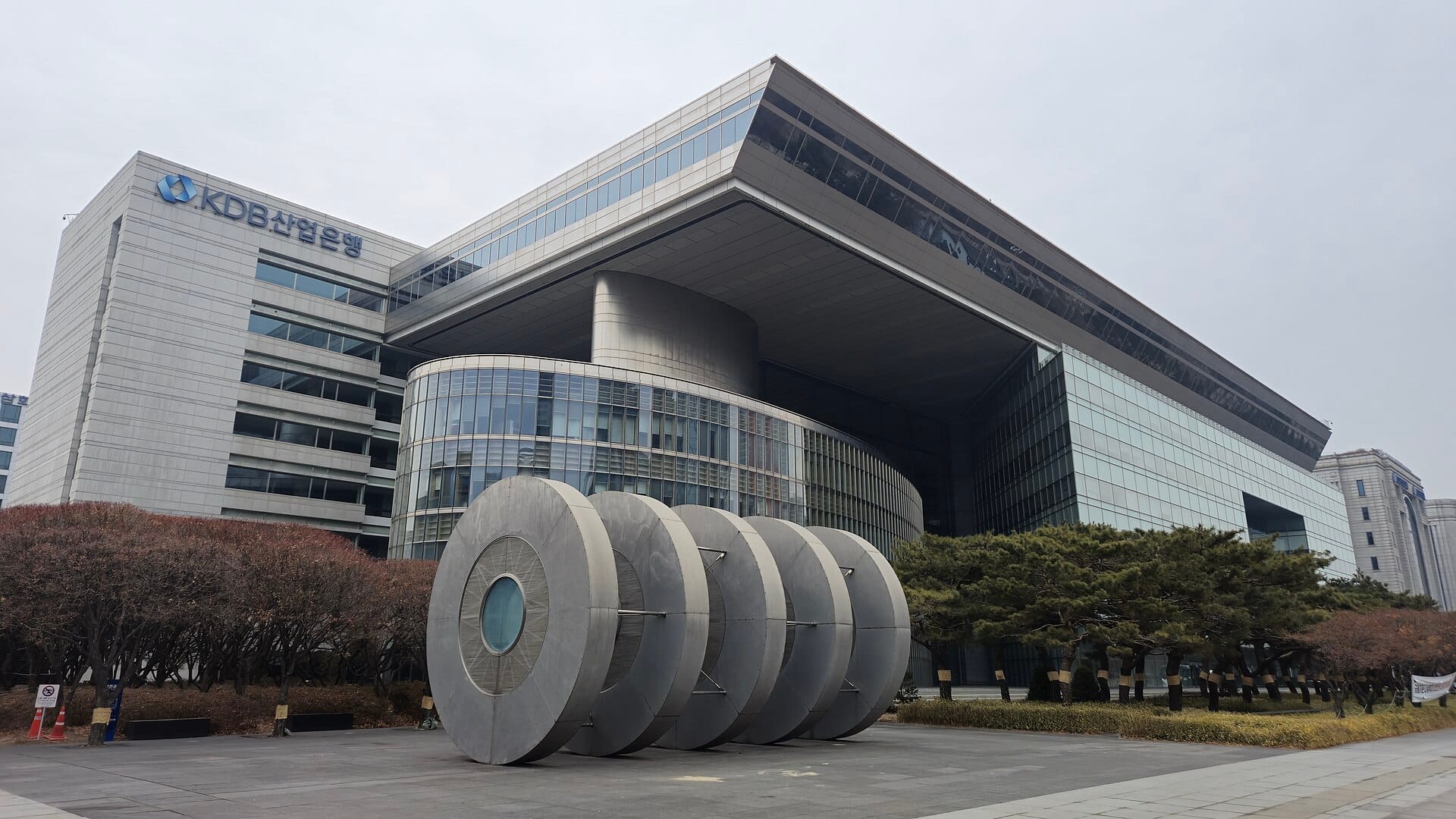
KDB is assigned a separate construction-company finance difficulty centre. It will receive company cases centrally, deal with them internally where appropriate, or request review through financial-sector associations. The associations can then convey the specific issue to individual financial institutions.
That division matters. A PF-site issue involving a public guarantee or KAMCO match is not automatically the same record as a contractor’s financing problem. Nor does a cooperative framework collapse the FSS, KDB, guarantors, asset managers, associations and private lenders into one credit committee.
Intake is not an underwriting result
The official source says private financial companies, contractors and developers can use the centres when difficulties arise in dealings with banks, securities firms, insurers, specialised credit providers and mutual-finance institutions. It also describes links to PF public guarantees and KAMCO fund matching.
None of that wording states that a submitted case will qualify. The centre can receive, coordinate, process or refer. The ultimate record may still depend on guarantee criteria, lender underwriting, collateral, project feasibility, sponsor support, intercreditor terms, budget authority or legislation.
Yonhap’s bylined report independently corroborates the 1 September start, the FSS expansion and KDB’s separate construction-company channel. It also reports that the government is pursuing KAMCO fund budget work, an amendment to the Korea Housing Finance Corporation Act, syndicated-loan changes and additional sector-specific funds. Those are different implementation tracks. A centre can open before every budget, law, product or fund is complete.
A four-record outcome ledger
- Intake. Record the date, applicant, legal entity, project site, financing issue and requested route. A general enquiry should not be counted as a funded case.
- Routing. Identify whether the FSS or KDB handled the matter, and which guarantor, public institution, association or lender received it. Referral is a process event, not a credit event.
- Decision. Capture the institution that approved, rejected or conditioned support; the product, amount, seniority, tenor, pricing, security, covenants, approvals and remaining conditions. “Under review” is not “approved”.
- Outcome. Separate commitment, legal close, drawdown, construction progress, restructuring effect, housing delivery and recovery. A disbursement does not prove completion; a completed building does not by itself prove investor return.
This ledger is deliberately stricter than a monthly case count. Ten referrals with no decision are not equivalent to ten approvals. Ten approvals with unmet conditions are not equivalent to ten drawdowns. And a drawdown into a weak project is not evidence that the intervention protected capital.
The 20-task programme needs its own status map
The joint briefing says the financial-support package contains 20 tasks, with 11 that could be implemented during August being advanced promptly. It separately mentions securing the KAMCO fund budget, amending the Korea Housing Finance Corporation Act, revising syndicated loans and encouraging additional sector-specific funds.
For private-market readers, the relevant control is a task register rather than one completion percentage. Each item should carry an owner, legal dependency, budget dependency, start date, operating rule and evidence of use. Otherwise “11 of 20” can be mistaken for 55% of capital deployed, which the source does not claim.
Where competitor coverage leaves a gap
Chosunbiz’s English report gives a substantive operational account of the two centres, participating institutions and intended referrals. Its headline correctly frames them as support centres. The remaining allocator gap is measurement: what would prove that coordination changed financing availability, project viability or recovery?
Alt Asset Asia’s answer is the outcome ledger. The most useful later disclosures would show anonymised case volumes by route, referral destination, decision status, time to resolution, product used, committed and drawn capital, project stage, restructuring outcome and any loss or recovery measure. Without that bridge, activity can be counted while capital results remain opaque.
Exact-entity demand clears the documented threshold
The Wikimedia Pageviews API for the exact English-language “Korea Development Bank” article records 254 user pageviews across 22–28 August 2026, versus 200 across the preceding equal seven-day window, a 27.0% rise. The latest daily rate of 36.2857 also exceeds the preceding 30-day rate of 30.6667 and 90-day rate of 33.3889.
This is an exact-entity reader-attention signal for KDB, not evidence of borrower demand, approved capital, project performance or support-centre usage.
What the announcement does not establish
The sources do not identify approved projects, disclose a capital envelope for the centres, promise a particular financing product, waive lender underwriting, guarantee a KAMCO match or state that every delayed PF site is viable. They also do not establish a valuation, recovery rate or expected return.
The centres may still be useful. A single escalation route can expose recurrent bottlenecks and shorten coordination. But the investment case begins only when the route produces auditable decisions and outcomes.
This is source-bounded editorial analysis, not investment, lending, legal, tax, regulatory, valuation or project-finance advice. It does not recommend KDB, any lender, developer, contractor, fund or project.
Frequently Asked Questions
When do South Korea’s PF finance difficulty centres start operating?
The joint government policy briefing says the Financial Supervisory Service and Korea Development Bank centres are scheduled to operate from 1 September 2026.
What is the difference between the FSS and KDB centres?
The FSS is expanding its existing real-estate PF support centre for PF-site difficulties and institutional coordination. KDB is creating a separate channel for construction-company finance difficulties. The two routes are meant to cooperate but are not the same intake.
Does submitting a case guarantee finance or a public guarantee?
No. The official record describes intake, internal handling or referral to institutions and financial-sector associations. It does not state that submission guarantees a loan, guarantee, KAMCO fund match, restructuring or rescue.
What should an investor ask for after a PF case is referred?
Ask for the dated intake record, route and responsible institution, the lender or guarantor decision, conditions and capital source, any legal or policy dependency, and the evidenced project outcome. Referral alone is not an approval or deployment record.
Source note
Primary: Republic of Korea Policy Briefing, joint ministries, 28 August 2026. Independent corroboration: Yonhap, Kang Soo-ryeon, 28 August 2026. Competitor context: Chosunbiz, 28 August 2026. Demand: Wikimedia Pageviews API. The four-record ledger and rate calculations are Alt Asset Asia analysis from the cited records.