
The Leopard 52 sailing catamaran, priced at USD 700,000–800,000, debuted in Asia at the Singapore Yachting Festival. Charter yields of 5–10% net, 18–24 month lead times, and strong Phuket and Langkawi demand make it a credible hard asset for Asia-Pacific investors.
Leopard 52 Sailing Catamaran: A Floating Alternative Asset for Asia-Pacific Investors
The Leopard 52 sailing catamaran made its Asia premiere at the 2025 Singapore Yachting Festival, arriving not merely as a luxury vessel but as a tangible, yield-generating alternative asset drawing serious attention from regional family offices and high-net-worth individuals. Priced at approximately USD 700,000–800,000 depending on specification, the Leopard 52 sits at the flagship end of South Africa-based Robertson and Caine's celebrated Leopard Catamarans range — a brand that has dominated the blue-water sailing catamaran segment globally for over two decades. Its Yacht Style Awards 2026 recognition further cements its position as the benchmark vessel in its class, a distinction that carries measurable weight in secondary market valuations.
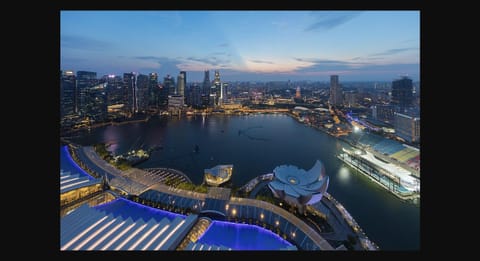
For the Asia-Pacific investor community, the timing of this regional debut is deliberate. Singapore's maritime leisure sector has expanded significantly, with the Singapore Tourism Board reporting sustained growth in yacht charter and ownership registrations through 2023 and 2024. The city-state's status as a regional hub for superyacht charters, combined with Thailand's Phuket-based bareboat and crewed charter market — valued at an estimated USD 180 million annually — creates a compelling operational backdrop for owners seeking income generation alongside capital preservation.
What Makes the Leopard 52 a Credible Hard Asset?
Unlike purely decorative collectibles, a well-maintained blue-water catamaran of this calibre generates active income through charter operations. Industry data from platforms such as The Moorings and Dream Yacht Charter — both of which operate Leopard models in their Asia-Pacific fleets — indicate that a 52-foot catamaran in premium condition can generate gross charter revenues of USD 8,000–14,000 per week in high-demand markets such as Phuket, Langkawi, and the Whitsundays. Over a 20–25 week annual charter season, that translates to gross revenues of USD 160,000–350,000, before management fees and operating costs, giving institutional-minded buyers a framework for underwriting the asset on yield rather than sentiment alone.
The Leopard 52 itself is engineered for this dual purpose. Its design prioritises volume, stability, and offshore performance simultaneously — attributes that attract both charter clients and private owners undertaking extended blue-water passages. The vessel features four double cabins with ensuite heads, a generous saloon, and a flybridge helm station that elevates visibility and comfort on extended passages. Twin diesel engines, typically Yanmar 57hp units, provide reliable auxiliary propulsion, while the sail plan — a square-top mainsail paired with a self-tacking jib — is optimised for shorthanded bluewater sailing, reducing crewing costs and expanding the owner-operator market.
- LOA: 52 feet (15.85 metres)
- Beam: 8.68 metres
- Cabins: 4 double ensuite
- Engines: Twin Yanmar 57hp diesel
- Charter gross yield (est.): USD 160,000–350,000 per annum
- Entry price (new): USD 700,000–800,000
How Does Catamaran Ownership Compare to Other Alternative Assets?
Positioning yacht ownership within an alternative asset portfolio requires discipline. Unlike whisky casks or fine wine — where storage costs are modest and liquidity, while limited, is improving through specialist auction platforms — a sailing catamaran demands active management, insurance, marina fees, and periodic refit expenditure. Annual operating costs for a 52-foot catamaran typically run between USD 40,000 and USD 80,000, depending on crewing arrangements and refit cycles. Net yield, after costs, narrows considerably, often to the 5–10% range on charter-managed vessels, though capital appreciation on well-maintained Leopard models has historically tracked positively in the second-hand market.
Robertson and Caine's production quality and global brand recognition underpin secondary market resilience. A five-year-old Leopard 50 — the predecessor model — currently trades on the brokerage market at USD 450,000–550,000, representing depreciation of roughly 25–35% from new, broadly comparable to premium classic car depreciation curves over the same period. For buyers entering through charter management programmes, the vessel effectively works to offset holding costs while the owner retains the asset on balance sheet — a structure familiar to family offices allocating to income-generating real assets.
Asia-Pacific Demand Dynamics and Regional Scarcity
Demand for blue-water sailing catamarans in Asia-Pacific has accelerated post-pandemic, driven by a cohort of younger ultra-high-net-worth individuals in Singapore, Hong Kong, and increasingly Mainland China who are seeking experiential assets that combine lifestyle optionality with financial rationale. The Singapore Yachting Festival itself recorded its highest-ever attendance in 2024, with exhibitor sales inquiries up an estimated 30% year-on-year according to organiser reports. Supply constraints from Robertson and Caine's Cape Town facility — where all Leopard vessels are built — mean lead times for new orders currently stretch to 18–24 months, a scarcity dynamic that supports pricing discipline in both the new and brokerage markets.
Thailand remains the most operationally active charter market in the region, with Phuket-based operators reporting near-full bookings through the October–April high season. Langkawi, benefiting from Malaysia's yacht duty exemption zone status, is emerging as a secondary hub attracting both charter operators and private owners seeking cost-efficient home ports. For investors evaluating the Leopard 52 as a regional asset, these two locations represent the most liquid operational environments, with established management infrastructure and growing inbound demand from European and Middle Eastern charter clients extending the revenue season.
Frequently Asked Questions
What is the purchase price of the Leopard 52?
The Leopard 52 is priced at approximately USD 700,000–800,000 new, depending on specification and optional equipment packages. Second-hand examples of the predecessor Leopard 50 model trade in the USD 450,000–550,000 range on the brokerage market.
How does a sailing catamaran generate investment returns?
Returns are generated primarily through charter income, with gross revenues on a 52-foot catamaran estimated at USD 160,000–350,000 per annum in active Asia-Pacific markets. Net yield after operating costs typically falls in the 5–10% range for charter-managed vessels, with secondary market capital appreciation providing additional upside for well-maintained examples.
What are the key Asia-Pacific markets for catamaran charter operations?
Phuket, Thailand and Langkawi, Malaysia are the most operationally active markets in the region, offering established charter management infrastructure, strong inbound demand, and extended sailing seasons. Singapore serves as a key sales and registration hub, while the Whitsundays in Australia represent a third significant market for operators targeting the broader Asia-Pacific region.
How does catamaran ownership compare to other alternative assets in a portfolio context?
Catamarans are income-generating hard assets with higher operational complexity than passive alternatives such as whisky casks or fine wine. Annual operating costs of USD 40,000–80,000 must be factored against charter revenues. The asset class suits investors seeking lifestyle optionality alongside financial returns, and is best evaluated within a broader alternative allocation strategy alongside lower-maintenance tangible assets.
What is the current lead time for ordering a new Leopard 52?
Lead times from Robertson and Caine's Cape Town production facility currently extend to 18–24 months for new orders, a supply constraint that supports pricing discipline in both the new and brokerage markets across Asia-Pacific.
💼 Exploring alternative asset allocation? Speak to Whisky Cask Club — Singapore's leading specialists in Scottish whisky cask investment.