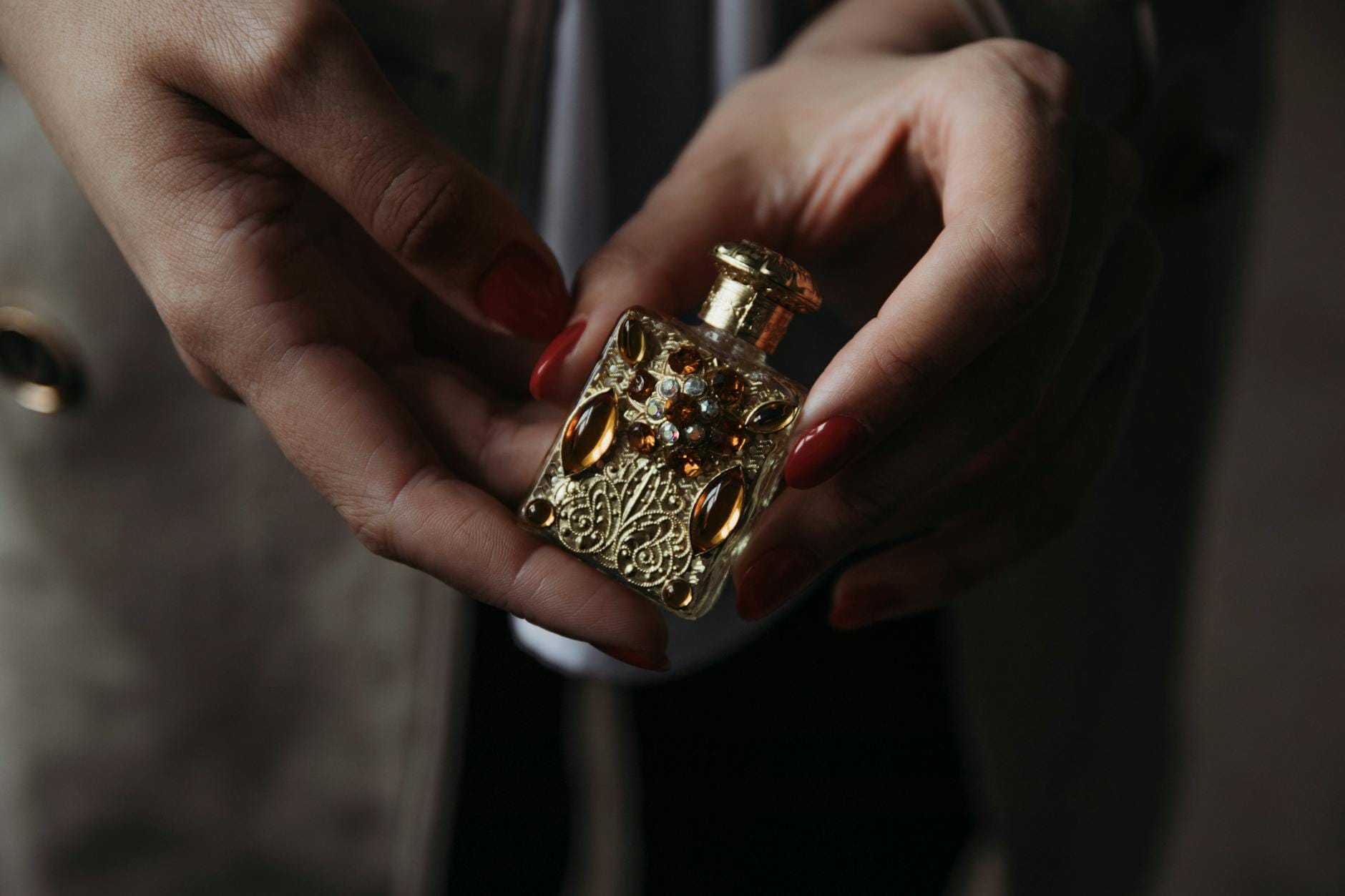
Vintage and limited-edition luxury fragrances are appreciating 20–30% annually, driven by IFRA ingredient bans and rising Asian collector demand. Six categories — from vintage Guerlain to oud-based compositions — offer structured entry points for Asia-Pacific family offices.
Luxury Fragrance as an Alternative Asset: What the Numbers Say
A single vintage bottle of Chanel No. 5 Extrait de Parfum from the 1920s sold at a Paris auction in 2023 for €4,200 — roughly 140 times its original retail equivalent. That figure would barely register against the broader collectible fragrance market, which specialist valuation house Orée du Bois estimated at approximately US$420 million in tradeable vintage and limited-edition inventory globally as of late 2024. For Asia-Pacific family offices already allocating to watches, wine, and whisky casks, the question is no longer whether luxury fragrance belongs in a collectibles portfolio — it is how to size the position intelligently.
If you manage discretionary wealth in Singapore, Hong Kong, or Tokyo, this matters because the same high-net-worth demographic driving record hammer prices at Christie's and Sotheby's watch auctions is now rotating discretionary spending into olfactory collectibles. Regional auction data from Bonhams Hong Kong shows a 34% year-on-year increase in fragrance-related lots between 2022 and 2024, outpacing vintage jewellery growth of 18% over the same period. Understanding the asset class before it becomes crowded is precisely the edge that separates informed family office allocation from reactive trend-chasing.
The Investment Thesis Behind Collectible Perfume
Luxury fragrance collectibles derive value from three distinct pillars: scarcity, provenance, and sensory irreproducibility. Unlike a watch movement that can be reverse-engineered or a whisky cask whose chemistry is at least theoretically replicable, a discontinued fragrance formula — particularly one relying on now-banned or exhausted natural ingredients such as Mysore sandalwood or Haitian vetiver — cannot be authentically reconstructed. The International Fragrance Association (IFRA) has issued over 50 ingredient restriction amendments since 1973, each one effectively rendering certain classic formulations legally unsellable in new production. This regulatory scarcity is a structural tailwind that no central bank policy can reverse.
Provenance adds a further layer. A sealed flacon of Guerlain Mitsouko Parfum from the 1950s, authenticated by the house's own archives, carries a premium of 300–500% over an unsealed equivalent, according to specialist dealer Parfums Rares Paris. Condition, fill level, and original packaging are the three variables that move price most dramatically in the secondary market, mirroring the grading logic applied to vintage watches and classic cars. Asian buyers, already fluent in provenance documentation from the watch sector, are applying the same due diligence frameworks to fragrance acquisitions with increasing sophistication.
The third pillar — sensory irreproducibility — is subtler but financially significant. When LVMH discontinued the original Dior Fahrenheit formula in 2019 following IFRA restrictions on oakmoss, secondary market prices for pre-2019 sealed bottles rose 60% within 18 months, according to data tracked by collector platform Fragrantica's marketplace index. This is a pattern that repeats across heritage houses: discontinuation is a price catalyst, not a death knell.
"Discontinued fragrance formulas subject to IFRA ingredient bans represent one of the few collectible categories where regulatory action directly creates irreversible scarcity — a structural advantage that watch and wine investors rarely encounter."
Six Investment Angles Worth Evaluating Now
For investors building or stress-testing a collectibles allocation, the following six categories represent the clearest risk-adjusted entry points in the luxury fragrance space as of mid-2025:
- Vintage Guerlain Extraits (pre-1980): The house's archive-authenticated sealed bottles have appreciated an average of 22% annually over the past five years per Orée du Bois data. Guerlain's Paris boutique maintains a private client registry for authenticated resales.
- Limited-Edition Parfums de Niche (numbered editions under 500 units): Houses such as Roja Parfums, Clive Christian, and Amouage regularly produce numbered flacons retailing at US$500–US$3,000 that have traded at 2–4x issue price within 36 months on platforms including 1stDibs and Vestiaire Collective.
- IFRA-Restricted Formula Stockpiles: Sealed cases of pre-restriction production runs — particularly those containing natural oakmoss, natural musk, or Mysore sandalwood — represent a finite, depreciating supply against growing collector demand. Several Singapore-based family offices have begun acquiring these through specialist dealers in London and Paris.
- Asian-Market Exclusive Releases: Houses including Hermès, Chanel, and Jo Malone have issued Asia-exclusive flankers and limited editions for markets including Japan, South Korea, and mainland China. These carry regional scarcity premiums and rarely appear on Western secondary markets.
- Baccarat Crystal Flacons: Certain fragrance collectibles derive significant value from their vessels rather than the juice. Baccarat-bottled editions from Lalique, Caron, and Baccarat's own fragrance line have appreciated in line with Baccarat crystal collectibles broadly — up approximately 18% over 2022–2024 per the Baccarat Collectors Society index.
- Artisanal Oud-Based Compositions: Middle Eastern and Southeast Asian oud-based fragrances from houses such as Amouage, Abdul Samad Al Qurashi, and Ensar Oud occupy a unique position: they command premium pricing in Gulf and Asian markets simultaneously, creating a dual-demand dynamic unavailable to Western heritage houses.
Each of these six categories has a distinct liquidity profile, storage requirement, and authentication pathway — factors that a private banker or family office CIO should map against existing portfolio construction before committing capital.
Storage, Authentication, and Custodial Infrastructure
Unlike whisky casks, which benefit from established bonded warehouse infrastructure across Scotland and Singapore's FTZ, luxury fragrance collectibles require specialised cold, dark, and humidity-controlled storage to preserve both the liquid and the packaging. Temperature fluctuations above 20°C accelerate oxidation and can reduce a sealed bottle's value by 40–70% within a decade, according to conservation guidelines published by the Osmothèque fragrance library in Versailles — the world's only institution dedicated to preserving discontinued perfume formulas. Investors acquiring fragrance collectibles at scale should budget approximately 1.5–2% of asset value annually for professional storage and insurance.
Authentication remains the sector's most significant structural weakness compared to watches or wine. There is no equivalent of the Swiss Federal Institute of Metrology for fragrance, and counterfeit vintage bottles — particularly Chanel, Guerlain, and Dior — are well-documented in the secondary market. Reputable authentication services include the Fragrance Foundation's UK chapter and private specialists such as Roja Dove's consultancy. Several Hong Kong-based auction houses including Bonhams and Poly Auction have begun requiring third-party authentication certificates for fragrance lots above HK$50,000. Regulatory frameworks governing fragrance as a financial asset remain nascent: the Monetary Authority of Singapore (MAS) and the Securities and Futures Commission (SFC) in Hong Kong do not currently classify fragrance collectibles as regulated investment products, meaning buyer protection is limited to civil contract law.
Asia-Pacific Demand Drivers and Regional Market Dynamics
China's luxury fragrance market grew at a compound annual rate of 14.2% between 2019 and 2024, reaching an estimated retail value of US$5.8 billion, according to Euromonitor International. ly, the growth is skewing toward niche and heritage houses rather than mass-market flankers, with Tmall Luxury Pavilion reporting that niche fragrance brands outgrew designer brands by a factor of 2.3x in gross merchandise value during 2024. This shift in consumer preference is a leading indicator of collector demand: the same consumers discovering niche houses today become the secondary market buyers of limited editions tomorrow.
Japan remains the region's most mature fragrance collector market, with dedicated auction events at Shinwa Auction in Tokyo and a well-established network of specialist dealers in Daikanyama and Ginza. South Korea's collector base is younger and more digitally native, with platforms including Bunjang and Cream facilitating fragrance resales at scale. Singapore functions as the regional hub for cross-border fragrance trade, benefiting from its free trade zone infrastructure and the absence of import duties on luxury goods. Family offices operating out of Singapore are uniquely positioned to acquire, store, and resell fragrance collectibles with minimal frictional cost compared to counterparts in Hong Kong or mainland China.
What to Watch: Key Developments Ahead for Fragrance Investors
The following catalysts are worth monitoring over the next 12–18 months for anyone building exposure to luxury fragrance as an alternative asset:
- IFRA Amendment 51 implementation (expected Q4 2025): Further restrictions on synthetic musks and certain citrus terpenes will trigger another wave of formula discontinuations, creating near-term buying opportunities in pre-restriction stockpiles.
- Sotheby's fragrance auction pilot (Hong Kong, 2025): Sotheby's has signalled interest in a dedicated fragrance collectibles sale in Hong Kong, which would provide the sector's first major transparent price discovery event in Asia and likely catalyse institutional attention.
- Chanel's archive programme expansion: Chanel's Les Exclusifs archive authentication service, currently available only in Paris and New York, is reportedly being extended to its Hong Kong and Tokyo boutiques — a development that would significantly reduce authentication friction for Asian buyers.
- MAS regulatory review of tangible collectibles: Singapore's MAS is conducting a broader review of tangible alternative assets under its 2025 investment products framework. Any classification change could affect how fragrance collectibles are marketed to accredited investors.
For private bankers and family office allocators in Asia-Pacific, the actionable step is straightforward: commission a specialist appraisal of the six categories outlined above against your existing collectibles allocation, map storage and authentication costs, and identify one or two reputable specialist dealers — in London, Paris, or Singapore — before secondary market liquidity tightens further. The window for acquiring pre-restriction vintage inventory at current price levels is measured in years, not decades.
Source: Whisky Bulletin coverage of cask investment on Whisky Bulletin.
💼 Exploring alternative asset allocation? Speak to Whisky Cask Club — Singapore's leading specialists in Scottish whisky cask investment.
Frequently Asked Questions
What makes luxury fragrance a viable alternative asset for Asian investors?
Regulatory scarcity from IFRA ingredient bans, strong provenance documentation from heritage houses, and rising collector demand across China, Japan, and South Korea create a structural appreciation dynamic. Vintage and limited-edition bottles from houses such as Guerlain and Chanel have appreciated 20–30% annually according to specialist valuation data.
How do you store fragrance collectibles to protect their investment value?
Professional storage requires temperatures below 20°C, darkness, and controlled humidity. The Osmothèque in Versailles sets the conservation benchmark. Investors should budget 1.5–2% of asset value annually for storage and insurance, similar to fine wine cellarage costs.
Are fragrance collectibles regulated as financial assets in Singapore or Hong Kong?
As of mid-2025, neither the Monetary Authority of Singapore (MAS) nor the Securities and Futures Commission (SFC) in Hong Kong classifies fragrance collectibles as regulated investment products. Buyer protection is governed by civil contract law, making due diligence and specialist dealer selection critical.
What is the best entry point for a family office new to fragrance investing?
Limited-edition numbered releases from niche houses (under 500 units, priced US$500–US$3,000 at issue) offer the clearest risk-adjusted entry: documented issue prices, growing secondary market infrastructure on platforms like 1stDibs, and 2–4x appreciation potential within 36 months based on recent comparable sales.
How does IFRA regulation create investment value in vintage fragrances?
The International Fragrance Association's ingredient restriction amendments have banned or limited over 50 materials since 1973, including natural oakmoss, certain musks, and Mysore sandalwood. Pre-restriction sealed production runs of affected formulas become legally irreplaceable, driving secondary market premiums of 60–500% depending on the house and condition.