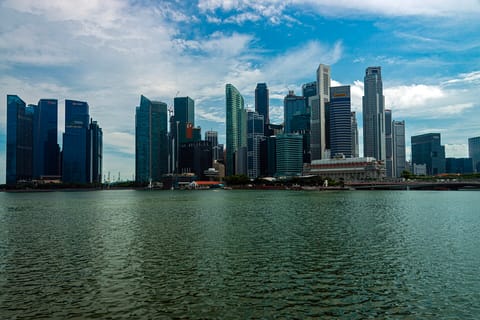

Archival luxury shirts are emerging as a niche alternative asset for Asia-Pacific family offices, driven by provenance premiums, growing regional auction infrastructure, and supply-demand imbalances mirroring early whisky cask market conditions. Allocation should be small, structured, and provenance-verified.
Luxury Shirts and Alternative Assets: Why Asia-Pacific Investors Are Paying Attention
A single bespoke shirt from Charvet on Paris's Place Vendôme can command upwards of US$600, yet the secondary market for investment-grade menswear and womenswear collectibles reached an estimated US$47 billion globally in 2023, according to data compiled by Bain & Company and Vestiaire Collective. For family offices in Hong Kong, Singapore, and Tokyo already diversifying into whisky casks, rare watches, and fine wine, luxury apparel — particularly limited-edition and archival pieces from heritage houses — is beginning to register as a legitimate allocation category rather than a lifestyle indulgence. The numbers are small relative to established alternative asset classes, but the trajectory is sharp enough to warrant a closer look.
If you manage a portfolio with meaningful exposure to tangible assets, this matters because the same scarcity dynamics, provenance premiums, and Asia-Pacific demand flows that have driven whisky cask appreciation of 564% over the past decade — per the Knight Frank Luxury Investment Index — are now surfacing in archival fashion. The underlying mechanics of collectible apparel investing are closer to rare spirits or vintage watches than most private bankers currently acknowledge. Understanding where the value actually sits, and which segments carry genuine liquidity, is the starting point for any serious allocation conversation.
The Provenance Premium: What Drives Value in Collectible Apparel
Provenance is the single most powerful price driver in collectible apparel, mirroring its role in fine wine and classic cars. A documented Hermès silk shirt worn by a named cultural figure at a historically significant event can achieve multiples of 10x to 50x its original retail price at auction. Christie's Hong Kong recorded a 2022 sale of archival Yves Saint Laurent pieces — including structured blouses from the 1970s Rive Gauche line — that averaged HK$280,000 per lot, well above pre-sale estimates. Provenance documentation, including original receipts, photographs, and chain-of-custody records, functions in apparel exactly as distillery certification does for Scotch whisky casks.
Heritage houses with unbroken archival records command the strongest premiums. Charvet, founded in 1838 and widely regarded as the world's oldest shirtmaker, maintains detailed client ledgers that authenticate bespoke commissions. Turnbull & Asser, holder of three Royal Warrants, similarly provides documentation that underpins secondary market confidence. For Asia-Pacific buyers, the additional scarcity layer comes from limited regional distribution: many heritage shirtmakers produce fewer than 2,000 bespoke units annually worldwide, creating genuine supply constraints that support price floors over time.
The comparison table below illustrates how key investment characteristics align across three alternative asset classes that Asia-Pacific family offices currently track:
- Whisky casks: Average annual appreciation 8-15%; high provenance documentation; illiquid 5-10 year hold; regulated storage requirements; strong Singapore and Hong Kong buyer base.
- Luxury watches: Average annual appreciation 5-12% for top references; deep secondary market liquidity; portable; well-established auction infrastructure in HK and Geneva.
- Archival luxury apparel: Appreciation highly variable (0-50x depending on provenance); thin but growing secondary market; storage-sensitive; auction infrastructure maturing rapidly in Asia.
Asia-Pacific Demand Flows and the Regional Scarcity Argument
Auction data from Sotheby's and Christie's Hong Kong shows that Asian buyers — predominantly from mainland China, Hong Kong, and Japan — accounted for 38% of global luxury fashion auction spend in 2023, up from 21% in 2018. This shift is structurally significant. Unlike Western collectors who have decades of institutional knowledge in apparel provenance, many Asian family offices are entering the category fresh, creating a demand surge that is not yet matched by equivalent supply of authenticated, investment-grade pieces in regional markets. This supply-demand imbalance is precisely the condition that generated outsized early returns for Asian whisky cask investors in the 2015-2020 window.
Singapore-based multi-family offices have begun including archival fashion within broader "passion asset" allocations, typically capped at 3-5% of total alternative asset exposure. The Monetary Authority of Singapore does not currently regulate collectible apparel as a financial product, meaning entry and exit remain unencumbered by the licensing frameworks that apply to securities or fund structures — a practical advantage for family offices seeking flexibility. In Japan, the National Tax Agency's treatment of collectible assets as potentially taxable on disposal has prompted some Tokyo-based investors to structure apparel holdings through Singapore special purpose vehicles, mirroring strategies already common in the watch and wine sectors.
Thailand and South Korea represent emerging demand centres. Seoul's growing influence as a global fashion capital — underscored by the city hosting 14 major international brand flagships opened between 2021 and 2023 — has created a sophisticated local collector base with genuine appetite for archival Western heritage pieces. Bangkok family offices, meanwhile, have shown particular interest in pieces with documented Southeast Asian provenance, such as bespoke commissions made for regional royalty or heads of state.
"Asian buyers accounted for 38% of global luxury fashion auction spend in 2023 — up from 21% in 2018 — creating a supply-demand imbalance that mirrors early conditions in the Asian whisky cask market."
Storage, Authentication, and the Operational Due Diligence Framework
Operational due diligence for apparel investment is more demanding than for watches or coins, and significantly more complex than whisky casks held in HMRC-bonded warehouses. Fabric degradation from humidity, UV exposure, and improper folding can materially impair value within a single decade of poor storage. Best-practice standards, as outlined by the Costume Institute at the Metropolitan Museum of Art and adopted by leading auction houses, specify climate-controlled storage at 65°F (18°C) and 45-55% relative humidity, acid-free tissue interleaving, and hanging only for structured garments with appropriate shoulder support. Investors who treat apparel storage with the same rigour applied to fine wine cellaring will preserve significantly more of their provenance premium over a 10-year hold.
Authentication has historically been the weakest link in the apparel investment chain, but technology is closing the gap rapidly. Entrupy, a New York-based authentication technology firm with a regional office in Singapore, uses AI-assisted microscopy to verify luxury goods with reported accuracy rates above 99% for major houses. Several Hong Kong auction specialists now require Entrupy or equivalent third-party authentication as a condition of consignment. For family office investors, insisting on authenticated provenance at the point of acquisition — not merely at exit — is non-negotiable operational practice.
Building a Position: Allocation Strategy and Entry Points
For Asia-Pacific investors considering a first allocation to collectible apparel, the most defensible entry points in the current market cluster around three specific segments. First, documented archival pieces from houses with unbroken heritage records — Charvet, Turnbull & Asser, Hilditch & Key — where provenance is verifiable and auction comparables exist. Second, limited-edition collaborative releases from contemporary houses with strong Asian cultural resonance, where the collector base is large, young, and growing. Third, pieces with documented celebrity or diplomatic provenance, where the narrative premium is both quantifiable and durable.
- Start with documented provenance: Never acquire without a full chain-of-custody record, original purchase documentation, and ideally third-party authentication.
- Size the position conservatively: Most institutional advisors suggest capping passion assets — including apparel — at no more than 5% of total alternative asset allocation for a first position.
- Plan the exit before entry: Identify your target auction house, expected hold period (minimum 7 years for meaningful appreciation), and storage solution before committing capital.
- Monitor regional auction calendars: Christie's and Sotheby's Hong Kong fashion sales, typically held in April and October, are the primary regional liquidity events.
- Consider currency exposure: Most auction pricing is in HKD or USD; Singapore-domiciled investors should factor FX risk into return projections.
The most common error among first-time apparel investors is conflating personal taste with investment merit — a bias that is particularly acute in fashion, where aesthetic preference can override objective provenance and liquidity analysis. Family offices with disciplined alternative asset frameworks should apply the same dispassionate criteria they use for whisky cask selection or watch reference vetting.
What to Watch: Key Dates and Forward-Looking Signals for Asia
The next 18 months will be telling for Asia-Pacific apparel investment. Christie's Hong Kong has signalled an expanded dedicated fashion auction for Q2 2025, which, if successful, would establish a meaningful regional price benchmark for the first time. The MAS's ongoing review of the Variable Capital Company framework — currently used by Singapore family offices to hold alternative assets — may create cleaner structures for pooled apparel investment vehicles by late 2025. Meanwhile, the reopening of Japan's inbound tourism market to full capacity is driving renewed interest in Tokyo's thriving vintage luxury sector, with Harajuku and Daikanyama dealers reporting 40% year-on-year increases in high-value archival transactions through Q1 2024.
Investors tracking these signals should watch Christie's Hong Kong's April 2025 auction catalogue for apparel lot volume and estimate ranges as a leading indicator of institutional appetite. If average lot estimates exceed HK$150,000 for heritage shirtmakers specifically, it will signal that the category has crossed the threshold from collector curiosity to investable asset class in the region's most important auction market. At that point, early-mover family offices will already hold positions — and the entry premium for latecomers will be measurable and real. Speak to your alternative asset advisor now about whether a small, structured allocation to authenticated archival apparel belongs in your next portfolio review.
Frequently Asked Questions
Luxury shirts as alternative assets: how liquid is the secondary market in Asia?
Liquidity remains thin compared to watches or whisky casks, but is improving. Christie's and Sotheby's Hong Kong now hold dedicated fashion auctions twice yearly, and specialist dealers in Tokyo and Singapore provide over-the-counter liquidity for authenticated heritage pieces. Investors should plan for a minimum 7-year hold to access meaningful price appreciation and should not rely on rapid exit.
Which regulatory framework governs collectible apparel investment in Singapore?
The Monetary Authority of Singapore does not currently classify collectible apparel as a regulated financial product. Holdings can be structured through Variable Capital Companies or standard SPVs. Investors should obtain independent tax advice, particularly regarding GST treatment on acquisition and disposal, and should monitor MAS framework updates expected in late 2025.
What authentication standards should Asia-Pacific investors require before acquiring archival luxury apparel?
Investors should require original purchase documentation, a full chain-of-custody record, and independent third-party authentication from a recognised provider such as Entrupy or a major auction house specialist. Christie's and Sotheby's Hong Kong both require third-party authentication as a condition of consignment, making this the de facto market standard for investment-grade pieces.
How does apparel investment compare to whisky cask investment for a Singapore family office?
Whisky casks offer more predictable appreciation curves, stronger regulatory infrastructure (HMRC bonded warehouses), and a more developed Asia-Pacific specialist. Apparel offers higher variance returns, thinner liquidity, and greater storage complexity, but also the potential for exceptional provenance-driven premiums. Most advisors suggest apparel as a small complement to — not a replacement for — established alternative asset positions in spirits, watches, or wine.
What storage conditions are required to preserve the investment value of luxury apparel?
Best-practice standards specify climate-controlled storage at 18°C and 45-55% relative humidity, acid-free tissue interleaving, and appropriate hanging or flat storage depending on garment construction. Failure to maintain these conditions can cause irreversible fabric degradation that materially impairs provenance value. Several Singapore and Hong Kong specialist storage providers now offer apparel-specific vaults modelled on fine wine cellar standards.
Source: Whisky Bulletin coverage of cask investment on Whisky Bulletin.
💼 Exploring alternative asset allocation? Speak to Whisky Cask Club — Singapore's leading specialists in Scottish whisky cask investment.