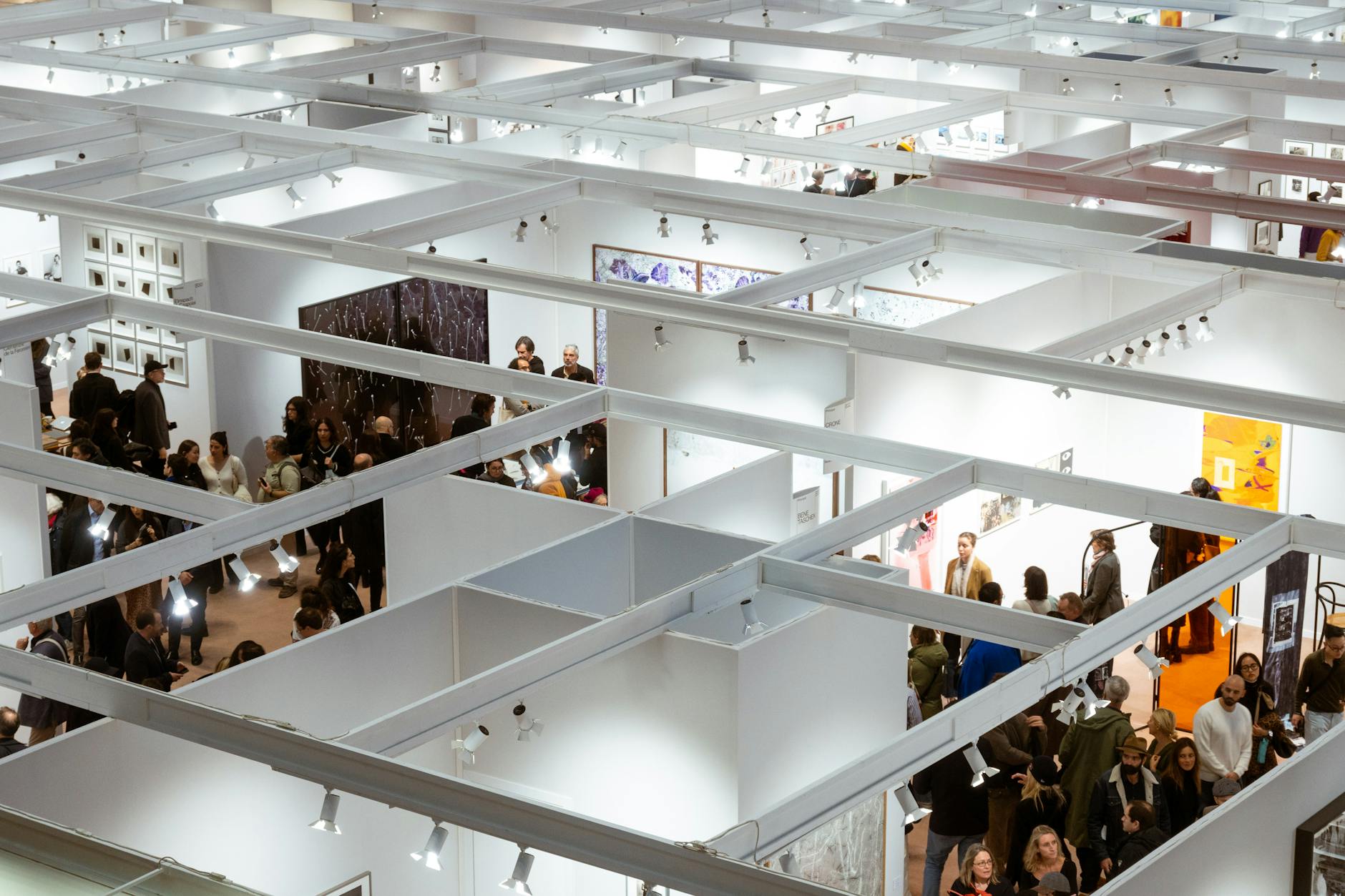
Frieze New York 2026 runs 9-12 May at The Shed, with nine concurrent shows offering Asian family offices live price discovery in a contemporary art market projected to hit US$65 billion by 2027.
Why Should Asian Family Offices Watch Frieze New York 2026?
Frieze New York 2026 opens at The Shed on 9 May with sales velocity that Asian family offices cannot afford to ignore — the fair's 2025 edition cleared an estimated US$180 million in transactions across 67 galleries, with Asia-Pacific buyers accounting for roughly 22% of declared sales according to data circulated by ArtTactic. For private banks in Singapore and Hong Kong building art allocations of 5-10% within ultra-high-net-worth portfolios, the satellite exhibitions running alongside Frieze are where pricing signals, primary market access, and gallery relationships are forged.
The reason this matters personally for any Asia-based allocator is simple: the Citi Global Art Market Disruptors report pegs blue-chip contemporary art's 10-year compound annual return at 8.3%, outpacing the MSCI World's 7.6% over the same window, and roughly 38% of new collectors entering the global market in 2025 came from Asia-Pacific. If your family office has not yet built a curatorial map of New York's May week, you are bidding blind against Korean conglomerate trusts and Hong Kong single-family offices who already have analysts on the ground at The Shed.
Nine concurrent exhibitions across Manhattan and Brooklyn deserve serious portfolio attention this week — not as cultural tourism, but as live price discovery for an asset class projected to hit US$65 billion globally by 2027.
What Is Frieze New York And How Does It Work?
Frieze New York is the North American flagship of the Frieze art fair group, founded in London in 2003 and now owned by Endeavor Group Holdings, which acquired the platform in 2016 for an undisclosed sum widely reported above US$30 million. The fair runs annually in early May at The Shed in Hudson Yards, with around 65-70 invited galleries and a tightly curated focus that distinguishes it from the larger Art Basel Miami Beach.
Pricing at Frieze New York typically ranges from US$15,000 for emerging primary-market works to US$8 million-plus for secondary blue-chip pieces from artists such as Yayoi Kusama, Yoshitomo Nara, and Lee Ufan — all of whom have deep Asian collector bases. According to Artprice data, Asian buyers accounted for 34% of global contemporary auction turnover in 2025, a figure that has doubled since 2018.
Asia-Pacific collectors absorbed an estimated US$40 million of Frieze New York 2025 transaction volume — a share that has grown every year since 2021, when Hong Kong reopened to international art shipping.
Which Manhattan Gallery Shows Offer The Strongest Investment Thesis?
Direct answer: Hauser & Wirth's Mark Bradford retrospective on 22nd Street and David Zwirner's Yayoi Kusama presentation in Chelsea are the two highest-conviction stops for Asian allocators this May. Bradford's auction record set at Phillips Hong Kong in 2024 at HK$58 million confirms his pricing power in regional secondary markets, while Kusama remains the single most-traded Asian-origin artist by dollar volume globally.
Pace Gallery's Lee Ufan exhibition in Chelsea is the third anchor — Lee's Dansaekhwa-era works have appreciated at roughly 14% annually since 2019 according to Seoul Auction data, and Korean family offices including those linked to the Samsung and Hyundai dynasties have been quietly accumulating across both primary and secondary channels. Gagosian's Takashi Murakami presentation completes a quartet of Asia-relevant blue-chip shows that any private banker briefing a Tokyo or Singapore client should physically attend.
For family offices building first-time art allocations, the gallery-show route offers cleaner provenance and lower buyer premiums than auction houses, where Sotheby's and Christie's typically charge 26% on hammer prices below US$1 million.
What Returns Do Contemporary Art Investments Generate For Asian Investors?
Direct answer: blue-chip contemporary art has delivered 8-12% annualised returns to disciplined Asian collectors over the past decade, with concentrated exposure to Japanese and Korean artists outperforming the broader index. Data from the Deloitte Art & Finance Report 2025 shows that 89% of Asian wealth managers now view art as a legitimate asset class, up from 53% in 2014.
The Artprice100 index, which tracks the top 100 most-traded artists by auction turnover, posted a 7.1% gain in 2025 versus a 4.2% return for the S&P 500 Art Index. Notable outperformers with Asia-Pacific demand drivers included Yoshitomo Nara (+18%), Liu Ye (+22%), and Matthew Wong (+31%), the latter following posthumous market discovery led by Hong Kong and Taipei collectors.
Which Downtown And Brooklyn Shows Should Allocators Prioritise?
Direct answer: five downtown and Brooklyn exhibitions warrant a half-day allocation from any visiting Asian collector or advisor. The geographic spread matters because emerging-market pricing — where 3-7x appreciation potential lives — sits outside the Chelsea blue-chip corridor.
- The Drawing Center, SoHo: Group show featuring three Singaporean and Filipino artists with primary market entry points US$8,000-25,000
- James Cohan, Tribeca: Firelei Báez solo presentation; her auction record cleared US$1.9 million at Sotheby's in 2024
- Jack Shainman, The School: Worth the Hudson Valley drive for institutional-grade Kerry James Marshall holdings
- Pioneer Works, Red Hook: Experimental programming where MoMA and Guggenheim curators source acquisitions
- Petzel Gallery, Chelsea: Cosima von Bonin survey; consistently strong European institutional demand signals
The Drawing Center show is particularly worth flagging for Singapore family offices given the Economic Development Board's ongoing efforts to position the city-state as Southeast Asia's contemporary art hub, with the National Gallery Singapore acquisition budget reportedly rising 18% for the 2026 fiscal year.
Why Are Asian Investors Buying Contemporary Art At Frieze?
Direct answer: Asian investors are buying at Frieze because the US dollar-denominated primary market still offers structurally lower entry pricing than Hong Kong or Seoul secondary markets, while providing portfolio diversification uncorrelated to regional equities. The Hong Kong Monetary Authority's family office regime, launched in 2023 and updated in 2025, has formally recognised art as an admissible alternative asset class under the Section 16 tax concession framework.
Singapore's Variable Capital Company structure, regulated by the Monetary Authority of Singapore, has similarly enabled at least 14 art-focused funds to launch since 2023, according to data from the Singapore Funds Industry Group. Private banks including UBS, DBS Private Bank, and Bank of Singapore have all expanded their art advisory desks in the past 18 months, with UBS reporting that art-collateralised lending against client holdings grew 31% year-on-year in 2025.
The structural shift is that art is no longer a passion purchase booked outside the balance sheet — it is increasingly a line item with documented appraisals, custody arrangements at Le Freeport Singapore, and insurance coverage through AXA Art and Hiscox.
How Does Art Investment Compare To Whisky Casks And Watches?
Direct answer: contemporary art offers higher absolute return potential than whisky casks or watches but with materially lower liquidity and higher transaction costs. Knight Frank's Luxury Investment Index 2025 ranked rare whisky as the top-performing collectible over the past decade at 280% appreciation, with art at 91% and watches at 138%.
- Art: 8-12% annualised, US$15,000 entry, 6-18 month liquidation window, 25-30% transaction costs
- Rare whisky casks: 9-12% annualised, US$5,000 entry, 5-15 year hold, 8-12% transaction costs
- Investment-grade watches: 5-9% annualised, US$15,000 entry, 3-12 month liquidation, 10-18% transaction costs
- Classic cars: 6-9% annualised, US$75,000 entry, 6-24 month liquidation, 8-15% transaction costs
For Asian family offices building a 10-15% alternatives sleeve, the institutional consensus emerging from private banking research desks is a 40/30/20/10 split across art, whisky, watches, and classic cars respectively — though the optimal mix varies significantly with the principal's holding horizon and tax residency.
What Are The Key Risks For First-Time Art Allocators?
Direct answer: the three principal risks are authentication exposure, illiquid market depth, and storage and insurance drag on net returns. Authentication scandals — most notably the Knoedler Gallery forgery case which cost collectors over US$80 million — remain a structural concern that pushes serious allocators toward post-1980 contemporary work with documented exhibition histories.
Storage at facilities such as Le Freeport in Singapore or the Geneva Freeport typically runs at 0.5-1.2% of insured value annually, with insurance adding a further 0.3-0.8%. For a US$2 million portfolio, that is up to US$40,000 per year in carry — material drag that any institutional allocator must build into return modelling.
What Are The Key Dates Ahead For Asian Art Allocators?
Frieze New York 2026 runs 9-12 May, immediately followed by the Sotheby's and Christie's marquee evening sales on 13-15 May, which together typically clear US$1.5-2 billion. Art Basel Hong Kong returns in March 2027, with TEFAF New York in May, and Frieze Seoul in September 2026 — the latter now considered a mandatory stop for any Asia-Pacific family office tracking the Korean collector cohort.
Watch also for the Mori Art Museum's annual acquisition disclosures in Tokyo, the Hong Kong Tatler Art Power List release each November, and the K11 Art Foundation's exhibition calendar from David Tang's successor entity. Each of these provides forward signal on where institutional Asian demand is concentrating across the next 12-24 months.
The action item for this week is concrete: if you cannot attend Frieze in person, instruct your private banker or art advisor to circulate sale results from the four anchor Chelsea galleries by 13 May, with secondary market comparables for any artist where your portfolio holds primary work. That single data pull will tell you more about your existing allocation's mark-to-market than any quarterly statement.
💼 Exploring alternative asset allocation? Speak to Whisky Cask Club — Singapore's leading specialists in Scottish whisky cask investment.
Frequently Asked Questions
What is Frieze New York and why does it matter to Asian investors?
Frieze New York is the North American flagship of the Frieze art fair group, held annually in May at The Shed in Hudson Yards. It matters to Asian investors because Asia-Pacific buyers accounted for roughly 22% of declared sales at the 2025 edition, making it a key venue for primary market price discovery.
How much do Frieze New York 2026 artworks cost?
Pricing ranges from US$15,000 for emerging primary market works to US$8 million-plus for secondary blue-chip pieces by artists such as Yayoi Kusama and Lee Ufan, both of whom have strong Asian collector bases.
What returns does contemporary art generate for family offices?
Blue-chip contemporary art has delivered 8-12% annualised returns over the past decade, with the Artprice100 index posting 7.1% in 2025. Asian-origin artists including Yoshitomo Nara and Liu Ye have materially outperformed the broader index.
How can Asian family offices structure art investments?
Singapore's Variable Capital Company structure regulated by MAS and Hong Kong's family office tax concession regime under Section 16 both formally recognise art as an admissible alternative asset class, enabling tax-efficient holding structures.
Which Frieze New York 2026 gallery shows are most relevant?
The four highest-conviction stops for Asian allocators are Hauser & Wirth's Mark Bradford retrospective, David Zwirner's Yayoi Kusama presentation, Pace Gallery's Lee Ufan exhibition, and Gagosian's Takashi Murakami show — all in Chelsea.