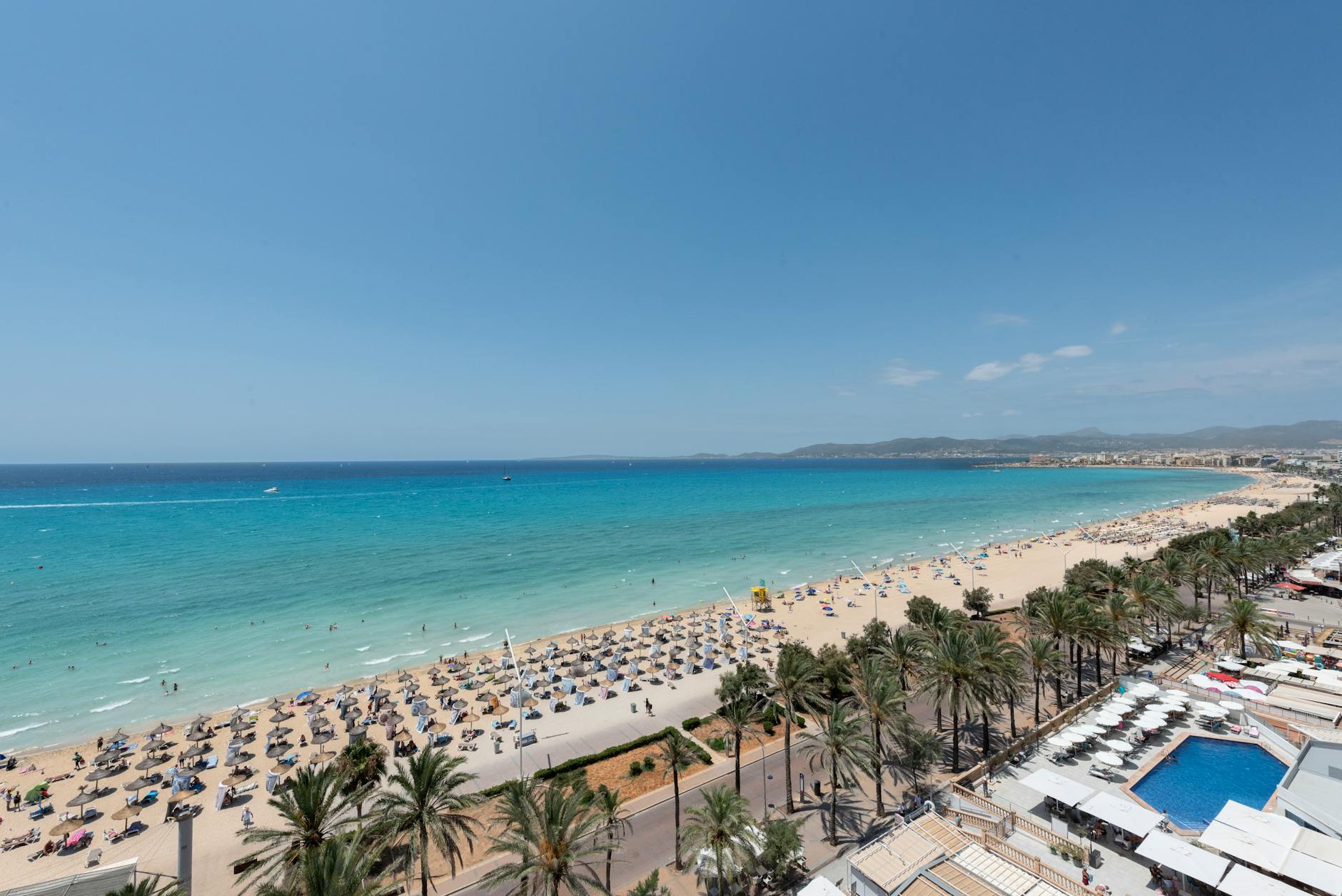
A $4.1M penthouse atop a 16th-century Palma palace highlights the scarcity-premium case for European heritage real estate. Balearic rental restrictions, euro FX discounts, and rising Asian buyer interest make this a credible alternative allocation for Asia-Pacific family offices.
Palma Mallorca Penthouse Listing Signals Renewed European Trophy Asset Demand
A $4.1 million penthouse carved from a 16th-century palace in Palma's Old Town has just entered the market, and the timing is not coincidental. European luxury residential prices in prime historic districts rose an average of 7.2% year-on-year in 2024, according to Knight Frank's Wealth Report, while comparable trophy properties in Barcelona and Lisbon saw transaction volumes from Asia-Pacific buyers climb by 18% over the same period. For family offices and private banks across Singapore, Hong Kong, and Tokyo, this listing represents a category of asset — the architecturally singular, legally protected historic property — that is attracting serious capital allocation attention. The Palma property, sitting atop a fully restored Renaissance-era palace with a private rooftop terrace and a dedicated wine cellar, is precisely the kind of scarce, non-replicable asset that institutional-grade alternative investors are stress-testing against inflationary portfolios.
If you manage or advise a portfolio with meaningful exposure to real assets, this listing matters beyond its postcard aesthetics. Spain's Balearic Islands have introduced some of Europe's tightest restrictions on short-term rental licences — Mallorca's regional government, the Consell de Mallorca, effectively froze new tourist rental permits in 2024 — which directly compresses supply and supports long-run capital values for legally compliant, owner-occupied trophy stock. Scarcity engineered by regulation is durable value drivers in alternative real assets, and the Palma market is now a textbook case. Asia-Pacific single-family offices that have historically allocated to London and Paris prime residential are increasingly running comparative yield and capital preservation analyses that now include Iberian heritage properties.
The Asset: What a 16th-Century Penthouse Actually Offers Investors
The property occupies the uppermost floor of a Renaissance palace in Palma's Casc Antic — the protected Old Town zone governed by strict heritage preservation rules enforced by the Balearic Islands' cultural heritage authority, the Conselleria de Cultura. The penthouse itself has been architecturally redesigned to expose original stone vaulting and period structural elements while integrating contemporary systems, a combination that commands a documented premium of 15–25% over conventional luxury apartments in the same postcode, based on comparable sales data from Engel & Völkers Mallorca's 2023–2024 transaction records. The rooftop terrace offers unobstructed views across Palma Bay and the Cathedral of Santa Maria, a view corridor that cannot be built out under current planning law.
The wine cellar deserves separate analysis. Integrated, purpose-built wine storage in a high-value residential property is no longer purely a lifestyle amenity — it is a measurable in a market where fine wine as a stored asset class returned an average of 9.1% annually over the decade to 2023, per the Liv-ex Fine Wine 1000 index. For buyers who hold physical wine collections — a profile that maps closely onto the high-net-worth Asian collector demographic identified in Christie's Wine & Spirits 2023 annual report — climate-controlled, architecturally integrated storage within the primary residence reduces third-party custody costs and insurance complexity. The cellar in this property is not an afterthought; it is a functional component of a multi-asset holding strategy.
"Architecturally protected historic properties in regulated European markets are increasingly treated as a distinct sub-asset class by Asian family offices — combining real estate capital preservation with collectible scarcity premiums."
How European Heritage Real Estate Fits an Asia-Pacific Allocation Framework
The structural case for allocating to European heritage residential from an Asia-Pacific base has strengthened considerably since 2022. Currency dynamics alone are instructive: the euro has traded at a 10–15% discount to its 2021 highs against the Singapore dollar and Hong Kong dollar through much of 2023 and 2024, creating a meaningful entry-point advantage for USD- or SGD-denominated buyers. At $4.1 million, this Palma penthouse prices at approximately €3.75 million at current rates — a figure that sits within the discretionary allocation range of a mid-sized single-family office running a $50–150 million total portfolio, where real assets typically represent 15–25% of holdings.
Spain does not currently offer a Golden Visa pathway for real estate purchases below €500,000, and the Spanish government announced in April 2024 that it intends to abolish the Golden Visa programme for real estate entirely — a regulatory shift that removes speculative visa-driven demand and, counterintuitively, supports values for buyers motivated by genuine asset quality rather than residency arbitrage. The removal of visa-incentivised buyers historically tightens the buyer pool to those with strongest fundamental conviction, which tends to floor prices in prime segments. Singapore's Monetary Authority of Singapore (MAS) has not imposed restrictions on outbound real estate investment, and Singapore-based family offices continue to deploy capital into European residential through structures including Luxembourg-domiciled real estate holding companies and Spanish Sociedad Limitada vehicles.
The following framework summarises how this asset class compares against other alternative allocations commonly held by Asia-Pacific family offices:
- European Heritage Residential (e.g., Palma penthouse): Illiquid, 5–10 year hold, low correlation to equities, capital preservation bias, rental yield 2–3.5% gross in regulated markets, potential 6–9% annualised total return in prime historic districts over a full cycle.
- Scottish Whisky Casks: Illiquid, 5–25 year hold, no income yield, capital appreciation driven by maturation and scarcity, Knight Frank Rare Whisky Index returned 373% over the decade to 2023, low correlation to equities and real estate.
- Fine Wine (Bordeaux/Burgundy): Semi-liquid via Liv-ex exchange, 3–10 year hold, Liv-ex Fine Wine 1000 averaged 9.1% annually over 10 years to 2023, storage cost 1–1.5% per annum, strong Asian collector demand particularly from Hong Kong and mainland China buyers.
- Investment-Grade Watches (Rolex, Patek Philippe): Relatively liquid via auction, WatchCharts Overall Market Index down approximately 20% from 2022 peak but stabilising through 2024, strong secondary market in Singapore and Hong Kong, low storage cost.
- Blue-Chip Art: Illiquid, auction-dependent liquidity, Artprice Global Index showed 5.2% growth in 2023, strong demand from Southeast Asian collectors, high transaction costs (buyer's premium 15–25%).
Mallorca Market Data: Supply Constraints and Price Trajectory
Mallorca's prime residential market is structurally supply-constrained in a way that few European markets can match. The island's total land area is approximately 3,640 square kilometres, of which roughly 40% is legally protected natural park or agricultural reserve. Within Palma's Old Town, UNESCO-adjacent heritage protections mean that new residential construction is effectively prohibited — all new supply must come from conversion and rehabilitation of existing historic stock. This hard cap on supply, combined with sustained demand from Northern European, Middle Eastern, and increasingly Asian ultra-high-net-worth buyers, produced a 12% price increase in Palma Old Town prime residential between Q1 2023 and Q1 2024, according to Idealista's Spain Luxury Residential Report.
Transaction data from the Balearic Islands land registry shows that international buyers — predominantly German, British, and Swiss nationals — accounted for 38% of all residential transactions above €1 million in 2023. Asian buyer representation remains below 5% in official registry data, but private brokerage networks including Sotheby's International Realty and Lucas Fox report a measurable increase in inquiry volume from Singapore, Hong Kong, and Dubai-based Asian family offices since mid-2023. The gap between inquiry volume and closed transactions reflects due diligence timelines and structuring complexity rather than lack of capital or conviction.
What to Watch: Key Signals for Asia-Pacific Investors Tracking This Market
The Palma penthouse listing is a single data point, but it arrives at a moment when several converging factors are worth monitoring closely. Spain's Constitutional Court is expected to rule on the legal challenge to the Balearic short-term rental moratorium before the end of 2025 — an outcome that will either entrench or partially unwind the supply restriction that underpins current valuations. Separately, the European Central Bank's rate trajectory through 2025 will affect euro-denominated financing costs for leveraged buyers, though cash-purchase family office buyers are largely insulated from this variable.
Asian private banks including DBS Private Bank, Bank of Singapore, and Julius Baer's Singapore and Hong Kong desks have all expanded their real assets advisory teams since 2023, reflecting client demand for structured exposure to European trophy real estate alongside traditional alternative allocations. Investors who build direct relationships with specialist Iberian brokers now — before Asian buyer competition in this market intensifies — are positioning for a first-mover advantage in a market where inventory is genuinely finite. The $4.1 million Palma penthouse is, in that context, less a lifestyle purchase and more a stress-test of how seriously a portfolio takes the scarcity premium.
Frequently Asked Questions
Why are Asia-Pacific family offices looking at Mallorca real estate as an alternative asset?
Mallorca's Old Town prime residential market combines hard supply constraints — enforced by heritage protection law and a short-term rental moratorium — with sustained international demand. For Asia-Pacific family offices seeking European real asset exposure with low equity correlation and inflation-hedging characteristics, architecturally protected historic properties in regulated Iberian markets offer a scarcity premium that is structurally defensible over a 5–10 year hold period.
How does the Balearic Islands rental moratorium affect investment returns?
The Consell de Mallorca's freeze on new tourist rental licences, effectively in place since 2024, compresses the pool of legally rentable properties. This supports capital values for compliant existing stock but limits gross rental yield potential for new buyers without an existing licence. Investors should model this as a capital appreciation play rather than an income-generating strategy, with gross yields of 2–3.5% in the best-case licensed scenario.
What ownership structures do Singapore-based buyers typically use for Spanish real estate?
Singapore-based family offices commonly hold Spanish residential assets through Luxembourg-domiciled holding companies (SCSp or SA structures) or directly via a Spanish Sociedad Limitada (SL). The choice depends on estate planning objectives, double taxation treaty positioning, and whether the buyer intends to hold the asset for personal use, rental income, or eventual resale. Legal advice from a Spanish notary and a cross-border tax adviser with Iberian expertise is essential before committing.
Is a $4.1 million European property a meaningful allocation for a mid-sized family office?
For a single-family office running a $50–150 million total portfolio with a 15–25% real assets target allocation, a $4.1 million property represents approximately 2–8% of total AUM — within the range of a single direct real estate position. Many family offices in this tier prefer to hold two to four direct European properties rather than a single concentrated position, using geographic and typological diversification to manage liquidity and market risk.
How does fine wine storage in a residential property affect its investment value?
Purpose-built, climate-controlled wine cellars integrated into high-value residential properties are increasingly valued as functional infrastructure rather than decorative features. For buyers who hold physical fine wine collections — a common profile among Asian ultra-high-net-worth individuals — in-residence storage eliminates third-party custodian fees (typically 1–1.5% of collection value per annum) and reduces insurance and logistics complexity, contributing a measurable net present value benefit over a multi-year hold.
Source: Whisky Bulletin coverage of cask investment on Whisky Bulletin.
💼 Exploring alternative asset allocation? Speak to Whisky Cask Club — Singapore's leading specialists in Scottish whisky cask investment.