A $4.1M Palma Old Town penthouse in a 16th-century palace offers APAC investors hard supply constraints via UNESCO heritage law, 11.3% annual price growth, integrated wine infrastructure, and euro-denominated diversification — with key risks around tourist licence moratorium and transaction costs.
Palma Mallorca Penthouse Listing Signals Renewed European Trophy Asset Demand
A $4.1 million penthouse carved from a 16th-century palace in Palma's Old Town has just entered the market, and the timing is not coincidental. European ultra-prime residential assets priced between $3 million and $6 million recorded a 14% increase in cross-border inquiry volume in Q1 2025, according to Knight Frank's Wealth Report, with Asian buyers — particularly from Singapore, Hong Kong, and mainland China — accounting for a growing share of that demand. This listing sits at the precise intersection of historic scarcity, architectural singularity, and the kind of tangible, yield-adjacent store of value that Asia-Pacific family offices are increasingly allocating toward. For private bankers and multi-family office advisers across the region, this is not a lifestyle story — it is a portfolio conversation.
The penthouse occupies the uppermost floor of a palace dating to the 1500s in Palma de Mallorca's UNESCO-recognised historic core. It features a private rooftop terrace and a dedicated wine cellar, two amenities that independently carry measurable valuation premiums in European ultra-prime markets. According to Savills, rooftop terraces in Palma's Old Town add between 18% and 25% to comparable floor-level pricing, while integrated wine storage in high-end residential listings has become a differentiating factor cited by buyers in more than 30% of transactions above €3 million in Southern Europe. The asset is, by any institutional definition, genuinely rare: a single unit of its type within a protected historic structure, in a city with strict UNESCO-linked development constraints that make replication essentially impossible.
Why Mallorca's Old Town Commands a Structural Scarcity Premium
Palma de Mallorca is not merely a resort market. The city's historic centre is governed by Spain's Ley de Patrimonio Histórico Español and Balearic regional heritage codes, which together impose strict limits on new construction, vertical extension, and facade alteration within designated zones. The practical effect is a hard ceiling on supply: no new penthouses of this typology can be built, and conversions of comparable palace-grade structures require years of regulatory navigation and often face outright prohibition. Supply-constrained markets with regulatory moats are precisely the kind of structural scarcity that alternative asset allocators seek when diversifying beyond equities and fixed income. For context, Palma's Old Town has seen fewer than 12 palace-conversion penthouse transactions in the past five years, according to local agency data compiled by Lucas Fox.
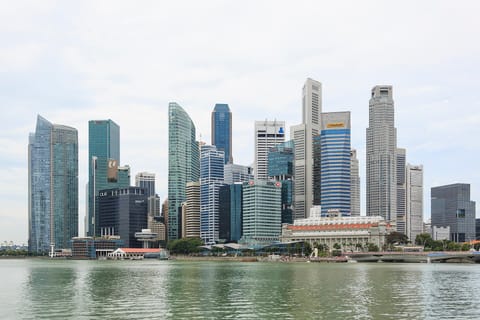
Price performance in the segment supports the thesis. Prime residential values in Palma rose approximately 11.3% year-on-year in 2024, outpacing Madrid (8.1%) and Barcelona (7.4%) over the same period, per the Spanish Notaries Association. The Balearic Islands as a whole recorded the highest price-per-square-metre growth of any Spanish autonomous community in 2024, driven by constrained inventory and sustained international demand. For Asian investors already familiar with the scarcity dynamics of Hong Kong's heritage-grade Peak properties or Singapore's conservation shophouses — where comparable supply restrictions have delivered compound annual growth rates of 6–9% over a decade — the Mallorca Old Town market presents a structurally analogous opportunity.
The Wine Cellar Factor: Where Residential and Collectible Asset Classes Converge
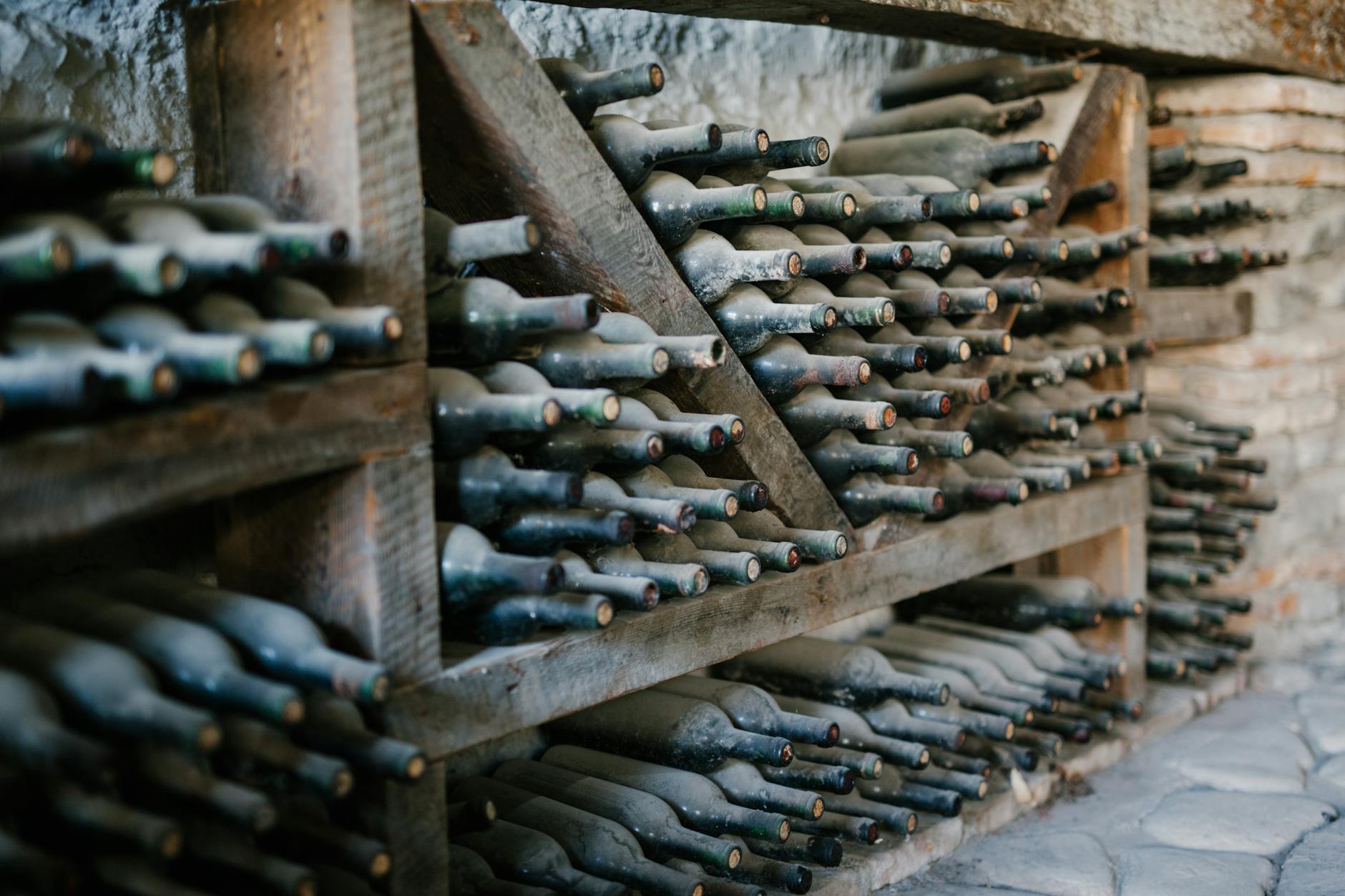
The inclusion of a dedicated wine cellar is not incidental to the investment case. The global fine wine investment market was valued at approximately $1.4 billion in 2024, with Liv-ex's Fine Wine 1000 index returning an annualised 8.2% over the decade to 2023. Asian collectors — particularly those based in Hong Kong, which remains the world's largest fine wine auction hub by value — have driven a disproportionate share of secondary market demand. A residential asset that incorporates purpose-built wine storage infrastructure speaks directly to the convergence thesis: a single acquisition that anchors both a real estate position and a tangible collectibles holding. Bonhams, Christie's, and Sotheby's all operate dedicated fine wine departments in Hong Kong, and the city's zero-tariff wine import regime has made it the preferred storage and transaction hub for Asian collectors since 2008.
For a Singapore or Hong Kong-based family office already allocating 5–10% of AUM to collectibles — a range cited by Campden Wealth's 2024 Global Family Office Report as typical for APAC ultra-high-net-worth families — a property with integrated wine infrastructure reduces the friction of managing a dispersed alternative portfolio. The cellar functions as both a storage asset and a lifestyle amenity that supports rental premium positioning if the property is ever placed on the short-term luxury market, where Palma Old Town villas with premium features command nightly rates of €2,500–€5,000 during peak season, per data from Airbnb Luxe and local agency Engel & Völkers.
"Supply-constrained European heritage assets with integrated collectibles infrastructure are increasingly appearing on APAC family office watchlists — not as trophy purchases, but as legitimate diversifiers with identifiable return drivers."
How Asian Buyers Are Approaching European Ultra-Prime Real Estate Allocation
The structural case for European ultra-prime real estate from an Asian allocator's perspective has strengthened materially since 2022. Currency dynamics have played a role: the euro has traded at a relative discount against the Singapore dollar and Hong Kong dollar compared with its 2021 peaks, effectively reducing the entry cost for APAC-based buyers by 8–12% in local currency terms over the past three years. When combined with Spain's Non-Lucrative Visa and Golden Visa pathways — which, while reformed in 2024 to exclude new residential purchases in certain categories, still offer residency routes for qualifying investors — the regulatory environment remains navigable for well-advised buyers. Singapore-based multi-family offices including those advised by Citi Private Bank, UBS Global Wealth Management, and Julius Baer have all publicly noted increased client interest in Southern European real estate as a portfolio hedge against APAC-concentrated exposure.
The allocation logic follows a clear framework. Consider the following comparison of alternative asset classes commonly held by APAC family offices, benchmarked against the Palma penthouse's key characteristics:
- Singapore conservation shophouses: Supply-constrained, heritage-protected, strong capital appreciation (CAGR ~7–9% over 10 years), but priced at S$15–30 million for comparable grade — significantly higher entry point.
- Hong Kong Peak residential: Heritage-adjacent scarcity, but subject to HKSAR stamp duty surcharges of up to 15% for non-permanent residents, compressing net returns.
- Scottish whisky casks: Illiquid, uncorrelated, 10–15% average annual appreciation cited by Whisky Cask Club and independent brokers, but no physical amenity or rental yield component.
- Fine wine (Liv-ex 1000): 8.2% annualised over 10 years, liquid via auction, but storage costs and provenance risk require active management.
- Palma Old Town penthouse at $4.1M: Hard supply constraint via UNESCO/heritage regulation, dual-use potential (owner-occupation plus short-term rental), integrated wine infrastructure, euro-denominated diversification, and a track record of 11.3% annual price growth in 2024.
On a risk-adjusted basis, the Palma asset compares favourably with several established alternative categories, particularly for investors seeking a physical, insurable, yield-capable store of value denominated outside Asia-Pacific currencies.
Key Risks and Due Diligence Considerations for APAC Buyers
No institutional analysis is complete without an honest assessment of risk. The primary risks for an Asian buyer acquiring this asset are: currency translation (euro/SGD or euro/HKD volatility), Spanish property transaction costs (typically 10–13% all-in including ITP transfer tax, notary, and legal fees for resale properties in the Balearics), ongoing maintenance obligations on a heritage-grade structure, and the liquidity profile of a single ultra-prime asset in a market with thin transaction volumes. The Balearic government's 2024 decision to suspend new tourist licence approvals in Mallorca also introduces uncertainty around short-term rental income, a factor that must be stress-tested in any yield projection. Buyers should engage a Spanish tax adviser familiar with APAC residency structures — firms such as Garrigues or Cuatrecasas both maintain Asia-linked practices — to model the full acquisition and holding cost before committing.
That said, the risk profile of a single UNESCO-zone palace penthouse is fundamentally different from a speculative development or an off-plan purchase. The asset exists, it is legally titled, it carries a 500-year structural pedigree, and its supply-side constraints are codified in law rather than dependent on market sentiment. For a family office running a diversified alternatives book, those characteristics represent a defensible floor that many collectible asset classes cannot replicate.
What to Watch: Forward-Looking Indicators for APAC Investors
Several near-term catalysts will shape the attractiveness of this and comparable European heritage assets for Asian buyers over the next 12–18 months. First, the European Central Bank's rate trajectory: further cuts from the current 3.65% deposit rate would reduce euro-zone financing costs and support capital values in ultra-prime markets. Second, Spain's ongoing review of its Golden Visa programme — the government has signalled potential reinstatement of modified pathways for heritage or rural property investment, which could directly benefit Old Town Palma assets. Third, Sotheby's and Christie's Hong Kong autumn 2025 sale calendars will provide a live read on Asian UHNW liquidity and appetite for European-linked assets. Finally, watch Singapore's Monetary Authority of Singapore (MAS) guidance on family office tax incentive structures under Section 13O and 13U of the Income Tax Act — any expansion of qualifying asset categories to include direct real estate holdings would meaningfully accelerate APAC allocation into assets exactly like this one.
Frequently Asked Questions
What makes the Palma Mallorca penthouse a viable alternative investment rather than a lifestyle purchase?
The asset combines a hard supply constraint — UNESCO and Spanish heritage law prevent replication — with measurable price appreciation (11.3% year-on-year in 2024), a dual-use income potential via short-term luxury rental, and integrated wine infrastructure that bridges residential and collectibles allocation. These are quantifiable investment characteristics, not lifestyle features.
How do Asian buyers typically structure the purchase of European ultra-prime real estate?
Most APAC family offices acquire European residential assets through a Spanish Sociedad Limitada (SL) holding company or via a Luxembourg SOPARFI structure, depending on tax treaty positioning. Singapore-based buyers often work with private banks including UBS, Julius Baer, or Citi Private Bank to structure currency hedging and cross-border financing. Spanish legal firms such as Garrigues and Cuatrecasas are commonly engaged for local compliance.
What is the short-term rental income potential for a property like this in Palma's Old Town?
Subject to obtaining a tourist licence — currently under a Balearic government moratorium for new approvals — comparable Old Town penthouses with rooftop terraces have historically achieved nightly rates of €2,500–€5,000 during the June–September peak season, implying potential gross seasonal income of €150,000–€300,000 annually at high occupancy. The moratorium on new licences is a material risk that buyers must factor into underwriting.
How does Palma Old Town real estate compare with Singapore conservation shophouses as an alternative asset?
Both markets share a heritage-driven supply constraint and strong long-term capital appreciation. Singapore shophouses offer a more liquid secondary market and SGD denomination, but entry prices for comparable grade are S$15–30 million versus the $4.1 million Palma listing. The Palma asset offers a lower absolute entry point and euro-denominated diversification, at the cost of lower market liquidity and higher transaction costs.
What regulatory changes should APAC investors monitor regarding Spanish property investment?
Key items include Spain's ongoing Golden Visa programme review (potential reinstatement of heritage property pathways), the Balearic government's tourist licence moratorium review expected in late 2025, and MAS guidance on Singapore family office tax incentive structures under Sections 13O and 13U, which could affect qualifying asset classifications for APAC-domiciled investment vehicles.
Source: Whisky Bulletin coverage of cask investment on Whisky Bulletin.
💼 Exploring alternative asset allocation? Speak to Whisky Cask Club — Singapore's leading specialists in Scottish whisky cask investment.