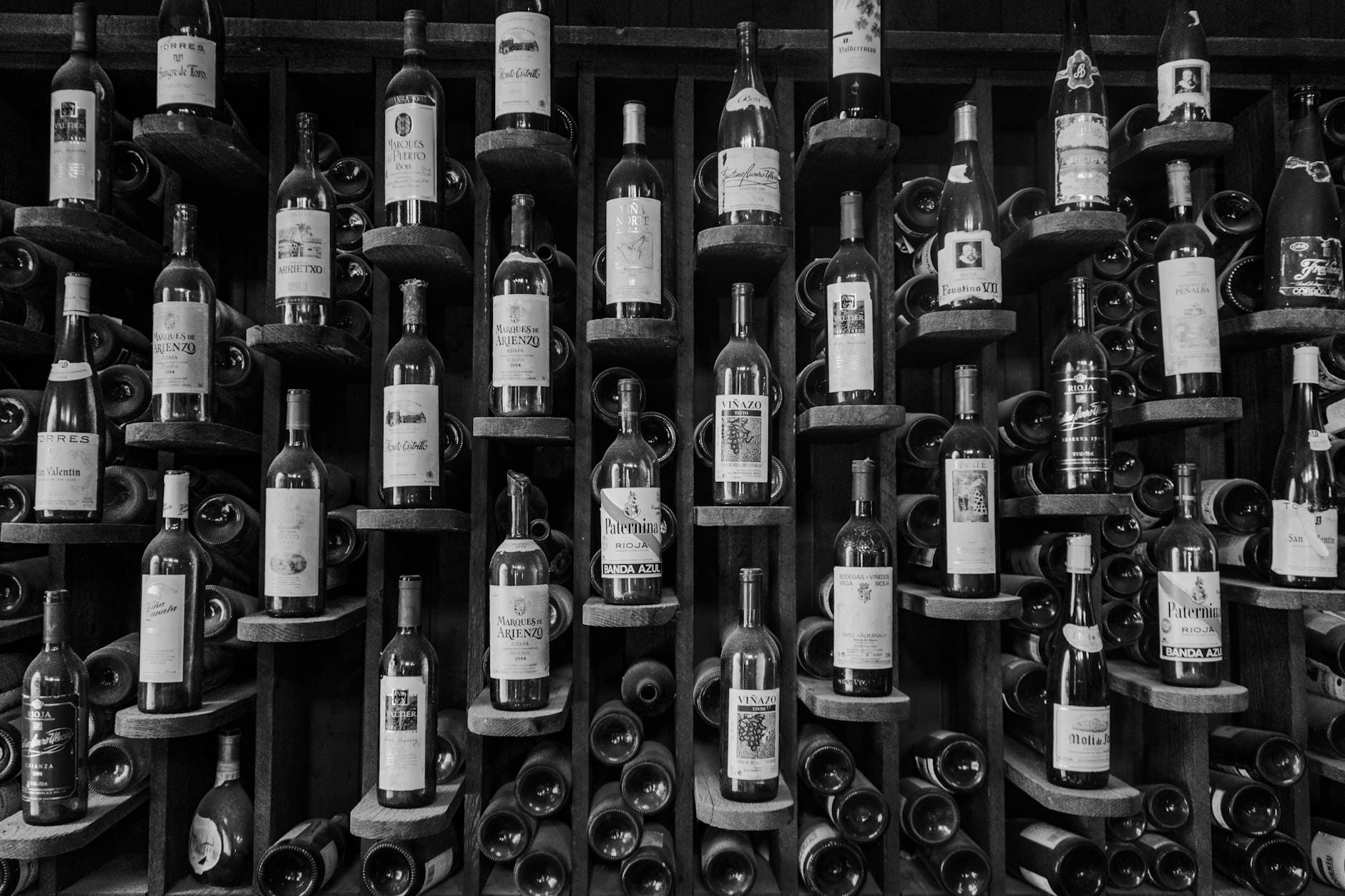
Private markets are projected to reach USD 26.7 trillion by 2030, but return compression in buyouts is pushing Asian family offices toward real assets and tangible alternatives like whisky casks, fine wine, and rare collectibles as genuine diversifiers.
Private Markets Growth Forecast: USD 26.7 Trillion and What It Means for Asian Investors
Private markets are on course to reach USD 26.7 trillion in assets under management by 2030, according to projections that have circulated among institutional allocators this year — a figure that, even accounting for a post-2021 slowdown in fundraising, represents a near-doubling from current levels. For family offices in Singapore, Hong Kong, and Tokyo, this trajectory is not a background statistic. It is the structural context within which every allocation decision — whether to private equity, private credit, real assets, or tangible alternatives such as whisky casks, fine wine, and rare collectibles — is being made right now.
The reason this matters personally to any Asian private banker or family office CIO is straightforward: as institutional capital crowds into mainstream private markets, the return premium that justified the illiquidity is compressing. The era of double-digit private equity returns driven by cheap leverage and multiple expansion is giving way to a more disciplined, operationally focused environment where differentiated assets — including hard, tangible alternatives — command renewed attention. Understanding where the growth is coming from, and where returns are resetting, is essential for anyone rebalancing a multi-asset private portfolio in 2024 and beyond.
Where the USD 26.7 Trillion Will Come From: Secondaries, Private Credit, and Real Assets
The composition of private markets growth matters as much as the headline number. Private credit is now the fastest-growing segment, with global AUM already exceeding USD 1.7 trillion and projected to surpass USD 2.8 trillion by 2028 according to data tracked by Preqin. Secondaries — the market for buying and selling existing private fund stakes — have expanded dramatically as liquidity-constrained limited partners seek exits outside traditional IPO windows. Secondary transaction volume reached approximately USD 114 billion in 2023, with Jefferies reporting that GP-led secondaries now account for roughly half of all deal flow.
Real assets, encompassing infrastructure, timberland, farmland, and increasingly, collectible tangibles, are also gaining structural allocation. Sovereign wealth funds in the region — including GIC and Temasek in Singapore, and Abu Dhabi Investment Authority, which is active across Asia — have publicly signalled increased real asset weightings as a hedge against persistent inflation. The shift toward real assets reflects a fundamental repricing of inflation risk, one that Asian family offices have been slower than their Western counterparts to act on, creating a window of relative opportunity.
Infrastructure and natural resources aside, the broader real asset category has expanded to include investment-grade collectibles. Whisky casks, fine wine, classic watches, and rare art have all attracted institutional-grade due diligence frameworks over the past five years, with platforms and specialists offering structured access, independent valuation, and defined exit pathways. This is no longer a hobbyist market — it is a recognised sub-segment of the real asset allocation bucket.
Returns Are Resetting: What the Data Shows
The return reset in private markets is well-documented. Cambridge Associates data shows that US buyout funds from the 2019–2021 vintage are generating net IRRs in the low-to-mid teens, compared with the high teens and above seen in earlier vintages that benefited from falling interest rates and expanding exit multiples. The cost of debt has risen by more than 400 basis points since 2022, compressing leveraged buyout returns structurally. Investors who locked into private equity commitments at peak valuations in 2021 are now navigating a markedly different exit environment, with IPO windows narrow and strategic M&A subdued.
This return compression has a direct consequence for portfolio construction. If the illiquidity premium in mainstream private equity is narrowing, the case for diversifying into less correlated, tangible private assets strengthens. The Knight Frank Luxury Investment Index, which tracks ten categories of collectible assets, recorded a 7% aggregate gain in 2023, with rare whisky outperforming at 9% over the same period. Fine wine, tracked by Liv-ex, showed more volatility but retained its long-run compound annual growth rate of approximately 10% over the past decade. These are not speculative figures — they are audited, index-tracked data points that institutional allocators are incorporating into their models.
"As mainstream private equity returns compress under higher rates and tighter exit multiples, tangible alternatives — whisky casks, fine wine, rare watches — are moving from the periphery to the core of Asian family office alternative allocations."
Asia-Pacific Demand Dynamics: Regional Buyers Are Reshaping Collectible Markets
Asia-Pacific investors are not passive observers in the collectible alternatives space. Auction data from Christie's and Sotheby's consistently shows that Asian buyers — predominantly from mainland China, Hong Kong, Singapore, and Taiwan — account for between 35% and 45% of global fine wine and rare spirits auction turnover. At Bonhams Hong Kong and Sotheby's Hong Kong, whisky lots have set regional records, with a single cask of Macallan achieving over USD 2.7 million at auction in 2023. The concentration of high-net-worth wealth in Asia, combined with cultural familiarity with Scotch whisky as a prestige asset, makes this region the marginal buyer in a supply-constrained market.
Singapore has emerged as a particularly important hub, with the Monetary Authority of Singapore (MAS) having clarified the regulatory treatment of collective investment schemes involving physical assets, providing greater certainty for family offices structuring exposure through fund vehicles. The Variable Capital Company (VCC) framework, introduced in 2020, has been adopted by several alternative asset managers offering whisky cask and fine wine fund structures, giving Singapore-domiciled family offices a tax-efficient, regulated wrapper for these allocations. Hong Kong's family office tax concession regime, expanded in 2023, similarly supports broader alternative asset exposure for qualifying single-family offices.
Japanese ultra-high-net-worth investors have also increased their engagement with tangible alternatives, partly driven by yen depreciation eroding the real value of domestic bond holdings. With the Bank of Japan only beginning to normalise rates in 2024, the structural case for hard assets denominated in foreign currencies remains compelling for Japanese allocators. Whisky, in particular, carries additional cultural resonance in Japan, where domestic distilleries such as Nikka and Suntory have global brand equity, creating a natural gateway into Scotch cask investment as a portfolio complement.
Building a Tangible Alternative Allocation Alongside Private Markets Growth
For investors benchmarking against the USD 26.7 trillion private markets universe, the practical allocation question is how to size and structure exposure to tangible alternatives. The following framework reflects how sophisticated Asian family offices are currently approaching this:
- Core private markets (60–70% of alternatives budget): Private equity, private credit, infrastructure — accessed through established global GPs such as KKR, Blackstone, Brookfield, or regional specialists including PAG and Hillhouse.
- Real assets and inflation hedges (15–20%): Timberland, farmland, infrastructure debt, and physical commodities. This bucket increasingly includes whisky casks and fine wine as inflation-correlated, supply-inelastic assets.
- Tangible collectibles (5–10%): Rare whisky casks, investment-grade wine, classic watches, and art — accessed through specialist platforms with independent valuation, bonded storage, and structured exit options.
- Secondaries and co-investments (10–15%): Opportunistic exposure to discounted private fund stakes via secondary managers such as Lexington Partners, Hamilton Lane, or Pantheon, which are all active in Asia-Pacific LP markets.
- Liquidity reserve (5%): Short-duration private credit or listed alternatives to manage liquidity needs without sacrificing the illiquidity premium entirely.
The key discipline is treating tangible alternatives not as a discretionary lifestyle allocation but as a structured portfolio component with defined entry criteria, valuation methodology, and exit horizon. Whisky casks, for example, are typically held for five to fifteen years, with value accruing as the spirit matures and the volume of liquid decreases through evaporation — the so-called "angel's share." This natural scarcity dynamic is independent of financial market cycles, providing genuine diversification rather than simply adding another beta exposure.
Frequently Asked Questions
How large are private markets expected to be by 2030?
Private markets are projected to reach USD 26.7 trillion in AUM by 2030, driven by continued growth in private credit, secondaries, real assets, and infrastructure, even as the pace of expansion moderates from the 2020–2021 peak.
Why are private equity returns resetting and what does this mean for allocators?
Higher interest rates have increased the cost of leveraged buyout financing by over 400 basis points since 2022, compressing net IRRs from the high teens to the low-to-mid teens for recent vintages. This narrows the illiquidity premium and encourages diversification into less rate-sensitive alternatives, including tangible real assets.
How are Asian family offices accessing whisky cask and fine wine investments?
Singapore-domiciled family offices increasingly use the Variable Capital Company (VCC) framework to access whisky cask and fine wine through regulated fund structures. Direct cask ownership via specialist brokers such as Whisky Cask Club is also common, offering bonded storage in Scotland, independent valuation, and defined exit pathways.
What role do secondaries play in the private markets growth story?
Secondary transaction volume reached approximately USD 114 billion in 2023, with GP-led deals accounting for roughly half of activity. Secondaries provide liquidity for LPs unable to wait for traditional exits and offer new investors discounted entry points into seasoned portfolios, making them one of the fastest-growing segments within private markets.
Which regulators in Asia-Pacific are most relevant for alternative asset fund structures?
The Monetary Authority of Singapore (MAS) oversees the VCC framework and collective investment scheme regulations relevant to physical asset funds. Hong Kong's Securities and Futures Commission (SFC) governs family office tax concession eligibility. Both regulators have moved to provide greater certainty for alternative asset structures over the past three years.
What to Watch: Key Developments for Asia-Pacific Alternative Investors
The next twelve months will be shaped by several converging forces that Asian allocators should monitor closely. The Bank of Japan's rate normalisation path will determine how aggressively Japanese family offices rotate out of domestic fixed income and into foreign-denominated hard assets. MAS consultations on the expansion of the VCC framework to include additional asset classes could open new regulated structures for collectible alternatives. Secondary market pricing — currently at discounts of 10–15% to NAV for buyout fund stakes — will tighten as rate expectations stabilise, closing a window for opportunistic entry. And the 2025 auction calendar, with major Scotch whisky and fine wine sales scheduled at Sotheby's Hong Kong and Christie's Singapore, will provide fresh price discovery data for cask and bottle valuations.
For Asian family offices navigating a private markets universe on course for USD 26.7 trillion, the actionable step is not to chase mainstream private equity at compressed returns, but to build a disciplined allocation to tangible, supply-constrained real assets — whisky casks, fine wine, and rare collectibles — that offer genuine cycle independence and regional demand tailwinds. Review your current alternatives budget, identify the real asset sub-allocation, and engage specialist platforms that can provide institutional-grade access, storage, valuation, and exit infrastructure.
Source: Whisky Bulletin coverage of cask investment on Whisky Bulletin.
💼 Exploring alternative asset allocation? Speak to Whisky Cask Club — Singapore's leading specialists in Scottish whisky cask investment.