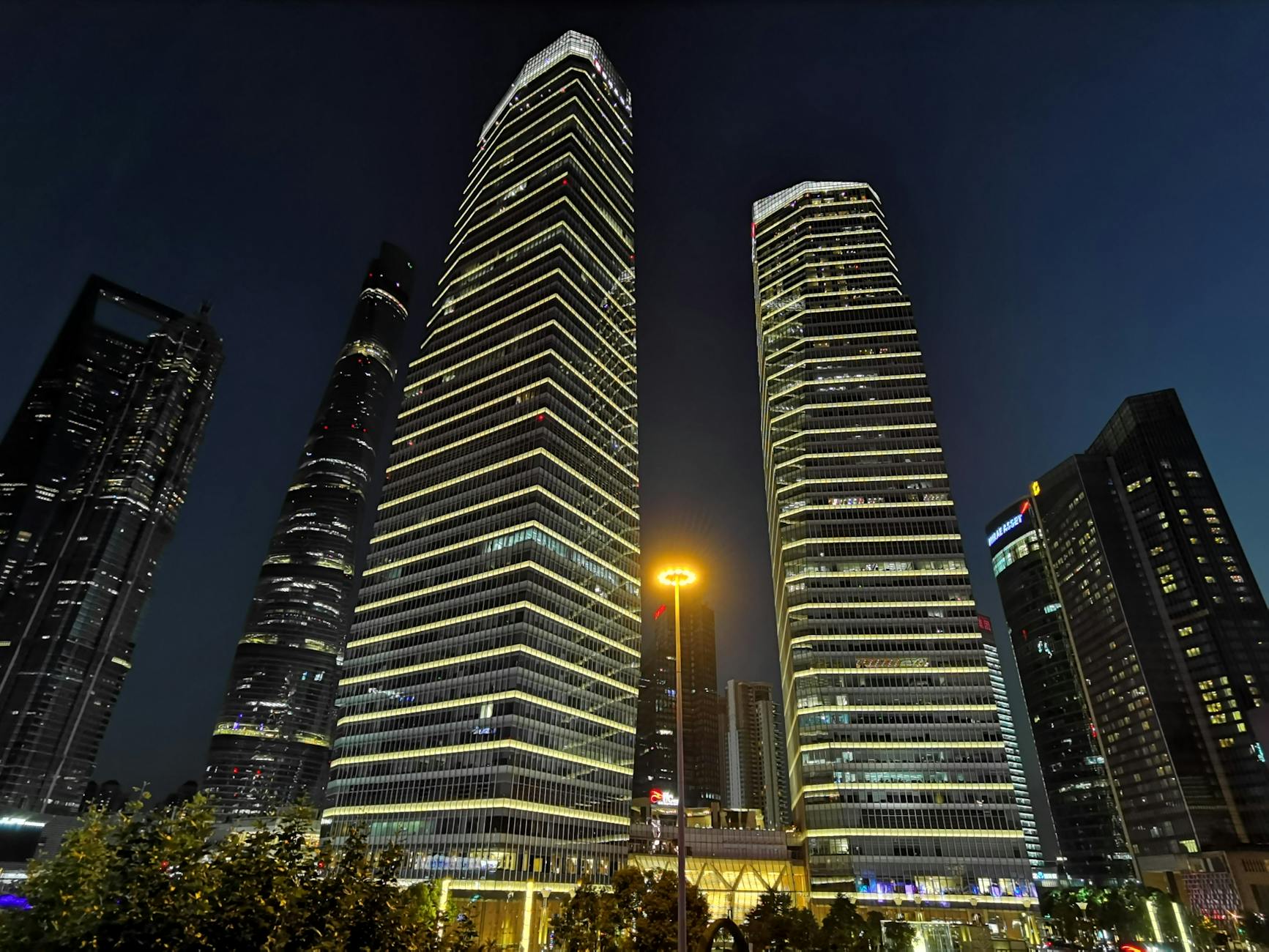
Saudi Arabia's US$925B Public Investment Fund has opened a Shanghai office, signalling scaled China investment ambitions. Asian family offices should track three emerging co-investment corridors in PE, infrastructure, and tangible alternatives as Gulf-China capital flows accelerate.
Saudi PIF's Shanghai Move Signals a New Phase in Cross-Border Alternative Asset Flows
Saudi Arabia's Public Investment Fund, which manages approximately US$925 billion in assets under management, opened a permanent office in Shanghai in mid-2025, marking the first time the Riyadh-based sovereign wealth fund has established a physical presence on the Chinese mainland. The move is not a symbolic gesture. It represents a structural commitment to sourcing, executing, and managing investments across one of the world's most capital-intensive economies — with direct implications for how alternative asset capital moves between the Gulf, China, and the broader Asia-Pacific region. For Asian family offices and private banks tracking sovereign capital flows, this is precisely the kind of institutional signal that reshapes allocation thinking.
If you manage alternatives exposure for a high-net-worth family in Singapore, Hong Kong, or Tokyo, the PIF Shanghai opening matters for a specific reason: sovereign wealth funds of this scale function as leading indicators. When a US$925 billion fund plants a flag in Shanghai, it validates deal flow, regulatory access, and return expectations that smaller allocators can follow. PIF's presence will accelerate co-investment structures, secondary market liquidity, and cross-border fund partnerships — all of which create downstream opportunities for Asian investors who are positioned early. The question is not whether this matters. It is how quickly the ripple effects reach your portfolio.
Why Shanghai, and What PIF Is Actually Looking For
PIF's choice of Shanghai over Beijing or Hong Kong reflects a deliberate investment thesis rather than a diplomatic preference. Shanghai is China's financial and commercial hub, home to the Shanghai Stock Exchange, the China Interbank Bond Market, and the headquarters of major state-owned enterprises across energy, infrastructure, and technology. PIF has previously disclosed allocations to Chinese electric vehicle manufacturers, logistics platforms, and renewable energy developers — all sectors where Shanghai-based deal origination is structurally superior. The office positions PIF to engage directly with Chinese corporates, regulators including the China Securities Regulatory Commission (CSRC), and local fund managers without the intermediary friction of routing everything through Hong Kong.
PIF's broader international strategy has accelerated sharply since 2021. The fund's overseas assets have grown from roughly 20 percent of its portfolio to a target of 30 percent by 2030, with Asia representing one of the highest-conviction regional allocations. In China specifically, PIF has participated in deals spanning logistics real estate, clean energy infrastructure, and consumer technology. The Shanghai office will support outbound dealmaking — meaning Chinese capital flowing into Saudi Vision 2030 projects — as well as inbound allocations into Chinese private markets. This bilateral flow dynamic is what makes the office strategically different from a standard liaison presence.
"When a sovereign fund of PIF's scale opens a permanent office in Shanghai, it is not exploring the market — it is operationalising a conviction it already holds. Asian co-investors should treat this as a structural green light, not a trial balloon."
Three Investment Corridors Now Opening for Asian Allocators
PIF's Shanghai presence creates three identifiable corridors through which Asian alternative asset investors — including family offices registered in Singapore under MAS guidelines, Hong Kong-licensed fund managers, and Japanese institutional allocators — can expect increased deal flow and co-investment access.
- Private equity and growth capital in Chinese industrials: PIF has a stated mandate to invest in sectors aligned with Saudi Vision 2030, including advanced manufacturing, clean energy, and logistics. Chinese companies in these verticals are natural targets. Asian PE funds with existing China exposure will find PIF a credible co-investor, reducing concentration risk and improving deal terms.
- Real assets and infrastructure: PIF's infrastructure arm has committed capital to projects across NEOM and the Red Sea development. Chinese construction and engineering firms are heavily involved. The Shanghai office will facilitate equity co-investment structures between Chinese SOEs and Gulf sovereign capital, with Asian infrastructure funds potentially participating as third-party co-investors.
- Alternative stores of value — including tangible assets: Sovereign funds of PIF's profile increasingly allocate to non-correlated tangible assets as portfolio stabilisers. Whisky casks, rare wines, and collectibles have appeared in family office portfolios linked to Gulf sovereign networks. As PIF deepens its Asia presence, the secondary market for premium tangible alternatives in Singapore and Hong Kong is likely to see increased institutional validation.
Each of these corridors carries a different risk-return profile, but all three benefit from the same underlying dynamic: sovereign capital moving at scale creates liquidity and price discovery that elevates the entire asset class. Asian allocators who understand this mechanism are already repositioning.
The Regulatory and Structural Context Asian Investors Must Understand
Operating in China requires navigating a regulatory environment that has evolved significantly since 2020. The CSRC's reforms to the Qualified Foreign Institutional Investor (QFII) programme, combined with the expansion of the Stock Connect scheme between Hong Kong, Shanghai, and Shenzhen, have made it structurally easier for foreign sovereign capital to access Chinese markets. PIF's Shanghai office will operate under China's existing foreign investment frameworks, including the Foreign Investment Law enacted in 2020, which provides national treatment to qualifying foreign investors. For Asian family offices considering co-investment alongside PIF in Chinese private markets, understanding these frameworks is not optional — it is the foundation of any credible due diligence process.
Singapore's Monetary Authority of Singapore (MAS) has also been active in facilitating Gulf-Asia capital flows. The Singapore-Saudi Arabia bilateral investment framework, strengthened in 2023, provides a regulatory bridge that many Singapore-domiciled family offices are already using to structure cross-border positions. Hong Kong's SFC has similarly engaged with Gulf sovereign funds on fund authorisation pathways. These regulatory tailwinds mean that the infrastructure for Asian investors to participate alongside PIF in China-linked deals is more accessible now than at any prior point. The Shanghai office accelerates the timeline, but the legal and structural groundwork has been laid.
Data Points That Define the Opportunity
Context without numbers is commentary. The following data points define the scale and specificity of what PIF's Shanghai office represents for Asian alternative asset allocators:
- US$925 billion: PIF's current AUM, making it the world's fourth-largest sovereign wealth fund by assets.
- 30 percent: PIF's target overseas asset allocation by 2030, up from approximately 20 percent in 2022.
- US$40 billion+: Estimated value of PIF's existing Asia-Pacific investment portfolio, spanning Japan, South Korea, China, and Southeast Asia.
- US$1.5 trillion: Saudi Vision 2030's total projected investment requirement, a significant portion of which is expected to be co-financed by Chinese and Asian capital partners.
- 6.5 percent: Average annual return target for PIF's international portfolio, benchmarked against a diversified mix of public equities, private equity, and real assets.
- 2020: Year China's Foreign Investment Law came into force, providing the legal framework under which PIF's Shanghai entity will operate.
These figures collectively describe an allocator that is not dabbling in Asia — it is building a permanent, scaled presence with specific return targets and regulatory anchors. For Asian co-investors, the implication is that PIF will be a consistent, repeat participant in regional deal markets, not an opportunistic visitor.
What to Watch: Key Developments in the Next 12 Months
The Shanghai office opening is the beginning of a multi-year capital deployment cycle. Asian investors tracking this story should monitor the following developments closely over the next 12 months:
- First disclosed Shanghai-originated deal: Watch for PIF's first publicly announced investment sourced through the Shanghai office. The sector and structure will signal where the fund's China conviction is highest.
- Co-investment framework announcements: PIF has a history of establishing formal co-investment vehicles with regional partners. A China-focused co-investment structure, potentially involving Singapore-domiciled family offices or Hong Kong-licensed managers, could be announced within 18 months.
- CSRC registration updates: Monitor PIF's QFII registration status and any updates to its onshore investment quota, which will determine the scale of direct A-share market participation.
- Saudi-China bilateral trade and investment data: The Saudi National Bureau of Statistics and China's Ministry of Commerce publish quarterly bilateral investment data. An uptick in Chinese FDI into Saudi Arabia will confirm that the Shanghai office's outbound mandate is producing results.
- MAS and SFC co-investment facilitation: Singapore and Hong Kong regulators may introduce new frameworks to facilitate Gulf-Asia co-investment structures. Watch for consultation papers or licensing updates from both authorities in H2 2025.
Asian family offices that position themselves within these deal flows — whether through direct co-investment, fund participation, or tangible asset allocation that benefits from sovereign validation — will be better placed than those who wait for the thesis to become consensus. The window for early-mover advantage in Gulf-China-Asia capital corridors is open now, and PIF's Shanghai office is the clearest signal yet that it will not stay open indefinitely.
Frequently Asked Questions
What is the Public Investment Fund (PIF) and why does it matter to Asian investors?
PIF is Saudi Arabia's sovereign wealth fund, managing approximately US$925 billion in assets. It is one of the world's largest and most active institutional investors. For Asian investors, PIF matters because it functions as a leading indicator of where large-scale capital is moving — its investment decisions validate sectors, geographies, and asset classes that smaller allocators can follow with greater confidence.
Why did PIF open an office in Shanghai rather than Hong Kong or Beijing?
Shanghai is China's primary financial and commercial hub, home to the Shanghai Stock Exchange and the headquarters of major state-owned enterprises in energy, infrastructure, and technology. PIF's investment focus in China — clean energy, advanced manufacturing, logistics — is better served by a Shanghai presence. Hong Kong remains important for capital markets access, but Shanghai provides direct proximity to the corporates and regulators most relevant to PIF's deal pipeline.
How can Asian family offices co-invest alongside PIF in China-linked deals?
Asian family offices can access PIF co-investment opportunities through several channels: direct bilateral relationships with PIF's investment teams, participation in fund structures that PIF anchors, and engagement with Singapore or Hong Kong-based fund managers who have established co-investment frameworks with Gulf sovereign capital. MAS-registered single-family offices and SFC-licensed managers are the most structurally positioned to participate.
What alternative assets benefit most from increased Gulf-China sovereign capital flows?
Tangible alternative assets — including whisky casks, rare wines, fine art, and collectibles — benefit from sovereign capital flows because institutional validation increases secondary market liquidity and price discovery. As Gulf sovereign networks deepen their Asia presence, the institutional acceptance of premium tangible alternatives in Singapore and Hong Kong increases, supporting both valuations and exit optionality for existing holders.
What regulatory frameworks govern PIF's operations in China?
PIF's Shanghai operations will be governed primarily by China's Foreign Investment Law (2020), which provides national treatment to qualifying foreign investors, and the CSRC's QFII framework for onshore securities market access. The China Interbank Bond Market also provides a separate access channel for fixed income. PIF will need to maintain active CSRC registration and comply with ongoing disclosure requirements applicable to major foreign institutional investors.
Source: Whisky Bulletin coverage of cask investment on Whisky Bulletin.
💼 Exploring alternative asset allocation? Speak to Whisky Cask Club — Singapore's leading specialists in Scottish whisky cask investment.