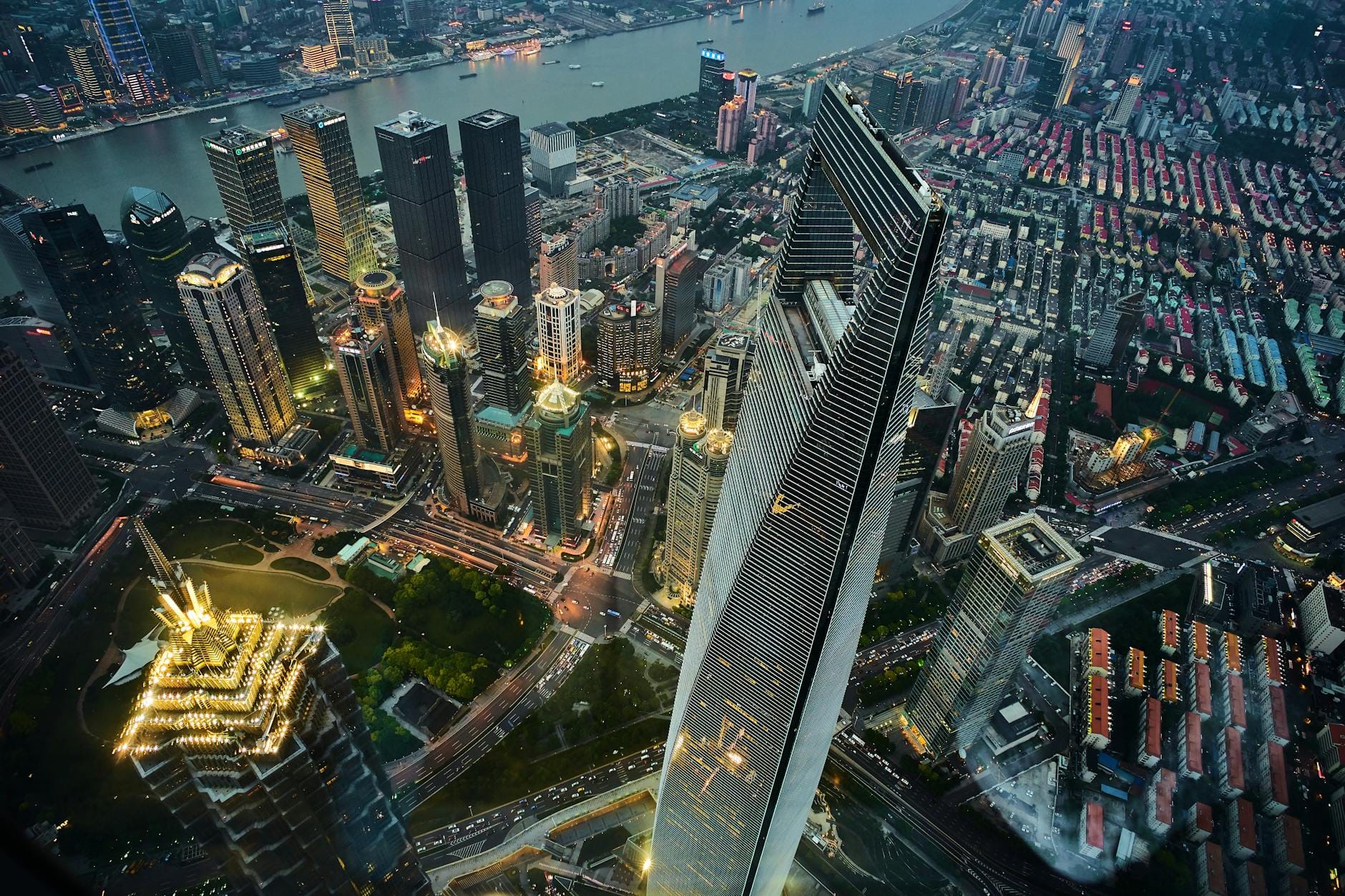
Saudi Arabia's $925B PIF has opened a Shanghai office, signalling large-scale Gulf sovereign capital deployment into Asia-Pacific. For regional family offices, this creates structural tailwinds for scarce alternative assets including whisky casks, art, and real assets.
Saudi PIF Shanghai Office Signals a Shift in Cross-Border Alternative Asset Allocation
Saudi Arabia's Public Investment Fund — which manages approximately $925 billion in assets under management as of 2024 — has opened a permanent office in Shanghai, marking the first time the Gulf sovereign wealth giant has established a physical presence on the Chinese mainland. For Asian family offices and private banks tracking where the world's largest pools of patient capital are moving, this is not a diplomatic footnote. It is a structural signal about where cross-border deal flow, co-investment pipelines, and alternative asset capital will concentrate over the next decade.
If you manage a multi-family office in Singapore, Hong Kong, or Tokyo, or advise ultra-high-net-worth clients on portfolio construction, the PIF's Shanghai move matters directly. Sovereign wealth funds of this scale do not open offices speculatively. They open them when they have identified a durable deal pipeline, a regulatory framework that accommodates their mandate, and counterparties capable of absorbing significant capital. The ripple effects for regional alternative asset pricing, co-investment access, and secondary market liquidity are already being discussed in boardrooms from Riyadh to Pudong.
Why the PIF Is Betting on China Now
The PIF's Shanghai office sits within a broader strategic context. Saudi Arabia's Vision 2030 programme requires the fund to grow from its current size to a target of $2 trillion in AUM by 2030, while simultaneously increasing domestic investment and diversifying internationally. China represents one of the few markets globally with asset pools, deal sizes, and sector breadth capable of absorbing PIF-scale capital. The fund has already made notable China-linked investments, including a reported stake in electric vehicle supply chain companies and participation in logistics infrastructure plays that connect Gulf trade corridors to Chinese manufacturing networks.
The Shanghai Free Trade Zone, where the office is believed to be registered, offers a regulatory framework that allows qualified foreign institutional investors to operate with greater flexibility than the broader Chinese market. China's QFII and RQFII schemes have collectively attracted over $130 billion in registered foreign institutional capital, and the PIF's presence adds sovereign-grade credibility to a channel that many Asian family offices already use for structured access. The timing also coincides with China's push to attract long-term foreign capital as domestic equity markets recover from a multi-year correction.
Analysts at regional private banks note that the PIF's move follows similar plays by Norway's Norges Bank Investment Management and Singapore's GIC and Temasek, both of which have maintained Beijing and Shanghai presences for years. The competitive dynamic is clear: sovereign funds that lack on-the-ground China intelligence increasingly find themselves at the back of the queue for premium co-investment allocations.
What This Means for Alternative Asset Flows Across Asia-Pacific
The direct investment thesis for Asian alternative asset allocators is multi-layered. When a sovereign fund of PIF's scale establishes a regional hub, it does not simply deploy into listed equities. It anchors a co-investment. Private equity GPs, real asset managers, infrastructure funds, and increasingly, specialist alternative asset platforms — including those covering tangible assets such as fine art, rare whisky casks, and collectibles — begin to orient their distribution and deal-sourcing networks around that hub.
Consider the data points already visible in the market:
- Gulf sovereign capital into Asia-Pacific alternatives rose by an estimated 34% year-on-year in 2023, according to data compiled by Preqin, with real assets and infrastructure accounting for the largest share.
- Hong Kong's SFC-regulated family office reported a 19% increase in Middle Eastern investor inquiries in the 12 months following Saudi Arabia's announcement of expanded Asia-Pacific investment mandates.
- Singapore's MAS Family Office scheme saw Gulf-linked entities account for approximately 8% of new 13O and 13U applications in 2023, up from under 2% in 2020.
- Auction results at Christie's and Sotheby's Asia in 2023-2024 showed a 22% increase in buyer registrations from Middle Eastern addresses, with particular concentration in 20th-century Chinese art and rare whisky lots.
- The Scotch Whisky Association reported that Gulf Cooperation Council countries collectively imported £187 million worth of Scotch whisky in 2023, a record high, reflecting both consumption and growing collector interest in investment-grade casks.
- PIF's total international portfolio allocation stood at approximately 30% of AUM in 2023, with a stated target to increase this to 40% by 2026, implying hundreds of billions in incremental cross-border deployment.
These numbers matter because they illustrate a convergence: Gulf sovereign capital is moving toward Asia at scale, and it is doing so across the full spectrum of asset classes — from infrastructure and private equity down to tangible collectibles and passion assets that family offices use for portfolio diversification and wealth preservation.
"When a $925 billion sovereign fund plants a flag in Shanghai, every co-investment pipeline in the Asia-Pacific region gets repriced. The question for regional allocators is not whether to pay attention — it is how quickly they can position ahead of the capital flows."
Implications for Tangible and Collectible Alternative Assets
The intersection of Gulf sovereign capital and Asian alternative assets is not abstract. Family offices in the Gulf have a well-documented appetite for tangible stores of value — real estate, gold, fine art, rare spirits, and investment-grade collectibles. As PIF deepens its China footprint, the secondary effects on regional pricing for premium tangible assets deserve serious attention from Asian allocators. Rare Scotch whisky casks, for instance, have delivered annualised returns of between 8% and 16% over rolling five-year periods according to the Knight Frank Luxury Investment Index, and have historically shown low correlation with public equity markets — a characteristic that resonates strongly with sovereign wealth mandates focused on long-duration, uncorrelated returns.
Singapore-based family offices have been among the most active buyers of investment-grade whisky casks over the past three years, with platforms such as Whisky Cask Club facilitating direct cask ownership for qualified investors seeking SGD-denominated alternative exposure. The entry of Gulf institutional capital into Asian alternative asset s is likely to compress available inventory and push secondary market premiums higher, particularly for asset classes with genuine scarcity characteristics — aged single malt casks from closed Scottish distilleries being a prime example. For regional allocators, the window to build positions at current valuations may be narrowing.
The broader pattern is consistent with what occurred in European fine art and wine markets after Gulf sovereign funds established London and Geneva presences in the 2010s. Within three to five years, secondary market pricing for top-tier tangible assets in those jurisdictions re-rated materially upward, driven partly by new institutional demand and partly by the increased legitimacy that sovereign participation confers on an asset class.
Regulatory and Structural Considerations for Asian Co-Investors
Asian family offices and private banks seeking to co-invest alongside or adjacent to PIF's China-linked deal flow will need to navigate both Chinese regulatory requirements and the PIF's own governance framework. China's National Development and Reform Commission and the Ministry of Commerce both have oversight roles for significant foreign direct investment, and deals involving strategic sectors — technology, energy, advanced manufacturing — will require additional approvals. The PIF's Shanghai office is expected to focus initially on financial services, technology, and infrastructure, with consumer and alternative assets likely forming a secondary layer of activity.
For Singapore and Hong Kong-based entities, the most accessible co-investment channel is likely to be through GPs that already have established relationships with the PIF's international investment team. Funds managed by KKR Asia, Hillhouse Capital, and Sequoia Capital China have all received Gulf sovereign capital in prior vintages and are well-positioned to intermediate future co-investment access for regional LPs. Smaller family offices may find that club deal structures and secondary fund-of-funds vehicles offer more practical entry points than direct GP relationships.
What to Watch: Key Developments for Asia-Pacific Allocators
The PIF Shanghai office opening is the beginning of a multi-year repositioning, not a one-time event. The following developments are worth monitoring closely over the next 12 to 24 months:
- PIF deal announcements from Shanghai: The first wave of China-originated transactions will signal which sectors and deal sizes the office is prioritising, providing a template for co-investment positioning.
- China QDLP and QFLP quota expansions: Beijing has been gradually expanding Qualified Foreign Limited Partnership and Qualified Domestic Limited Partnership quotas; any acceleration would directly benefit PIF's deployment capacity.
- Gulf-Asia family office network formation: Watch for joint venture structures or co-investment clubs bridging Gulf UHNW capital and Asian family office networks — Singapore's Variable Capital Company structure is particularly well-suited to this.
- Secondary market pricing for tangible alternatives in HK and SG: If Gulf institutional demand for Asian collectibles and rare spirits increases as predicted, auction house results and over-the-counter cask pricing will reflect it within two to three auction cycles.
- Regulatory reciprocity moves: Saudi Arabia's Capital Market Authority has been expanding bilateral investment treaty frameworks; any new agreement with China or ASEAN members would further accelerate capital flows.
For Asian allocators, the actionable insight is straightforward: the arrival of Gulf sovereign capital at scale in Asia-Pacific alternative assets is a structural tailwind, not a cyclical one. Positioning in asset classes with genuine scarcity — investment-grade whisky casks, museum-quality art, and trophy real assets — before that capital fully arrives is the asymmetric opportunity that disciplined family offices are already pursuing. The PIF's Shanghai office is the clearest signal yet that the window for early-mover positioning remains open, but it will not remain so indefinitely.
Frequently Asked Questions
What is Saudi Arabia's Public Investment Fund and how large is it?
Saudi Arabia's Public Investment Fund, known as the PIF, is the sovereign wealth fund of the Kingdom of Saudi Arabia. As of 2024 it manages approximately $925 billion in assets under management and is targeting $2 trillion in AUM by 2030 under the country's Vision 2030 economic diversification programme. It invests across domestic and international asset classes including private equity, real estate, infrastructure, and listed equities.
Why did the PIF open an office in Shanghai specifically?
Shanghai offers access to China's financial markets, major corporate headquarters, and the regulatory framework of the Shanghai Free Trade Zone, which provides qualified foreign institutional investors with greater operational flexibility. A physical presence enables the PIF to source deals directly, build relationships with Chinese counterparties, and participate in co-investment opportunities that require on-the-ground due diligence — advantages that cannot be replicated from a remote office.
How does PIF's China expansion affect alternative asset prices in Asia-Pacific?
When large sovereign funds establish regional presences, they anchor co-investment s and increase institutional demand for premium assets across the full allocation spectrum. Historical precedent from Gulf sovereign activity in European markets suggests that secondary market pricing for scarce tangible assets — fine art, rare spirits, collectibles — re-rates upward within three to five years of significant institutional capital entering a regional market.
What allocation strategies should Asian family offices consider in response?
Asian family offices should consider building positions in scarce tangible alternatives — including investment-grade Scotch whisky casks, rare art, and hard assets with low public-market correlation — before Gulf institutional demand fully materialises in regional secondary markets. Co-investment access through established GP relationships with KKR Asia, Hillhouse Capital, or Sequoia Capital China may also provide indirect exposure to PIF-adjacent deal flow.
Are investment-grade whisky casks a credible alternative asset for institutional-grade portfolios?
Yes. The Knight Frank Luxury Investment Index has recorded annualised returns of between 8% and 16% for rare Scotch whisky over rolling five-year periods, with low correlation to public equity markets. Singapore-based platforms such as Whisky Cask Club facilitate direct cask ownership for qualified investors, and the asset class has attracted increasing interest from family offices across Singapore, Hong Kong, and increasingly from Gulf-linked investors seeking tangible, uncorrelated stores of value.
Source: Whisky Bulletin coverage of cask investment on Whisky Bulletin.
💼 Exploring alternative asset allocation? Speak to Whisky Cask Club — Singapore's leading specialists in Scottish whisky cask investment.