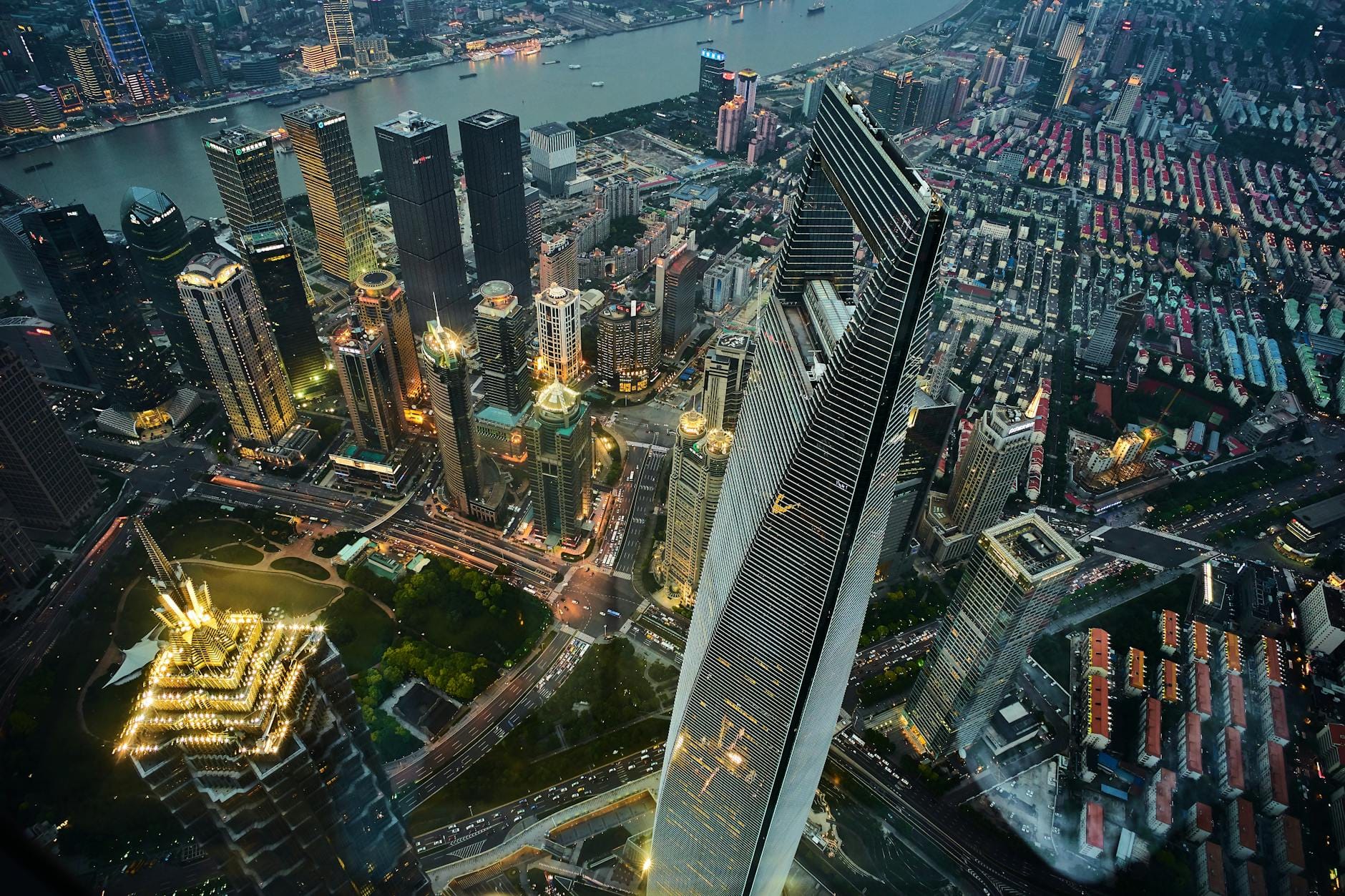
Saudi Arabia's $925B PIF has opened a Shanghai office to deepen China investment ties. For Asian family offices, this accelerates Gulf capital flows into hard assets including whisky casks, art, and infrastructure — creating co-investment opportunities across Singapore and Hong Kong structures.
Saudi PIF's Shanghai Move Signals a Shift in Cross-Border Alternative Asset Allocation
Saudi Arabia's Public Investment Fund — the $925 billion sovereign wealth vehicle that ranks among the world's five largest — has formally opened a Shanghai office, marking the first permanent Gulf sovereign presence in mainland China's financial hub. The move is not merely diplomatic symbolism. For Asian family offices, private banks, and alternative asset managers, it signals a structural realignment of capital flows that will reshape co-investment pipelines, asset pricing, and deal access across the region for the next decade. If you manage a portfolio with any exposure to real assets, private equity, or tangible alternatives in Asia-Pacific, this development belongs in your morning brief.
PIF's Shanghai footprint joins a small but growing roster of sovereign and quasi-sovereign offices in the city, including the Abu Dhabi Investment Authority's regional presence and GIC's long-established mainland China team. The concentration of Gulf sovereign capital in Shanghai — collectively managing well over $2 trillion in AUM — creates a gravitational pull for co-investment opportunities that mid-sized Asian family offices have historically struggled to access. Understanding how PIF intends to deploy from this base, and which asset classes are in scope, is essential for any allocator thinking about portfolio positioning over the next 18 to 36 months.
PIF's Investment Mandate and What the Shanghai Office Is Actually For
PIF's stated objective for the Shanghai office is to strengthen outbound dealmaking and deepen co-investment relationships with Chinese institutional partners. The fund has already committed capital to a range of China-linked vehicles, including a reported $5 billion allocation to Chinese technology and consumer sectors announced in 2023, and participation in KKR and Blackstone vehicles with significant China exposure. The Shanghai presence allows PIF's deal teams to conduct on-the-ground due diligence, manage existing portfolio relationships, and identify new opportunities in sectors aligned with Saudi Vision 2030 — notably advanced manufacturing, logistics, sports infrastructure, and real assets.
For alternative asset allocators in Hong Kong and Singapore, the more immediate implication is deal flow. When a $925 billion fund opens a regional office, the secondary effect is that local placement agents, fund administrators, and co-investment platforms recalibrate their origination pipelines to match. Expect increased deal flow in infrastructure, private credit, and hard assets — including collectibles and tangible stores of value — as Gulf capital seeks diversification beyond listed equities and conventional fixed income. PIF's domestic Saudi allocation target is 50% by 2030, meaning roughly half of its capital — nearly $460 billion — must be deployed outside the Kingdom, with Asia-Pacific identified as a priority corridor.
"When a $925 billion sovereign fund plants a permanent flag in Shanghai, every alternative asset class from private credit to rare collectibles enters a new pricing environment across Asia-Pacific."
How Gulf-China Capital Corridors Affect Hard Asset and Collectible Markets
The intersection of Gulf sovereign capital and Chinese institutional demand has historically driven price appreciation in tangible asset classes that serve as stores of value — fine art, rare whisky casks, classic automobiles, and investment-grade watches among them. When two of the world's largest pools of sovereign and high-net-worth capital converge on a regional hub, the downstream effect on alternative asset pricing is measurable. Hong Kong auction data from Sotheby's and Christie's shows that Gulf-linked buyers accounted for an estimated 12–15% of total Asian sale value in 2023, up from under 5% a decade earlier. Shanghai's emergence as a co-investment base for PIF will accelerate that trend.
Scottish whisky casks represent a particularly instructive case study. The Knight Frank Luxury Investment Index recorded a 373% appreciation in rare whisky over the decade to 2023, outperforming art, wine, and classic cars over the same period. Asian demand — led by buyers in Hong Kong, Singapore, Japan, and increasingly mainland China — now accounts for over 30% of global cask transaction volume by value, according to independent broker data. As Gulf sovereign capital deepens its China ties and seeks non-correlated hard asset exposure, whisky casks and other tangible alternatives are increasingly appearing in the conversation at the family office and private banking level. Singapore-based specialists such as Whisky Cask Club have reported a notable uptick in enquiries from Gulf-linked family offices seeking Singapore-domiciled cask structures over the past 18 months.
Classic automobiles tell a similar story. The Historic Automobile Group International (HAGI) Top Index rose approximately 38% between 2019 and 2023, with Asian buyers — particularly from Japan, Hong Kong, and Singapore — driving a disproportionate share of auction hammer prices above $500,000. Investment-grade watches, tracked by the WatchCharts Overall Market Index, saw a 65% price surge between 2020 and 2022 before a correction; the market has since stabilised, with Asian secondary market platforms reporting renewed institutional interest in 2024.
Regulatory and Structural Considerations for Asian Allocators
PIF's Shanghai office operates within China's Qualified Foreign Institutional Investor (QFII) and Stock Connect frameworks, but the fund's primary focus is expected to be on private market transactions rather than listed securities. For Asian family offices considering co-investment alongside PIF or structuring parallel exposure to the same asset classes, the regulatory environment matters. Singapore's Monetary Authority of Singapore (MAS) has positioned the city-state as the preferred domicile for Gulf-linked family office structures, offering a streamlined Variable Capital Company (VCC) framework that allows multi-asset, multi-class fund structures with relatively low minimum capital thresholds.
Hong Kong's Securities and Futures Commission (SFC) has separately introduced enhanced family office incentive packages, including profit tax concessions for qualifying single-family offices managing assets across private equity, real estate, and tangible alternatives. Both jurisdictions are actively competing for the management and custody of capital that flows through the PIF-China corridor. For allocators based in Thailand, Japan, or Australia, Singapore remains the most accessible regional hub for structuring exposure to deals that originate from this new Gulf-China axis.
Key Takeaways for Alternative Asset Allocators
- PIF's $925 billion AUM makes its Shanghai office consequential sovereign moves in Asia-Pacific alternative asset markets in 2024.
- Gulf-linked buyers already account for an estimated 12–15% of Asian auction sale value; the Shanghai office will accelerate this share.
- The Knight Frank Luxury Investment Index recorded 373% appreciation in rare whisky over the decade to 2023 — the strongest performer in the tangible asset basket.
- Asian buyers now represent over 30% of global whisky cask transaction volume by value, creating a natural convergence with incoming Gulf capital.
- Singapore's VCC framework and Hong Kong's SFC tax concessions are the two most relevant regulatory structures for allocators seeking to co-invest alongside Gulf sovereign vehicles.
- PIF's 50% domestic allocation target by 2030 means nearly $460 billion must be deployed externally, with Asia-Pacific as a named priority corridor.
What to Watch: Forward-Looking Signals for Asia-Pacific Investors
The next 12 months will clarify how aggressively PIF intends to use its Shanghai base for private market dealmaking versus relationship management. Watch for co-investment announcements between PIF and Chinese state-linked funds such as China Investment Corporation (CIC) or the National Council for Social Security Fund (NSSF), as these will signal which asset classes — infrastructure, logistics, real assets — are being prioritised. Any formal co-investment framework between PIF and a Chinese counterpart would represent a structural shift in how Gulf capital accesses Asian private markets, and would have direct pricing implications for hard assets that serve as stores of value across the region.
Singapore and Hong Kong family offices should also monitor MAS and SFC guidance updates on cross-border co-investment structures, particularly any changes to the treatment of tangible alternative assets — including whisky casks, fine art, and collectible vehicles — within VCC and SFC-regulated fund wrappers. The convergence of Gulf sovereign capital, Chinese institutional demand, and a maturing Asian alternative asset creates a genuinely rare allocation window for investors positioned ahead of the curve. The practical next step for any allocator reading this is to audit current portfolio exposure to non-correlated hard assets and assess whether existing custodial and fund structures are optimised for the co-investment opportunities that PIF's Shanghai presence will generate over the next 24 to 36 months.
Frequently Asked Questions
What is the Public Investment Fund (PIF) and how large is it?
PIF is Saudi Arabia's sovereign wealth fund, established in 1971 and restructured under Vision 2030. As of 2024, it manages approximately $925 billion in assets across domestic and international investments spanning private equity, real estate, infrastructure, and listed equities.
Why did PIF open an office in Shanghai specifically?
Shanghai is China's primary financial and deal-making hub, hosting the headquarters of major state-owned enterprises, private equity firms, and institutional investors. A Shanghai presence allows PIF to conduct on-the-ground due diligence, manage existing portfolio relationships, and originate new co-investment opportunities in alignment with Saudi Vision 2030 priorities.
How does PIF's China expansion affect alternative asset prices in Asia-Pacific?
Increased Gulf sovereign capital flowing into Asia-Pacific raises demand for non-correlated hard assets — including whisky casks, fine art, classic cars, and investment-grade watches — that serve as stores of value. Historical data shows Gulf-linked buyers already account for 12–15% of Asian auction sale value, a share expected to grow as PIF deepens its regional presence.
Which regulatory frameworks are most relevant for Asian family offices co-investing alongside PIF?
Singapore's Variable Capital Company (VCC) framework under MAS oversight and Hong Kong's SFC profit tax concession regime for qualifying single-family offices are the two most relevant structures. Both jurisdictions actively compete for Gulf-linked capital management mandates.
What is the investment case for whisky casks in the context of Gulf-Asia capital flows?
Whisky casks offer non-correlated returns — the Knight Frank Luxury Investment Index recorded 373% appreciation over the decade to 2023 — and are increasingly held within Singapore-domiciled fund structures accessible to Gulf and Asian family offices. Asian buyers now account for over 30% of global cask transaction volume by value, creating natural demand alignment with incoming Gulf capital.
Source: Whisky Bulletin coverage of cask investment on Whisky Bulletin.
💼 Exploring alternative asset allocation? Speak to Whisky Cask Club — Singapore's leading specialists in Scottish whisky cask investment.