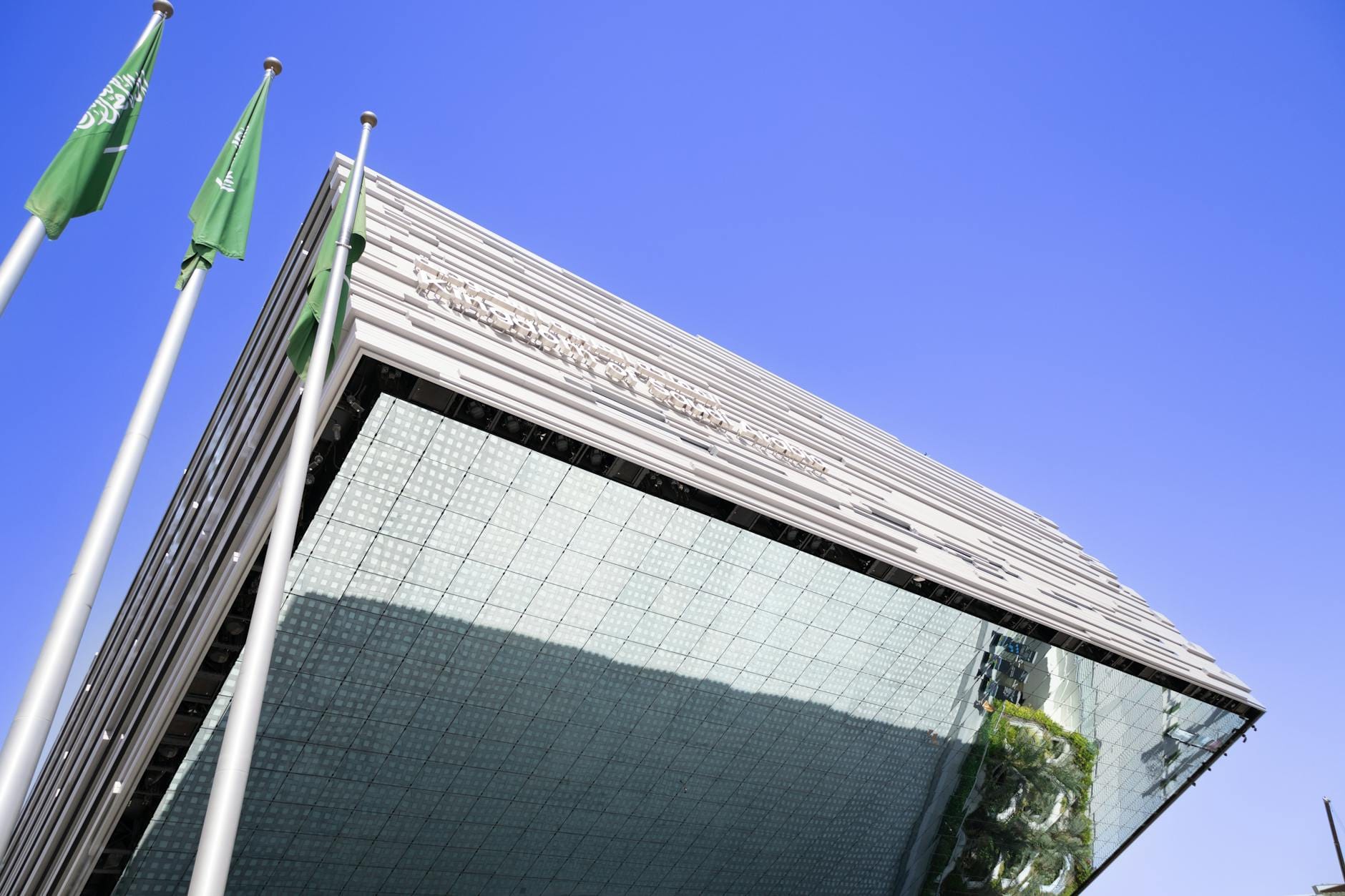
Saudi Arabia's PIF has opened a Shanghai office, formalising Gulf-China capital ties. With USD 925B AUM, PIF's presence will reprice Asian private markets and boost demand for tangible alternative assets including whisky casks and collectibles.
Saudi PIF Shanghai Office Signals a Shift in Cross-Border Capital Allocation
Saudi Arabia's Public Investment Fund — which manages approximately USD 925 billion in assets under management as of early 2025 — has opened a permanent office in Shanghai, marking the first time the Gulf sovereign wealth giant has established a physical presence on the Chinese mainland. The move is not merely symbolic. It positions PIF as an active participant in outbound Chinese dealmaking at precisely the moment when Beijing is encouraging domestic institutional capital to seek diversified offshore returns. For Asian family offices and private bankers tracking sovereign capital flows, this is a development worth flagging at the morning brief.
The reason this matters personally to any allocator in the Asia-Pacific region is straightforward: when a USD 925 billion sovereign fund plants a flag in Shanghai, it reshapes the competitive dynamic for co-investment opportunities, secondary market pricing, and deal origination across the asset classes that family offices in Hong Kong, Singapore, and Tokyo care about most. Sovereign capital at this scale does not move quietly — it reprices whole categories of alternative assets, including real assets, private equity, and increasingly, passion assets used as portfolio diversifiers. Understanding where PIF is looking tells you where institutional pricing power is about to concentrate.
Why Shanghai and Why Now: The Strategic Logic Behind PIF's China Pivot
PIF already operates offices in New York, London, and Hong Kong, but the Shanghai office represents a deliberate escalation. China's outbound investment volumes have been recovering steadily: according to China's Ministry of Commerce, outbound direct investment reached USD 140.3 billion in 2023, with a rising share directed toward Gulf Cooperation Council markets. PIF's Shanghai presence is designed to intercept that flow at the source, building co-investment pipelines with Chinese state-owned enterprises, private conglomerates, and the growing universe of Chinese asset managers seeking Gulf-region exposure.
Saudi Arabia's Vision 2030 programme explicitly targets China as a strategic partner across infrastructure, technology, and entertainment. PIF has already committed capital alongside Chinese partners in sectors ranging from electric vehicles — it led a USD 2.6 billion round in Lucid Motors and has explored parallel opportunities with Chinese EV manufacturers — to logistics and sports. The Shanghai office formalises a relationship that has been building through deal-by-deal engagement into a permanent, institutionalised channel. For Asian allocators, the implication is that Gulf sovereign capital will increasingly show up as a co-investor or price-setter in Asian private markets, tightening spreads and raising entry valuations in segments that were previously less contested.
Regulatorily, the office operates within Shanghai's Lingang Special Area free-trade zone framework, which allows qualified foreign institutional investors expanded access to onshore RMB-denominated products. China's CSRC and SAFE have both signalled openness to deepening Gulf institutional participation in domestic capital markets, adding a regulatory tailwind to PIF's timing.
What This Means for Alternative Asset Allocation Across Asia-Pacific
The arrival of PIF in Shanghai has layered implications for the alternative asset classes that define this publication's coverage. Consider the following dynamics currently at play across the region:
- Real assets repricing: PIF's known appetite for infrastructure and real estate — it has committed over USD 40 billion to domestic giga-projects including NEOM — signals that cross-border real asset co-investments with Chinese partners could attract Gulf anchor capital, compressing yields for other buyers.
- Private equity deal flow: Chinese private equity managers including Hillhouse Capital and Sequoia China (now HongShan) have historically sought Gulf LP commitments. A Shanghai-based PIF team accelerates that LP-GP relationship, potentially crowding out smaller Asian family office positions in top-tier funds.
- Passion and tangible assets: High-net-worth capital displaced from compressed PE returns increasingly rotates into uncorrelated stores of value — Scotch whisky casks, fine wine, rare watches, and classic cars. The Scotch Whisky Association reported that the value of Scotch exports to the Middle East rose 14% in 2023, reflecting growing Gulf appetite for whisky as a collectible and investment asset despite domestic restrictions on consumption.
- Art and collectibles: Sotheby's reported that Asian buyers accounted for 38% of global auction spending in 2023. Gulf sovereign and ultra-high-net-worth buyers are increasingly active in the same sales rooms, creating pricing competition that benefits existing holders of blue-chip works.
- Rare watches: The secondary market for investment-grade timepieces — Patek Philippe, AP Royal Oak, and Rolex Daytona references — has stabilised after the 2022-2023 correction, with WatchCharts data showing a 9% average recovery in benchmark references through Q1 2025. Gulf buyers remain among the most active participants at Christie's and Phillips Asia sales.
The common thread across all five categories is that sovereign capital flows from the Gulf into Asia — now institutionalised through the Shanghai office — will raise the floor on quality tangible assets while simultaneously compressing yields on financial alternatives. This makes the case for physical, portable, globally liquid assets even more compelling for Asian family offices seeking genuine diversification.
"When a USD 925 billion sovereign fund opens a permanent mainland China office, it does not just create deal flow — it resets the pricing benchmark for every co-investor in the region. Asian allocators who ignore Gulf capital movements do so at their own cost."
How Asian Family Offices Should Position Around This Development
Single-family offices and multi-family offices across Singapore, Hong Kong, and Bangkok are already navigating a crowded private markets environment. The PIF Shanghai office adds a new variable: a well-capitalised, long-horizon sovereign co-investor that can move at speed and scale. For smaller allocators, this creates both risk and opportunity. The risk is straightforward — being outbid or diluted in deals where PIF chooses to participate. The opportunity is subtler but equally real.
Family offices that build relationships with PIF's Shanghai team early — through industry associations, co-investment forums, or shared LP positions in regional fund managers — gain access to deal intelligence and potential co-investment rights that would otherwise be inaccessible. The Singapore Economic Development Board and Hong Kong's InvestHK both maintain active sovereign wealth liaison programmes that provide structured access points. Proactive engagement with these channels is a low-cost option on a high-value relationship.
Simultaneously, allocators should review their tangible asset exposure. With institutional capital compressing returns in financial alternatives, the relative attractiveness of whisky casks, investment-grade wine, and rare collectibles — assets with genuine scarcity, low correlation to listed markets, and strong Asian demand — increases materially. The Knight Frank Luxury Investment Index recorded a 104% appreciation in rare whisky over the decade to 2023, outperforming classic cars (185% over the same period) and art (64%), making the asset class a credible allocation for portfolios of USD 5 million and above.
Key Takeaways for Allocators
- PIF AUM: Approximately USD 925 billion, making it the world's fourth-largest sovereign wealth fund by assets.
- Shanghai office location: Lingang Special Area free-trade zone, enabling expanded QFII and RQFII access.
- China outbound FDI: USD 140.3 billion in 2023 (Ministry of Commerce), with GCC exposure rising.
- Scotch whisky Middle East export growth: 14% value increase in 2023 (Scotch Whisky Association).
- Rare whisky 10-year appreciation: 104% per Knight Frank Luxury Investment Index to end-2023.
- Asian auction share: 38% of global auction spending in 2023 (Sotheby's data).
What to Watch: Key Developments Ahead
The PIF Shanghai office is operational but its deal pipeline is still being assembled. Several near-term signals will indicate how aggressively PIF intends to deploy from this base. Watch for co-investment announcements with Chinese state-backed funds such as China Investment Corporation (CIC) or the National Council for Social Security Fund (NSSF), which would confirm a sovereign-to-sovereign channel rather than purely commercial deal flow. Monitor PIF's participation in upcoming Hong Kong and Singapore private markets conferences — the SuperReturn Asia and AVCJ forums in Q3 2025 will be early indicators of how the Shanghai team is positioning itself to the broader Asian LP and GP community.
Also watch the RMB internationalisation agenda. If PIF begins allocating to onshore RMB-denominated products — permitted under the Lingang framework — it would signal a level of China conviction that goes well beyond relationship-building and into structural portfolio allocation. That would be a significant data point for any Asian allocator benchmarking their own China exposure. The next 12 months will reveal whether PIF's Shanghai office is a diplomatic gesture or the anchor of a serious China-Gulf capital corridor — and the answer will matter to every alternative asset allocator in this region.
Frequently Asked Questions
What is the Saudi Public Investment Fund and how large is it?
The Saudi Public Investment Fund (PIF) is Saudi Arabia's sovereign wealth fund, established in 1971 and restructured under Vision 2030 from 2016 onwards. As of early 2025, PIF manages approximately USD 925 billion in assets across domestic and international investments spanning infrastructure, technology, real estate, and financial markets.
Why has PIF opened an office in Shanghai specifically?
Shanghai provides access to China's onshore capital markets through the Lingang Special Area free-trade zone framework, which offers expanded QFII and RQFII privileges to qualified foreign institutional investors. The city is also the hub for Chinese outbound investment dealmaking, making it the logical base for building co-investment pipelines with Chinese corporate and institutional partners aligned with Saudi Arabia's Vision 2030 objectives.
How does PIF's Shanghai presence affect alternative asset prices in Asia?
Sovereign capital at PIF's scale raises entry valuations and compresses yields in asset classes where it participates, including private equity and real assets. This displacement effect increases the relative attractiveness of uncorrelated tangible assets — Scotch whisky casks, fine wine, rare watches, and collectibles — which offer scarcity-driven returns not directly subject to institutional repricing pressure.
What allocation role can whisky casks play for Asian family offices navigating this environment?
Scotch whisky casks have delivered approximately 104% appreciation over the decade to end-2023 according to the Knight Frank Luxury Investment Index, with low correlation to listed equities and private equity. For Asian family offices with portfolios of USD 5 million or above, a 3-7% allocation to whisky casks provides genuine diversification, liquidity optionality through specialist brokers, and exposure to a global collector base that includes rising Gulf demand.
Which Asian regulators and institutions are relevant to sovereign co-investment access?
Singapore's Economic Development Board (EDB) and Monetary Authority of Singapore (MAS), Hong Kong's InvestHK and Securities and Futures Commission (SFC), and China's CSRC and SAFE are the primary regulatory and facilitation bodies. Family offices seeking structured access to sovereign co-investment opportunities can engage through EDB's family office programme in Singapore or the Hong Kong Family Office Association's sovereign liaison channels.
Source: Whisky Bulletin coverage of cask investment on Whisky Bulletin.
💼 Exploring alternative asset allocation? Speak to Whisky Cask Club — Singapore's leading specialists in Scottish whisky cask investment.