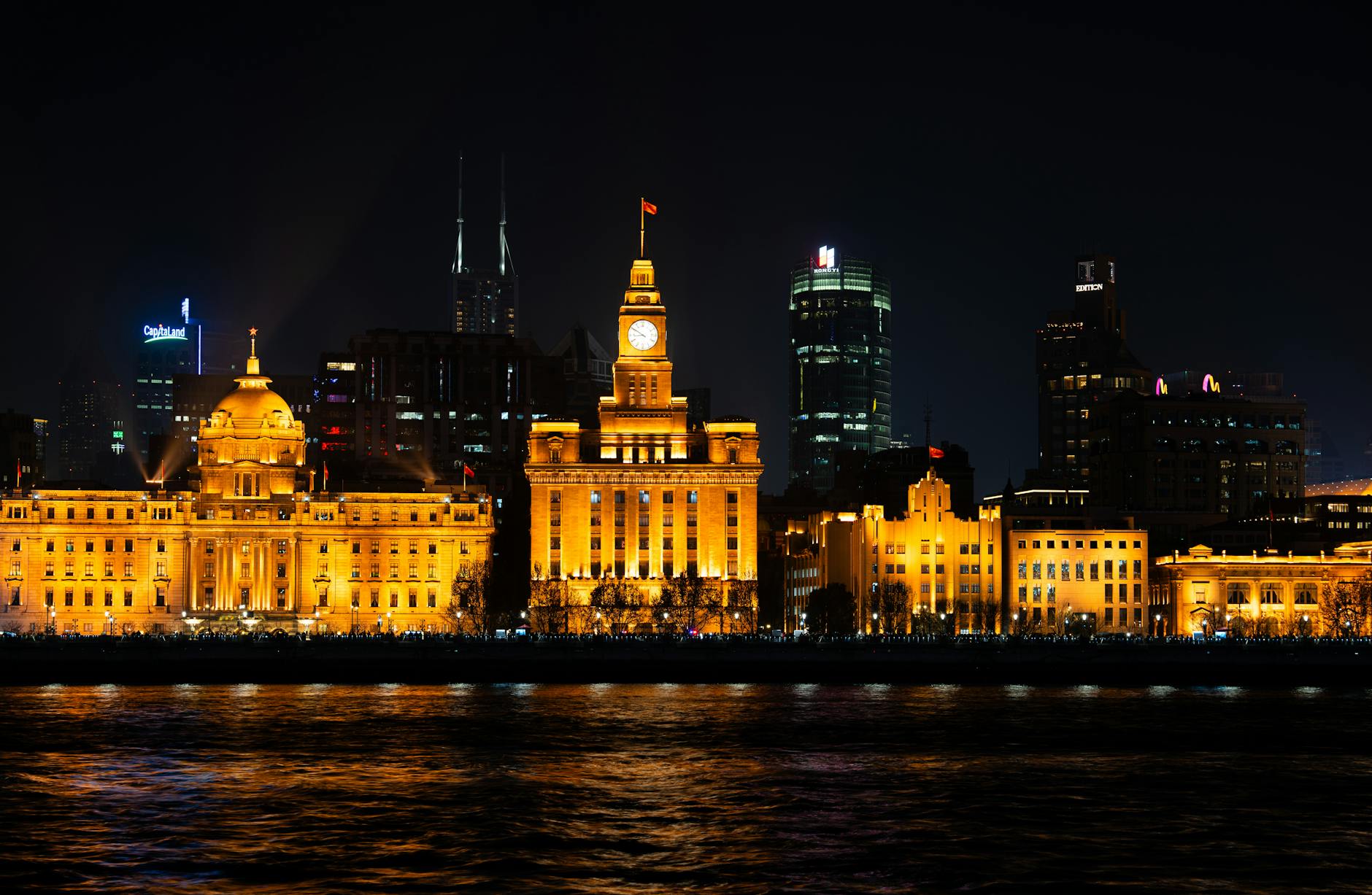
Saudi Arabia's $925B Public Investment Fund has opened a Shanghai office, accelerating Gulf-China capital flows. Asia-Pacific family offices should expect increased competition for scarce alternative assets including whisky casks, fine wine, and collectibles as sovereign demand broadens.
Saudi PIF Shanghai Office Signals a Structural Shift in Cross-Border Capital
Saudi Arabia's Public Investment Fund — which manages approximately $925 billion in assets under management as of 2024 — has opened a permanent office in Shanghai, marking the sovereign wealth fund's most tangible operational commitment to mainland China to date. The move is not merely symbolic: it places PIF deal teams inside China's financial hub, within reach of the country's sprawling network of state-owned enterprises, private equity managers, and family office capital. For Asia-Pacific investors tracking alternative asset flows, the implications extend well beyond bilateral Saudi-China relations.
If you manage a family office or allocate capital across Asia, this development matters because it accelerates the channelling of Gulf sovereign capital into asset classes — including real assets, private equity, and tangible alternatives — that overlap directly with portfolios built around art, collectibles, whisky, and wine. When a $925 billion sovereign fund embeds itself in Shanghai, it reshapes the competitive landscape for every institutional buyer of scarce, yield-generating alternative assets across the region. The price discovery effects alone are worth monitoring closely.
Why Shanghai, Why Now: The Strategic Rationale Behind PIF's China Move
PIF's choice of Shanghai over Hong Kong or Singapore is deliberate and carries strategic weight. Shanghai hosts the headquarters of China's largest state-backed investment vehicles, including China Investment Corporation's domestic operations, CITIC Group, and a dense cluster of renminbi-denominated private equity funds. By anchoring there, PIF gains proximity to deal origination pipelines that are simply not replicated in offshore financial centres. The office also positions PIF to participate in China's outbound investment push, particularly into Belt and Road-aligned infrastructure and commodities assets.
The timing aligns with a broader Gulf-China rapprochement. Saudi Arabia and China signed a comprehensive strategic partnership in 2022, and bilateral trade reached $106 billion in 2023 according to Chinese customs data. PIF has already deployed capital into Chinese electric vehicle manufacturers, logistics platforms, and technology funds. The Shanghai office institutionalises what has until now been a transactional relationship, converting deal-by-deal engagement into a permanent capital deployment platform. For context, GIC and Temasek have maintained Shanghai presences for over a decade — PIF is catching up fast.
Regional observers also note that the move comes as PIF accelerates its Vision 2030 mandate to diversify Saudi Arabia's economy away from oil revenues. The fund's international allocation target is understood to be 20–25% of total AUM, meaning up to $230 billion could flow into non-domestic assets over the medium term. China, as the world's second-largest economy, is a natural anchor for that allocation.
What This Means for Alternative Asset Allocation Across Asia-Pacific
The arrival of Gulf sovereign capital in Shanghai has measurable knock-on effects for the alternative asset classes that define Alt Asset Asia's coverage. When large pools of institutional money enter a region, they compress yields on financial assets and push sophisticated allocators further along the risk and illiquidity spectrum. Family offices in Singapore, Hong Kong, and Taipei that have watched private equity multiples inflate over the past decade are already familiar with this dynamic. The entry of PIF into the Shanghai market will intensify competition for trophy real assets, accelerate art market activity in Greater China, and push secondary-market premiums on scarce collectibles higher.
"When a $925 billion sovereign fund opens a permanent office in your market, every asset with a finite supply and a credible provenance story gets repriced. Asia-Pacific family offices should treat this as a structural demand signal, not a one-off headline."
The data supports this thesis. Knight Frank's 2024 Wealth Report recorded a 12% year-on-year increase in ultra-high-net-worth individuals across the Gulf region, with collectible assets — including rare whisky, vintage watches, and fine wine — absorbing a growing share of discretionary alternative allocations. Gulf buyers already account for an estimated 8–11% of global auction volume at Christie's and Sotheby's Middle East sales. As PIF embeds itself in Shanghai, expect Chinese and Gulf capital to increasingly co-invest in the same scarce asset pools.
Key Data Points Investors Should Track
Understanding the scale of this development requires grounding it in specific numbers. The following metrics are directly relevant to Asia-Pacific alternative asset allocators:
- PIF AUM: ~$925 billion (2024 estimate), making it the world's fourth-largest sovereign wealth fund by assets.
- China bilateral trade with Saudi Arabia: $106 billion in 2023, up from $87 billion in 2021, reflecting accelerating economic integration.
- PIF international allocation target: 20–25% of AUM, implying up to $230 billion in non-domestic deployments over the medium term.
- Gulf UHNWI growth: +12% year-on-year in 2023 (Knight Frank), driving increased demand for scarce collectible assets globally.
- Rare whisky cask appreciation: +373% over the past decade according to the Knight Frank Luxury Investment Index, outperforming art, wine, and watches over the same period.
- Chinese family office AUM: estimated at $2.7 trillion across onshore and offshore structures (Campden Wealth, 2023), representing the largest pool of private capital in Asia available for alternative allocation.
These six data points together describe a market where sovereign and private capital from two of the world's fastest-growing wealth regions are converging on a finite pool of investable alternatives. The scarcity premium embedded in assets like aged whisky casks, single-owner wine collections, and museum-quality watches will only become more pronounced as institutional demand broadens.
How Asian Family Offices Should Position Ahead of Increased Gulf Competition
For single-family offices in Singapore and Hong Kong — the two jurisdictions that collectively host over 4,000 registered family office structures — the PIF Shanghai opening is a signal to review alternative asset allocation before Gulf capital further compresses entry points. The most actionable response is to prioritise assets that combine provenance scarcity with Asia-Pacific storage and custody infrastructure. Scottish whisky casks held in HMRC-bonded warehouses, for example, offer both a credible appreciation track record and a custody structure that is well-understood by Singapore-based MAS-licensed wealth managers.
Private banks in the region, including the wealth management arms of DBS, UOB, and OCBC, have incrementally expanded their alternative asset advisory capabilities over the past three years. Regulatory frameworks in Singapore under MAS and in Hong Kong under the SFC have also evolved to accommodate a broader range of collectible and tangible asset fund structures. The regulatory infrastructure for institutional-grade alternative allocation in Asia-Pacific is now sufficiently mature to support meaningful portfolio allocations, not just opportunistic single-asset purchases. Family offices that have not yet formalised their alternatives sleeve should treat the PIF Shanghai development as a prompt to act.
The comparison with other sovereign wealth fund expansions is instructive. When Norway's Government Pension Fund Global expanded its Asia-Pacific real estate operations in 2018, it preceded a sustained period of yield compression in Singapore and Tokyo commercial property. Investors who positioned ahead of that institutional inflow captured significantly better entry multiples than those who waited for the headline deals to close. The PIF Shanghai office sets up a structurally similar dynamic across a broader range of asset classes.
What to Watch: Key Developments and Forward Signals
The following signals will indicate how quickly PIF's Shanghai presence translates into measurable capital flows across alternative asset categories relevant to Asia-Pacific investors:
- PIF co-investment announcements with Chinese state funds: Watch for joint venture structures involving China Development Bank Capital or CITIC Private Equity, which would confirm deep onshore integration.
- Gulf auction house expansion into Shanghai: Christie's and Sotheby's have both flagged Greater China as a priority growth market. A Gulf sovereign anchor investor accelerates that timeline.
- MAS and SFC licensing activity: If PIF registers investment vehicles in Singapore or Hong Kong, it signals an intent to access offshore RMB pools and co-invest with Asian family offices directly.
- Rare whisky and wine index performance in H2 2025: The Knight Frank Luxury Investment Index quarterly update, due in late 2025, will capture whether Gulf and Chinese demand is already repricing scarce collectible categories.
- Vision 2030 mid-cycle review (2025): PIF's international allocation targets may be revised upward, which would accelerate deal velocity across all asset classes.
The most important signal to watch is not the headline deal announcements, but the secondary market price movement in asset classes with genuinely finite supply. Whisky casks distilled before 2000, first-growth Bordeaux in original wooden cases, and reference-grade vintage watches are the categories most likely to register early repricing as Gulf and Chinese sovereign capital broadens its definition of "alternative allocation." Asia-Pacific family offices and private bankers who act on this structural shift before the next auction cycle will be better positioned than those waiting for the trend to become consensus.
Frequently Asked Questions
Why did Saudi PIF choose Shanghai over Hong Kong or Singapore for its China office?
Shanghai provides direct access to China's largest state-backed investment vehicles and renminbi-denominated private equity funds. Hong Kong and Singapore serve as offshore financial centres, but PIF's mandate requires proximity to onshore deal origination pipelines, which are concentrated in Shanghai. The choice reflects a strategic preference for deep market integration over offshore convenience.
How does PIF's Shanghai office affect alternative asset prices in Asia-Pacific?
Large sovereign fund entries into a regional market compress yields on financial assets and push allocators toward illiquid, scarce alternatives. With PIF embedding in Shanghai alongside China's $2.7 trillion family office sector, demand for finite-supply assets — including rare whisky casks, fine wine, and vintage watches — is expected to increase, supporting higher secondary market premiums over the medium term.
What regulatory frameworks govern alternative asset investment by family offices in Singapore and Hong Kong?
In Singapore, the Monetary Authority of Singapore (MAS) regulates collective investment schemes and fund management activities under the Securities and Futures Act. Single-family offices may qualify for exemptions from certain licensing requirements. In Hong Kong, the Securities and Futures Commission (SFC) oversees fund structures and asset management. Both jurisdictions have expanded their frameworks to accommodate a broader range of tangible and collectible asset structures.
What is the historical return profile of rare whisky casks as an alternative asset?
According to the Knight Frank Luxury Investment Index, rare whisky has appreciated approximately 373% over the past decade, outperforming art, wine, classic cars, and watches over the same period. Whisky casks held in HMRC-bonded warehouses in Scotland offer additional advantages including no VAT liability until bottling, transparent provenance records, and a custody structure familiar to MAS-licensed wealth managers in Singapore.
Which other sovereign wealth funds have established a precedent for this type of regional expansion?
Norway's Government Pension Fund Global expanded its Asia-Pacific real estate operations in 2018, preceding a period of yield compression in Singapore and Tokyo commercial property. GIC and Temasek have maintained Shanghai offices for over a decade. Abu Dhabi Investment Authority (ADIA) has a long-established Asia presence. PIF's Shanghai move follows a well-documented pattern of sovereign fund regionalisation that consistently precedes broader institutional capital inflows into alternative asset categories.
Source: Whisky Bulletin coverage of cask investment on Whisky Bulletin.
💼 Exploring alternative asset allocation? Speak to Whisky Cask Club — Singapore's leading specialists in Scottish whisky cask investment.