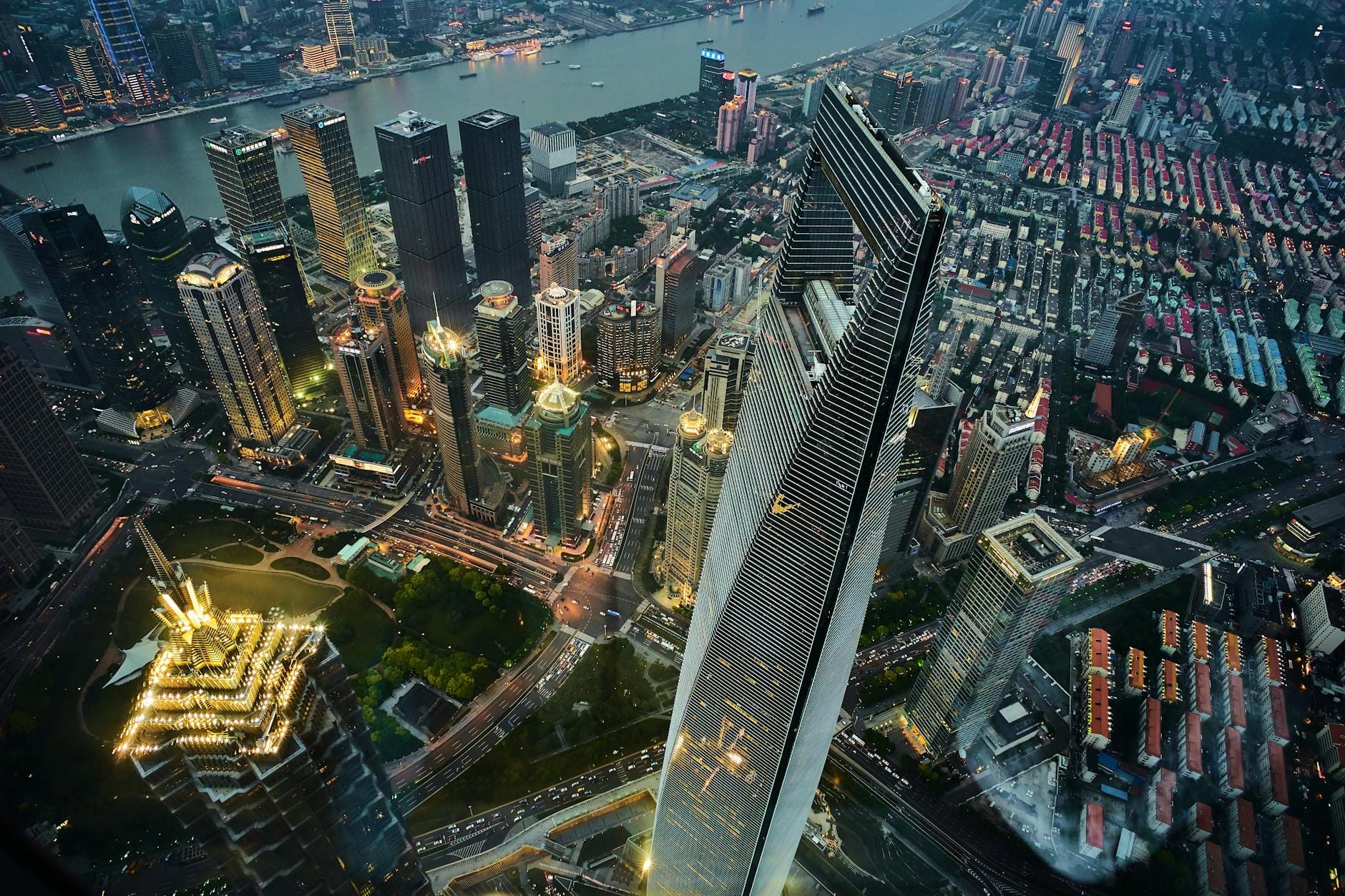
Saudi Arabia's $925B PIF has opened a Shanghai office to deepen China investment links. For Asian family offices, this signals new co-investment pipelines, increased real asset demand, and a Gulf-China capital corridor forming over the next 18–24 months.
Saudi PIF Shanghai Office Signals a Major Shift in Cross-Border Capital Flows
Saudi Arabia's Public Investment Fund — managing approximately $925 billion in assets as of early 2025 — has opened a permanent office in Shanghai, marking the sovereign wealth fund's first dedicated operational footprint in mainland China. The move is not a routine administrative expansion. It signals a structural reorientation of Gulf capital toward Chinese markets at a moment when Western institutional allocators are, in some cases, pulling back. For Asian family offices, private banks, and alternative asset managers tracking cross-border capital flows, this development carries direct implications for how sovereign-backed liquidity will move through the region over the next decade.
If you manage allocations for a high-net-worth Asian family or advise on multi-asset portfolios from Singapore, Hong Kong, or Tokyo, the PIF's Shanghai presence matters for one concrete reason: sovereign wealth funds of this scale create gravitational effects. Where they allocate, valuations shift, co-investment opportunities emerge, and secondary market liquidity deepens. The PIF's Shanghai office is not just a diplomatic gesture — it is an operational infrastructure decision that will influence deal flow across real assets, private equity, and increasingly, tangible alternative investments in the Asia-Pacific corridor.
What the PIF's China Strategy Actually Looks Like in Numbers
The PIF has been steadily building its China exposure since 2021, when it established a dedicated emerging markets allocation framework. By late 2024, its disclosed Chinese holdings included stakes in electric vehicle manufacturers, logistics infrastructure, and technology platforms — with estimates from Bloomberg Intelligence placing total China-linked exposure at between $5 billion and $8 billion across direct and fund-of-fund structures. The Shanghai office is designed to accelerate outbound dealmaking, support due diligence on onshore RMB-denominated assets, and facilitate co-investment arrangements with Chinese state-linked enterprises and private conglomerates.
Critically, the office also positions the PIF to engage with China's growing outbound investment. Chinese family offices and ultra-high-net-worth individuals have been diversifying into hard assets at an accelerating pace — a trend tracked by the Hurun Research Institute, which reported in 2024 that over 60% of Chinese billionaires surveyed held some form of tangible alternative asset outside domestic equities. The PIF's physical presence in Shanghai creates a two-way conduit: Gulf capital flowing into China, and Chinese capital flowing into Saudi Vision 2030 projects and co-sponsored alternative asset vehicles. For regional allocators, this bilateral flow is the more interesting story.
"Where sovereign wealth funds of $900 billion-plus establish permanent offices, co-investment pipelines follow within 18 to 24 months. The PIF's Shanghai footprint is an early signal, not a trailing indicator."
How This Affects Alternative Asset Allocation Across Asia-Pacific
The PIF's expanded China presence arrives at a moment when Asian institutional allocators are reassessing their alternative asset weightings. According to Preqin's 2024 Asia-Pacific Alternatives Report, institutional allocations to real assets — including infrastructure, commodities, and tangible collectibles — grew by 14% year-on-year across the region, with Singapore-based family offices leading the charge. The report identified a clear trend: as public equity volatility persisted, allocators with AUM between $200 million and $2 billion were actively increasing exposure to assets with low correlation to listed markets.
Tangible alternative assets — whisky casks, fine wine, rare watches, classic automobiles, and museum-quality art — sit squarely within this reallocation trend. The Knight Frank Luxury Investment Index recorded a 9% average appreciation across its tracked tangible asset categories in 2024, with rare whisky outperforming at 11% and classic cars at 7%. For Asian family offices watching sovereign capital move into hard assets and real infrastructure, the PIF's Shanghai office reinforces the macro case for tangible allocation as a portfolio stabiliser. Sovereign funds do not move into operational infrastructure without a medium-term conviction about the asset classes that will benefit from the resulting capital flows.
The specific relevance for alternative asset managers in Hong Kong and Singapore is this: PIF co-investment vehicles historically attract participation from regional limited partners. When the PIF structures a fund or special purpose vehicle out of its Shanghai office, expect invitations to flow to family offices and private banks already active in the Gulf-Asia corridor. Temasek Holdings and GIC have both co-invested alongside PIF in prior rounds, and smaller regional allocators have participated through fund-of-fund structures managed by platforms such as Hamilton Lane and Pantheon.
Key Data Points Every Asian Allocator Should Know
- $925 billion: PIF's estimated AUM as of Q1 2025, making it the world's fourth-largest sovereign wealth fund by assets.
- $5–8 billion: Bloomberg Intelligence estimate of PIF's current China-linked exposure across direct and indirect holdings.
- 14%: Year-on-year growth in real asset allocations by Asia-Pacific institutional investors in 2024, per Preqin.
- 11%: Rare whisky appreciation recorded by the Knight Frank Luxury Investment Index in 2024 — the top-performing tangible asset category.
- 60%+: Share of Chinese billionaires holding tangible alternative assets outside domestic equities, per Hurun Research Institute 2024.
- 18–24 months: Typical lag between a sovereign wealth fund establishing a regional office and the emergence of co-investment pipelines accessible to local allocators.
Regulatory and Structural Context for the Shanghai Office
Operating a sovereign wealth fund office in Shanghai requires navigation of China's Qualified Foreign Institutional Investor framework and, increasingly, the newer QFII 2.0 rules introduced by the China Securities Regulatory Commission in 2023. These rules expanded the scope of permissible investments for foreign institutional capital, including access to onshore bond markets, private equity structures, and commodity-linked instruments. The PIF's Shanghai office is expected to operate under a licensed entity structure, likely registered through the China (Shanghai) Pilot Free Trade Zone, which offers streamlined approval processes for foreign financial institutions.
For Asian private banks advising clients on China exposure, the PIF's regulatory pathway is a useful reference point — it demonstrates that large-scale foreign institutional capital can now access onshore Chinese alternative assets with greater structural clarity than was possible five years ago. The People's Bank of China and the State Administration of Foreign Exchange have both signalled openness to Gulf sovereign capital as part of broader RMB internationalisation goals, giving the PIF's Shanghai operation a degree of regulatory tailwind that smaller foreign allocators may not enjoy.
What to Watch: Key Developments for Asia-Pacific Allocators
The PIF's Shanghai office is the starting point of a multi-year story. The following markers will indicate how quickly and deeply this capital deployment accelerates, and where co-investment opportunities for Asian allocators are most likely to emerge.
- First co-investment announcement: Watch for a PIF-sponsored vehicle involving a Chinese state enterprise or private conglomerate within the next 12 months. This will define the asset class focus of the Shanghai operation.
- GIC and Temasek positioning: Both Singapore sovereign funds have existing PIF relationships. Any joint announcement involving Chinese assets would signal a broader Gulf-ASEAN-China capital axis forming.
- Outbound Chinese capital flows into Saudi assets: If the PIF's Shanghai office facilitates Chinese family office or institutional investment into Vision 2030 infrastructure projects, it will validate the two-way corridor thesis and open new co-investment structures for regional allocators.
- QFII quota expansion: Any increase in PIF's approved QFII quota by the CSRC would be a direct indicator of the scale of onshore deployment planned for 2025–2026.
- Tangible asset fund launches: Regional alternative asset managers — particularly those operating in Singapore and Hong Kong — should monitor for PIF-linked fund structures that include real asset or collectibles mandates, which have appeared in prior Gulf sovereign vehicle structures.
Asian family offices with existing Gulf connections or exposure to Vision 2030-linked vehicles should request updated co-investment term sheets from their private banking relationships before end of Q3 2025 — the Shanghai office signals that the deal pipeline is moving from exploratory to operational. The window for early-mover positioning in PIF-adjacent structures is narrowing, and the allocators who engage now will have the clearest view of what comes next.
Frequently Asked Questions
What is the Saudi PIF and why does its Shanghai office matter for Asian investors?
The Public Investment Fund is Saudi Arabia's sovereign wealth fund, managing approximately $925 billion in assets. Its new Shanghai office matters for Asian investors because it creates a permanent infrastructure for Gulf capital deployment into Chinese markets and opens co-investment pipelines that regional family offices and private banks can access through existing relationships with global fund managers.
How does the PIF's China expansion affect alternative asset prices in Asia-Pacific?
Large sovereign capital inflows into a region historically increase valuations across correlated asset classes, including real assets and tangible alternatives. As PIF-backed capital flows into Chinese infrastructure and private equity, it tends to compress risk premiums and drive institutional allocators toward less correlated assets — including whisky casks, fine wine, and rare collectibles — to maintain portfolio diversification.
Which Asian sovereign funds have existing co-investment relationships with the PIF?
Temasek Holdings and GIC, both Singapore-based sovereign funds, have co-invested alongside the PIF in prior transactions, including technology and infrastructure deals. These existing relationships make Singapore a natural hub for any PIF-sponsored co-investment structures that emerge from the Shanghai office's deal pipeline.
What regulatory framework governs the PIF's Shanghai operations?
The PIF's Shanghai office is expected to operate under China's Qualified Foreign Institutional Investor framework, likely registered through the China (Shanghai) Pilot Free Trade Zone. The CSRC's updated QFII 2.0 rules, introduced in 2023, expanded permissible investment categories for foreign sovereign capital, including access to onshore private equity and commodity-linked instruments.
Should Asian family offices adjust their alternative asset allocations in response to the PIF's Shanghai move?
The PIF's Shanghai office does not require immediate portfolio changes, but it is a leading indicator worth monitoring. Family offices should review their exposure to Gulf-Asia co-investment vehicles and consider whether their alternative asset allocations — particularly in tangible assets with low correlation to listed markets — are sized appropriately for a period of increased sovereign capital activity in the region.
Source: Whisky Bulletin coverage of cask investment on Whisky Bulletin.
💼 Exploring alternative asset allocation? Speak to Whisky Cask Club — Singapore's leading specialists in Scottish whisky cask investment.