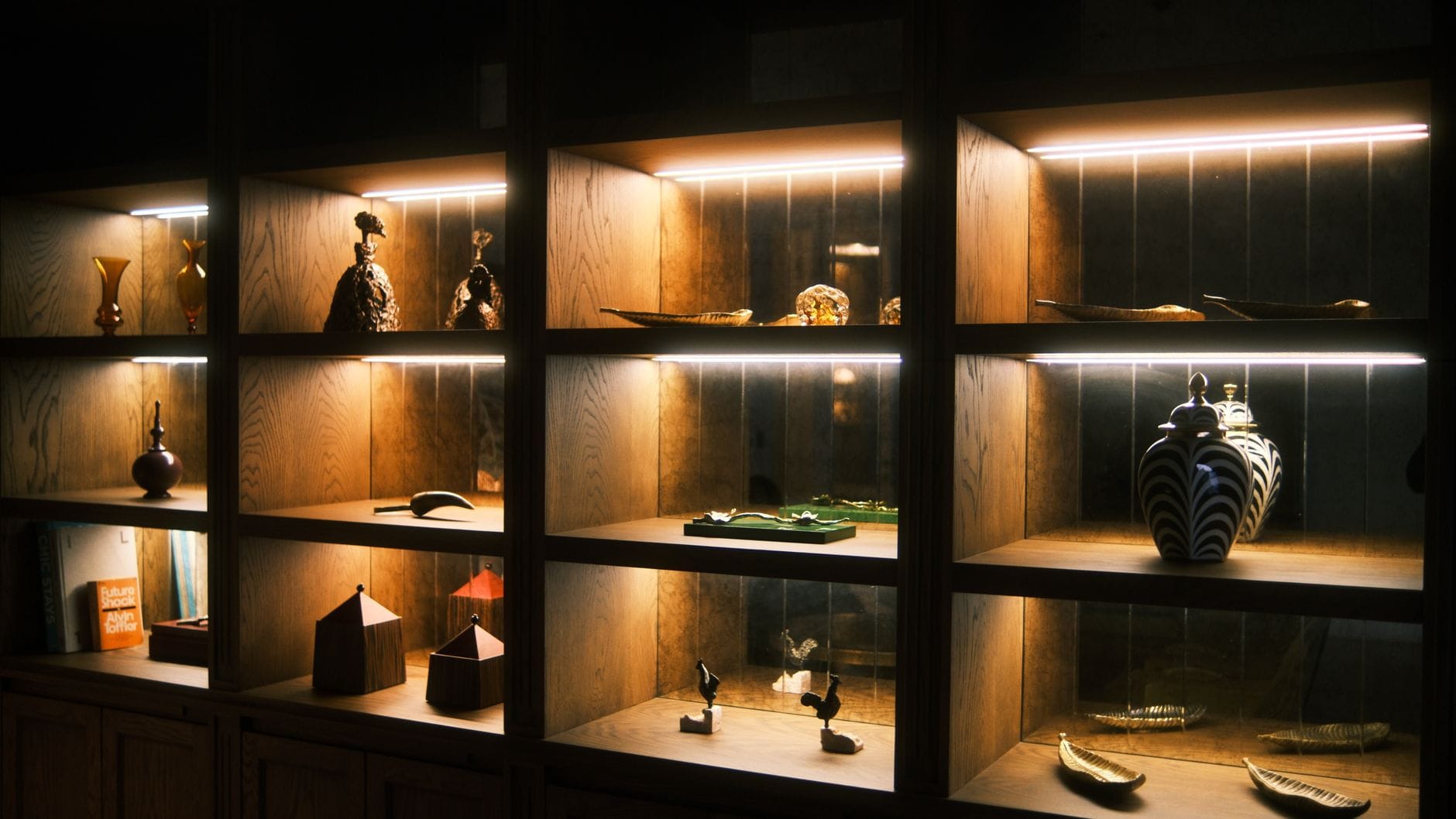
Asian HNWIs holding excess cash above a 10–12% liquidity buffer face significant opportunity cost. Data shows whisky casks, fine wine, and rare watches have returned 8–14% annually — far outpacing cash yields while offering non-correlation to equity drawdowns.
Cash Allocation Strategy for HNWIs in Volatile Markets
With global equity markets shedding trillions in capitalisation across the first half of 2025 — the MSCI Asia Pacific Index recording drawdowns exceeding 12% at peak stress points — the question of optimal cash allocation has moved from theoretical to urgent for high-net-worth investors across the region. Family offices in Singapore and Hong Kong are reporting elevated cash weightings, with some allocators holding 15–25% of portfolios in liquid instruments, well above the historical 5–10% norm. The tension is real: cash preserves capital and provides optionality, but with core inflation still running above 2.5% across most APAC economies, every dollar parked in a savings account is quietly losing purchasing power.
The debate is not simply about risk tolerance. It is a structural question about what cash is actually for inside a sophisticated portfolio. For Asian family offices managing AUM in the USD 50 million to USD 500 million range, cash is less a safe haven and more a tactical instrument — a war chest that enables rapid deployment into dislocated assets when opportunity windows open. The distinction matters enormously when building an allocation framework that can survive multi-year volatility cycles.
What Does the Data Say About Cash and Opportunity Cost?
BlackRock's 2024 Global Family Office Survey found that APAC family offices held an average cash weighting of 19%, the highest of any region globally, compared to 12% for their European counterparts. While this reflects genuine risk aversion in the post-COVID rate environment, it also represents a significant drag on long-term compounding. A USD 10 million cash position earning 3.5% annually in a high-yield savings account generates USD 350,000 per year — but a comparable allocation to a diversified alternative asset portfolio, including whisky casks, fine wine, and rare watches, has historically returned 8–14% per annum on a risk-adjusted basis according to Knight Frank's Luxury Investment Index.
The Knight Frank Luxury Investment Index, which tracks collectible and passion asset performance, posted a 9% aggregate gain in 2023 and a further 7% in 2024, outperforming both global equities on a volatility-adjusted basis and cash instruments across the same period. Rare Scotch whisky, in particular, delivered cask-level returns averaging 12.6% per annum over the past decade according to the Whisky Cask Club market index — a figure that has attracted growing interest from Singapore-based multi-family offices seeking non-correlated return streams.
Why Alternative Assets Are Gaining Ground Among Asian HNWIs
The allocation shift toward tangible alternatives is not incidental. Asian ultra-high-net-worth investors — defined by UBS and Julius Baer as those with investable assets above USD 30 million — have been systematically diversifying away from public markets since 2022. Hong Kong auction data from Sotheby's and Christie's shows Asian buyers accounting for 48% of total global fine wine and spirits hammer value in 2024, up from 31% in 2019. Japanese collectors, in particular, have emerged as dominant buyers of aged Scotch whisky at auction, with a single cask of 1988 Karuizawa fetching HKD 1.2 million at Bonhams Hong Kong in late 2024.
This demand profile has two implications for HNWI allocation strategy. First, illiquid alternatives are no longer purely a Western institutional play — they are increasingly liquid, with active secondary markets operating across Singapore, Hong Kong, and Tokyo. Second, the scarcity premium embedded in aged whisky casks, first-growth Bordeaux vintages, and reference-grade vintage watches is structurally insulated from the interest rate cycle that drives equity and bond volatility. When the Federal Reserve pivots, it does not reprice a 30-year-old Speyside cask.
How Should HNWIs Structure Their Cash Versus Alternatives Split?
Leading private banks in Singapore, including DBS Private Bank and UOB Private Wealth, have begun recommending a tiered liquidity framework for HNWI clients navigating elevated volatility. The model typically segments the portfolio into three buckets: a liquidity reserve of 8–12% in cash or near-cash instruments for operational needs and tactical deployment; a core alternatives sleeve of 15–25% across whisky casks, fine wine, art, and classic cars; and a growth allocation of 60–70% across public and private markets. This structure deliberately limits cash drag while maintaining the optionality that Asian family offices prize.
The critical insight from advisers at firms like Pictet Asia and Lombard Odier Singapore is that cash should not be a passive holding — it should have a deployment mandate attached. Investors who held elevated cash in Q4 2022 and failed to deploy into distressed credit or discounted collectibles missed one of the clearest entry windows in a decade. The opportunity cost of uninvested cash is not just nominal yield foregone; it is the compounding return from assets that were temporarily mispriced during peak volatility.
The Forward View: Asia's Appetite for Non-Correlated Returns
Looking ahead, the structural case for alternatives over excess cash is strengthening across APAC. Singapore's Monetary Authority has continued to position the city-state as a hub for family office activity, with over 1,100 single-family offices registered as of end-2024 — a figure that has tripled since 2020. Many of these offices are actively building out their passion asset allocations, with whisky casks emerging as a preferred entry point given their relatively low minimum investment thresholds (GBP 5,000–15,000 per cask), transparent valuation benchmarks, and strong secondary market liquidity through specialist brokers. For HNWI investors across Hong Kong, Singapore, and Bangkok who are holding excess cash above their operational buffer, the more precise question is not whether to hold cash during volatility — it is what to do with the cash that is sitting idle beyond that buffer. The answer, increasingly, is pointing toward tangible, scarce, and non-correlated assets with a proven track record across multiple market cycles.
💼 Exploring alternative asset allocation? Speak to Whisky Cask Club — Singapore's leading specialists in Scottish whisky cask investment.
Frequently Asked Questions
How much cash should HNWIs hold during market volatility?
Most private banking frameworks recommend an 8–12% liquidity reserve for HNWIs, covering operational needs and tactical deployment. Holding significantly above this level — beyond 20% — introduces meaningful opportunity cost, particularly when inflation erodes real purchasing power and alternative assets offer non-correlated returns in the 8–14% range.
Are alternative assets like whisky casks genuinely liquid enough for HNWI portfolios?
Increasingly, yes. The secondary market for whisky casks has matured significantly, with specialist brokers in Singapore and the UK facilitating cask sales within 30–90 days. Platforms such as Whisky Cask Club provide transparent valuations and active buyer networks, making casks a viable allocation for investors who previously viewed them as fully illiquid.
What is the historical return on whisky cask investment compared to cash?
According to the Whisky Cask Club market index, Scotch whisky casks have delivered average annualised returns of approximately 12.6% over the past decade. This compares favourably to high-yield savings rates of 3–4% in Singapore and Hong Kong, and does so with low correlation to equity market drawdowns.
Why are Asian family offices increasing their alternative asset allocations?
Asian family offices are responding to both pull and push factors. On the push side, elevated equity volatility and compressed fixed-income yields have reduced the appeal of traditional 60/40 portfolios. On the pull side, the maturation of secondary markets for fine wine, whisky, art, and watches — combined with strong regional auction demand — has made alternatives more accessible and more liquid than at any prior point.
Which alternative assets are most popular among Singapore and Hong Kong HNWIs?
Fine wine, aged Scotch whisky casks, rare watches, and contemporary Asian art rank consistently among the top alternative allocations for Singapore and Hong Kong family offices. Whisky casks have gained particular traction given their low entry point, tax-efficient structure in the UK, and strong demand from Japanese and Southeast Asian collectors driving secondary market liquidity.