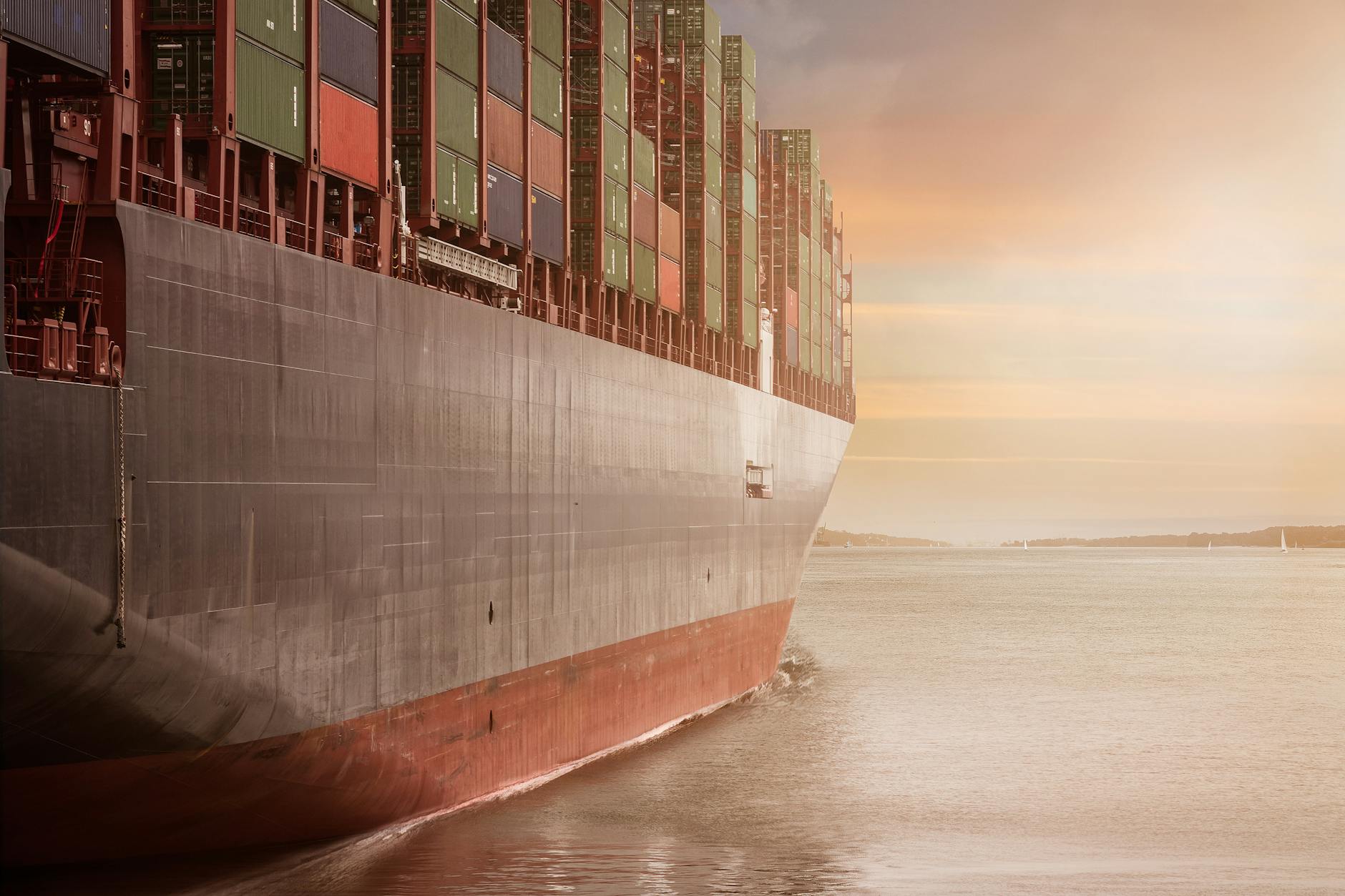
A government report finds alcohol's annual social cost in Karnataka is ₹51,000 crore, exceeding state excise revenue. This creates regulatory tension, impacting the demand narrative for Asia-Pacific investors in premium spirits and whisky casks.
Karnataka's Alcohol Social Cost: What the ₹51,000 Crore Figure Really Signals
A new government-backed report has placed the annual social cost of alcohol use in Karnataka — one of India's most economically significant southern states — at ₹51,000 crore, equivalent to approximately £4.8 billion or roughly USD 5.8 billion. The figure encompasses healthcare expenditure, lost productivity, road accident costs, law enforcement burden, and family welfare impacts attributable to heavy or harmful drinking. It is, by any measure, a number large enough to reshape policy conversations at both state and national level in India, and it carries direct implications for investors tracking the South and Southeast Asian spirits market.
Karnataka is not a marginal market. The state has a population exceeding 67 million, a fast-growing urban middle class centred on Bengaluru, and one of the higher per-capita alcohol consumption rates among Indian states. The state excise department has historically generated substantial revenue from liquor sales — Karnataka's excise collections exceeded ₹34,000 crore in the 2023–24 fiscal year alone — making the newly published social cost figure more than twice the revenue the government collects. That ratio is a political flashpoint, and it is already being cited by prohibition advocates seeking stricter controls.
Why This Matters for Alternative Asset Investors in Asia-Pacific
For family offices and private banks in Singapore, Hong Kong, and Bangkok monitoring spirits as an alternative asset class, the Karnataka report is a data point with two distinct readings. The first is cautionary: if Indian state governments respond to social cost evidence with tighter licensing, higher taxes, or partial prohibition — as Andhra Pradesh and Bihar have done in recent years — the addressable domestic market for premium imported Scotch and Indian single malts contracts. That suppresses one of the most anticipated long-run demand drivers for cask investors banking on Asian consumption growth.
The second reading is more nuanced and arguably more investable. Regulatory pressure in India historically pushes premium consumption underground or redirects it toward duty-free and travel retail channels in the Gulf, Singapore, and Southeast Asia — corridors where Indian diaspora spending on premium Scotch is already measurable. Data from the Scotch Whisky Association shows India remained the largest volume market for Scotch globally in 2024, receiving over 180 million bottles, with premium expressions growing at a faster rate than standard blends. Regulatory tightening at the state level has not historically dented that national import trend; if anything, it has concentrated spending among higher-income cohorts who access premium product through legal channels.
Cask Investment: The Supply-Side Case Remains Intact
The Karnataka social cost study has no direct bearing on Scottish whisky cask supply, which is determined by distillery production decisions made years or decades in advance. What it does affect is the demand-side narrative that underpins cask valuations over a 5–15 year investment horizon. Scotch whisky cask values have appreciated at a compound annual rate of approximately 10–15% over the past decade according to data tracked by specialist brokers, outperforming many traditional fixed-income instruments over the same period. The Knight Frank Luxury Investment Index has consistently included rare whisky among its top-performing collectible asset categories.
For investors in Singapore and Hong Kong — where whisky cask ownership is treated as a tangible, non-correlated alternative asset — the India demand story remains a core part of the thesis despite state-level regulatory noise. Singapore-based cask specialists report growing interest from Indian family offices seeking to hold Scotch casks as both a portfolio diversifier and a culturally resonant store of value. The scarcity dynamic for aged single malt, particularly from closed or limited-output distilleries, is independent of any single national market's regulatory posture.
Regional Allocation Context: How Asia-Pacific Investors Are Positioning
Across the Asia-Pacific region, allocation to whisky casks and fine spirits as alternative assets has grown materially since 2020. Auction data from Bonhams and Sotheby's Hong Kong shows rare Scotch whisky lots achieving consistent price premiums of 20–40% above pre-sale estimates in the 2023 and 2024 cycles. Japanese and Taiwanese collectors have historically anchored the top end of the market, but Singapore and Hong Kong-based buyers — including a growing cohort of South Asian family offices — have become increasingly active participants at the £10,000–£100,000 per cask level.
The Karnataka data serves as a reminder that emerging market demand for premium spirits is structurally complicated by public health politics. Investors who understand that complexity — and position accordingly in upstream assets like Scotch casks rather than downstream retail exposure — are better insulated from the policy cycle. The social cost debate in India is unlikely to be resolved quickly; Karnataka's report will feed into a multi-year legislative and public health conversation. Cask investors with a 7–12 year horizon have time on their side, and the fundamental scarcity of aged Scotch whisky means the asset class does not depend on any single market's regulatory outcome to generate returns.
Frequently Asked Questions
What is the social cost of alcohol in Karnataka and how was it calculated?
The social cost figure of ₹51,000 crore per year was produced by a government-backed study covering Karnataka state. It aggregates direct and indirect costs including healthcare spending on alcohol-related illness, lost economic productivity, road accident costs attributable to drunk driving, law enforcement expenditure, and household welfare impacts. The methodology follows frameworks used by the World Health Organization and comparable studies in other jurisdictions.
How does India's regulatory environment affect Scotch whisky cask investment returns?
Indian state-level prohibition or tax increases can dampen domestic consumption of imported Scotch in the short term, but India's national import volumes have remained resilient through multiple state-level regulatory shifts. Cask investors are exposed to long-run global demand for aged single malt, which is diversified across the US, Europe, East Asia, and South Asia. No single market's policy cycle has historically been sufficient to materially alter cask appreciation trajectories over a 7–15 year holding period.
What annual returns have Scotch whisky casks delivered for investors?
Specialist brokers and index data suggest Scotch whisky casks have delivered compound annual returns of approximately 10–15% over the past decade, though returns vary significantly by distillery, age, and cask type. The Knight Frank Luxury Investment Index has ranked rare whisky among the top-performing collectible asset categories for several consecutive years. Past performance does not guarantee future results, and investors should seek independent advice before allocating.
Why are Singapore and Hong Kong significant hubs for whisky cask investment in Asia?
Both cities offer favourable regulatory environments for holding tangible alternative assets, strong private banking infrastructure, and deep networks of high-net-worth and ultra-high-net-worth individuals with appetite for non-correlated returns. Singapore in particular has emerged as a regional centre for whisky cask brokerage, with several specialist firms operating under MAS oversight. The city-state's free trade agreements also facilitate the physical storage and eventual bottling or re-export of cask contents.
Does the Karnataka alcohol report affect Indian single malt whisky as an investment asset?
Indirectly, yes. Indian single malt distilleries such as Amrut, Paul John, and Indri-Trini have attracted growing collector and investor interest globally. A tightening regulatory environment in key Indian states could constrain domestic sales revenue for these producers, potentially affecting their expansion and production volume decisions. However, all three brands derive a significant and growing share of revenue from export markets, which provides a degree of insulation from domestic policy shifts.
💼 Exploring alternative asset allocation? Speak to Whisky Cask Club — Singapore's leading specialists in Scottish whisky cask investment.