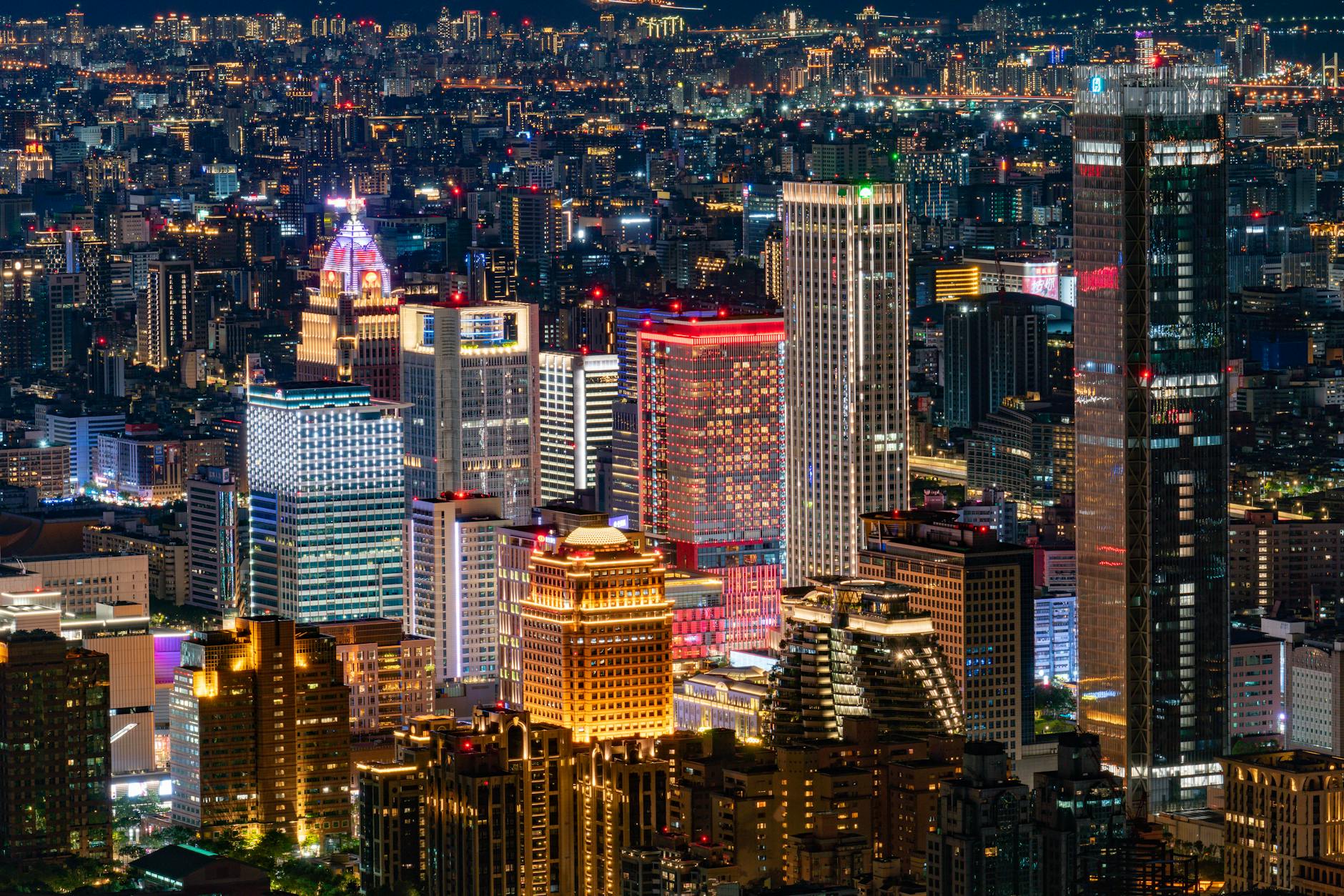
Taiwan's financial holding companies posted record Q1 2024 profits exceeding NT$180 billion on a TAIEX surge. Historically, such equity windfalls drive Taiwanese capital into alternative assets. Whisky casks, fine wine, watches, art, and collector cars are the primary beneficiaries.
Taiwan Financial Firms Record Q1 Profits Signal Broader Wealth Reallocation
Taiwan's listed financial holding companies collectively posted their highest-ever first-quarter net profits in 2024, with combined earnings surging past NT$180 billion (approximately US$5.6 billion) — a figure that has sent ripples well beyond Taipei's financial district. The rally in the Taiwan Stock Exchange Weighted Index (TAIEX), which climbed more than 26% over the twelve months to March 2024, was the primary engine, lifting investment returns, brokerage commissions, and wealth management fee income simultaneously. For family offices and private banks operating across Hong Kong, Singapore, and Tokyo, the numbers are not just a Taiwan story — they are a leading indicator of where significant new capital is being formed and, critically, how it is likely to be deployed.
If you manage or advise on a multi-asset portfolio with any exposure to Asia-Pacific wealth flows, this matters directly to your allocation decisions. When equity markets generate outsized returns in a compressed window, high-net-worth families systematically rotate a portion of those gains into non-correlated, tangible stores of value — a pattern documented repeatedly after the 2017 Taiwan bull run, the 2020 Nasdaq surge, and the 2021 Hang Seng recovery. The question is not whether Taiwanese wealth will diversify; it is which alternative asset classes capture the flow first.
The Profit Surge: What the Numbers Actually Show
Cathay Financial Holding, Taiwan's largest financial conglomerate by assets, reported Q1 2024 net profit of NT$42.3 billion, more than doubling its year-earlier result. Fubon Financial Holding posted NT$37.8 billion, while CTBC Financial Holding recorded NT$21.6 billion — both multi-year highs. The gains were not confined to proprietary trading desks. Wealth management divisions at all three groups reported double-digit percentage increases in fee income as retail and high-net-worth clients accelerated subscriptions to equity-linked products, structured notes, and offshore fund platforms. Brokerage volumes on the TAIEX averaged NT$320 billion per session in January and February 2024, roughly 40% above the prior-year baseline.
The structural driver behind these numbers is Taiwan's dominance in the global semiconductor supply chain. TSMC alone accounts for roughly 35% of the TAIEX's market capitalisation, and its share price appreciation of approximately 70% over the twelve months to March 2024 created a wealth effect that cascaded through insurance portfolios, pension allocations, and private banking books. Taiwan's Financial Supervisory Commission (FSC), the sector's primary regulator, noted in its Q1 review that unrealised gains on equity holdings at life insurers — historically the largest domestic institutional investors — reached their highest level since records began. When paper gains of that magnitude accumulate, conversion into liquid, portable, and non-correlated assets becomes a boardroom-level conversation.
"When TAIEX-linked wealth creation reaches this scale, the secondary effect on alternative asset demand — particularly tangible, portable stores of value — is historically both swift and durable." — Alt Asset Asia analysis
How Taiwanese Capital Has Historically Flowed Into Alternative Assets
Taiwan has a well-documented history of channelling equity-market windfalls into hard assets. After the 2017 TAIEX rally, Hong Kong auction houses — including Christie's and Sotheby's Asia — recorded a measurable uptick in Taiwanese buyer registrations for wine, watches, and fine art two to three quarters. The pattern repeated in 2021, when Taiwanese collectors were identified as among the top five buyer nationalities at several major watch auctions in Geneva and Hong Kong, according to data published by Phillips Watches. Rare Scotch whisky, in particular, has attracted growing interest from Taiwanese family offices, partly because cask ownership is treated as a commodity asset rather than a financial instrument under current FSC guidelines, reducing regulatory friction.
Singapore-based multi-family offices that serve Taiwanese ultra-high-net-worth clients report that whisky cask allocations typically range from 2% to 5% of a diversified alternative sleeve, sitting alongside classic cars, wine, and art. The Knight Frank Wealth Report 2024 ranked rare whisky as one of the top-performing passion assets over the prior decade, with the Rare Whisky Apex 1000 Index recording cumulative appreciation of over 280% in the ten years to end-2023. For a Taiwanese family office sitting on newly realised equity gains, a cask portfolio offering low correlation to public markets, no annual management fee, and a clear exit pathway through specialist brokers or auction presents a compelling case.
5 Alternative Asset Classes Positioned to Capture Taiwan Wealth Flows
The following asset classes have historically absorbed capital from Asia-Pacific equity wealth events and are structurally well-positioned to benefit from the current Taiwan profit cycle:
- Scotch whisky casks: Cask values for aged single malts from distilleries including Macallan, Glenfarclas, and Springbank have appreciated at compound annual rates of 8–15% over the past decade according to WhiskyInvestDirect and Rare Whisky 101 data. Singapore and Hong Kong serve as natural custody and trading hubs for Asian buyers.
- Investment-grade watches: Reference pieces from Patek Philippe (notably the Nautilus 5711) and Rolex (Daytona in precious metal) have demonstrated price resilience even during secondary market corrections in 2022–2023, with Taiwanese buyers consistently active at Phillips and Christie's Asia sales.
- Fine wine and Burgundy en primeur: The Liv-ex Fine Wine 1000 index recovered 4.2% in Q1 2024 after a 2023 correction, and Burgundy grand cru allocations remain heavily oversubscribed among Asian private banks including DBS Private Bank and Julius Baer's Asia desk.
- Blue-chip contemporary art: Works by Zao Wou-Ki and Yoshitomo Nara continue to command premium results at Sotheby's and Christie's Hong Kong, with Taiwanese collectors historically among the most active bidders for Chinese-diaspora and East Asian contemporary works.
- Classic and collector cars: Japanese domestic market (JDM) vehicles — particularly the Nissan Skyline GT-R R34 and Toyota Supra A80 — have seen auction premiums of 30–60% above guide in Singapore and Taiwan over the past 18 months, driven by millennial wealth accumulation and finite global supply.
Each of these asset classes shares a common characteristic: supply is structurally constrained, provenance is verifiable, and Asian buyer demand provides a regional liquidity floor that limits downside. For a Taiwanese family office or private banking client rotating out of equity gains, the combination of capital preservation, moderate appreciation, and portfolio diversification is the core investment thesis.
Regulatory and Structural Considerations for Asian Allocators
Taiwan's FSC has not issued specific guidance on passion asset or alternative tangible asset classification, which in practice means that whisky casks, wine, art, and watches are treated as personal property rather than regulated financial instruments. This creates both opportunity and responsibility for advisers. Singapore's Monetary Authority of Singapore (MAS) takes a similarly permissive stance on tangible alternative assets held outside a fund structure, making Singapore-domiciled family offices a natural intermediary for Taiwanese capital seeking offshore diversification. Several single-family offices registered under MAS's Variable Capital Company (VCC) framework have begun incorporating whisky cask and fine wine sleeves as part of their broader commodities allocation, citing the non-financial-instrument classification as a structural advantage.
Hong Kong's Securities and Futures Commission (SFC) has been more active in scrutinising collective investment schemes involving alternative assets, but direct ownership of physical assets — a cask of Scotch, a case of Burgundy, a watch held in a freeport — falls outside SFC jurisdiction. For Taiwanese investors routing capital through Hong Kong or Singapore structures, this regulatory clarity is a meaningful factor in due diligence. Advisers at leading private banks including UBS Wealth Management Asia, Credit Agricole Indosuez, and HSBC Private Banking have all expanded their alternative asset coverage teams in Singapore over the past two years, a direct response to growing client demand from Northeast Asian wealth centres including Taiwan, South Korea, and Japan.
What to Watch: Key Signals for Alternative Asset Allocators
The Taiwan profit cycle is not guaranteed to persist. The TAIEX's semiconductor-heavy composition makes it vulnerable to any deterioration in AI-driven chip demand or a resumption of US-China technology export restrictions. However, the wealth already created in Q1 2024 is real, liquid, and actively seeking allocation. The following signals will determine the pace and scale of flows into alternative assets over the next two to four quarters:
- FSC insurance asset allocation data (Q2 2024 release, expected July): Any increase in the "other investments" category at major life insurers will confirm that institutional capital is moving beyond equities.
- Hong Kong and Singapore auction house preview lists (May–June 2024): A rise in Taiwanese buyer registrations at Phillips, Bonhams, and Christie's Asia would confirm the wealth effect is translating into bidding activity.
- TAIEX Q2 performance: Sustained index levels above 20,000 points will extend the unrealised gain pool and delay forced liquidation, giving family offices more flexibility on timing their alternative asset entry.
- MAS VCC registration data (semi-annual): Growth in Singapore-domiciled family office structures with Taiwanese beneficial owners would indicate formalisation of the offshore diversification trend.
- Rare Whisky Apex 1000 Index monthly readings: Any acceleration above the current 8–10% annualised trend would attract additional speculative and institutional interest from Asia-Pacific allocators.
The immediate action for advisers and family office principals is to position client conversations around the post-equity-gain diversification thesis now, before the Q2 auction season and the typical mid-year portfolio review cycle compress the available window. Whisky cask specialists with Singapore operations, fine wine merchants with Hong Kong freeport storage, and watch dealers with verified secondary market access are the three counterparties most likely to see inbound enquiries from Taiwanese capital over the next six months. Acting ahead of that demand curve — rather than responding to it — is where allocation alpha is genuinely generated.
Frequently Asked Questions
How do Taiwan financial firms' record Q1 profits relate to alternative asset investment?
Record profits at Taiwan's financial holding companies reflect a major equity wealth creation event. Historically, when Asian equity markets generate outsized returns, high-net-worth families and family offices rotate a portion of gains into non-correlated tangible assets such as whisky casks, fine wine, watches, and art. The Q1 2024 Taiwan profit surge is therefore a leading indicator of increased alternative asset demand from Taiwanese capital over the following two to four quarters.
Which alternative assets are most accessible to Taiwanese investors seeking diversification?
Scotch whisky casks, investment-grade watches, fine wine, blue-chip contemporary art, and collector cars are the most accessible categories. Whisky casks and wine held in Singapore or Hong Kong freeports are particularly attractive because they are classified as physical commodities rather than regulated financial instruments under both Taiwan's FSC and Singapore's MAS frameworks, reducing compliance complexity for offshore buyers.
What role does Singapore play in channelling Taiwanese alternative asset investment?
Singapore serves as the primary offshore hub for Taiwanese family office capital seeking alternative asset exposure. The MAS Variable Capital Company (VCC) framework allows family offices to hold physical assets — including whisky casks and fine wine — within a regulated but flexible structure. Singapore's freeport facilities, specialist brokers, and proximity to major auction house Asia operations make it the natural entry point for Taiwanese investors entering the alternative asset space.
What is the Rare Whisky Apex 1000 Index and why does it matter to Asian investors?
The Rare Whisky Apex 1000 Index tracks the secondary market prices of 1,000 of the most actively traded rare Scotch whisky bottles. It recorded cumulative appreciation of over 280% in the decade to end-2023, outperforming most traditional asset classes on a risk-adjusted basis. For Asian investors, it provides a benchmark for the whisky cask market's performance and helps frame cask investment as a data-supported allocation rather than a lifestyle purchase.
How should a family office approach sizing an alternative asset allocation after an equity market windfall?
Singapore-based multi-family offices serving Taiwanese clients typically allocate 2% to 5% of a diversified alternative sleeve to passion assets such as whisky, wine, and watches. The exact sizing depends on liquidity requirements, investment horizon, and the client's existing exposure to real assets. Advisers generally recommend entering via direct physical ownership rather than fund structures to maximise regulatory simplicity and avoid layers of management fees.
Source: Whisky Bulletin coverage of cask investment on Whisky Bulletin.
💼 Exploring alternative asset allocation? Speak to Whisky Cask Club — Singapore's leading specialists in Scottish whisky cask investment.