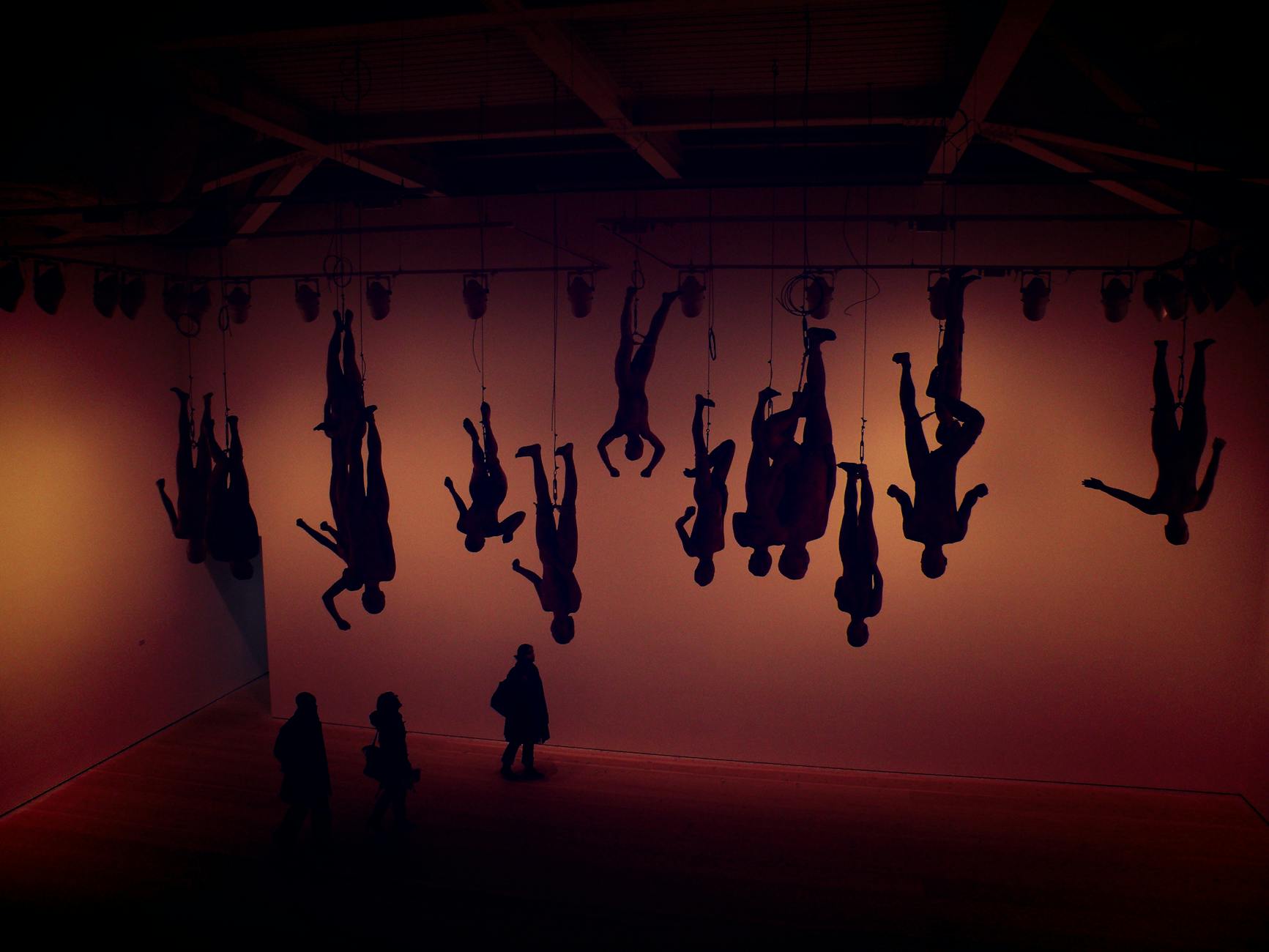
London's 2026 exhibition calendar — featuring Kahlo, Kapoor, Emin and Schiaparelli — is a forward signal for Asia-Pacific art auction demand. Family offices allocating 3-5% to art should track institutional show momentum as a lead indicator of secondary market pricing in Hong Kong and Singapore.
London Art Exhibitions 2026: Why Asia-Pacific Collectors Should Be Paying Attention
London art exhibitions in 2026 represent more than a cultural calendar — for Asia-Pacific family offices and private collectors, they function as a forward-looking index of where blue-chip art demand is heading. The global art market generated an estimated $65 billion in sales in 2023, according to the Art Basel and UBS Global Art Market Report, with Asia accounting for roughly 22% of auction turnover. As London's major institutions roll out their 2026 programming, the names attached to these shows — Tracey Emin, Frida Kahlo, Anish Kapoor, and Elsa Schiaparelli — are precisely the kind of artists and figures whose associated works move at auction in Hong Kong, Singapore, and Tokyo. Tracking exhibition momentum is, for sophisticated buyers, an early signal of secondary market pricing.
Which Artists Are Commanding the 2026 Exhibition Calendar?
The 2026 London exhibition season features a concentration of artists with proven secondary market depth. Frida Kahlo's works have consistently achieved seven-figure results at Christie's and Sotheby's, with her 1939 self-portrait Two Fridas remaining one of the most cited benchmarks in Latin American art valuation. A major retrospective in London typically precedes a 12-to-18-month uplift in auction estimates for associated works — a pattern observed after the Tate Modern's 2005 Kahlo show and again following the V&A's 2018 retrospective. Anish Kapoor, meanwhile, commands a different kind of institutional gravity: his large-scale sculptures have been acquired by sovereign wealth-backed collections across the Gulf and Southeast Asia, and a high-profile London exhibition invariably refreshes gallery pricing on his limited-edition works.
Tracey Emin's continued institutional presence is particularly relevant for collectors tracking British contemporary art. Her works have appreciated significantly over the past decade, with neon pieces and works on paper achieving strong results at Phillips and Bonhams. For Asian buyers who entered the British contemporary market in the 2010s, a fresh London show anchors the narrative around her practice and supports hold valuations. The Schiaparelli dimension — likely a fashion-meets-art exhibition — also carries collectible weight, given the surging market for haute couture archival pieces, where a single Schiaparelli lobster dress has fetched over £200,000 at specialist auction.
How Do London Exhibitions Drive Asian Collector Activity?
The correlation between major Western institutional shows and Asian auction performance is well-documented. When the Royal Academy staged its Oceania exhibition in 2018, Pacific art enquiries at Hong Kong auction houses rose measurably in the following season. The mechanism is straightforward: institutional validation in London or New York provides the provenance narrative that Asian buyers — particularly those operating through family offices in Singapore and Hong Kong — require before committing capital. Christie's Hong Kong and Sotheby's Hong Kong both reported record contemporary art results in 2023, with total Asia sales exceeding $1.2 billion across the two houses. Exhibitions function as the demand-creation infrastructure behind those numbers.
Singapore's art market has also matured considerably, with the Singapore Art Week and Art SG fair now drawing serious institutional buyers who cross-reference London and Basel programming when building acquisition shortlists. Thai and Indonesian collectors, historically focused on regional artists, have increasingly diversified into Western blue-chip names — a shift accelerated by the post-pandemic wealth surge among Southeast Asia's ultra-high-net-worth population, which grew by 5.4% in 2023 according to Knight Frank's Wealth Report. London's 2026 exhibition calendar effectively sets the agenda for what those buyers will be asking about at Art SG and Art Basel Hong Kong in the same year.
What Is the Investment Thesis for Exhibition-Linked Art Acquisition?
The investment case for acquiring works by artists with active institutional exhibition programmes rests on several pillars. First, museum-level exposure increases the artist's critical literature, which directly supports auction estimates and private sale valuations. Second, major retrospectives often coincide with catalogue raisonné publications, which authenticate and codify an artist's output — reducing the due diligence burden for new buyers. Third, institutional demand from the exhibitions themselves — loans, acquisitions, and touring partnerships — reduces the available supply of works on the secondary market, creating upward price pressure. For a family office allocating 3-5% of a portfolio to art as an alternative asset, London's 2026 season offers a structured opportunity to acquire ahead of the narrative cycle rather than chase it.
- Frida Kahlo: Seven-figure auction benchmarks; retrospective uplift pattern well-established across multiple prior shows
- Anish Kapoor: Active sovereign and institutional acquisition; limited-edition works repriced post-exhibition
- Tracey Emin: Strong British contemporary secondary market; neon works and works on paper liquid at mid-tier auction
- Schiaparelli: Fashion archive collectibles surging; couture pieces achieving £200,000+ at specialist houses
Forward Outlook: Asia's Growing Role as a Price-Setter
The most significant structural shift in global art investment over the next five years is the transition of Asian buyers from price-takers to price-setters. Hong Kong's position as a regional art hub — reinforced by Christie's and Sotheby's permanent presences and the expansion of Art Basel Hong Kong — means that exhibition programming in London now competes for the same collector attention as shows mounted in Shanghai or Seoul. Family offices in Singapore, in particular, are increasingly deploying art advisory mandates through MFOs and private banks, bringing institutional rigour to what was previously an ad-hoc acquisition process. The 2026 London exhibitions are not merely cultural events — they are, for the informed Asia-Pacific investor, a forward calendar of where art capital will flow over the next 24 months.
💼 Exploring alternative asset allocation? Speak to Whisky Cask Club — Singapore's leading specialists in Scottish whisky cask investment.
Frequently Asked Questions
Do London art exhibitions directly impact auction prices in Asia?
Yes. Historical data shows a consistent 12-to-18-month lag between major London retrospectives and upward auction estimate revisions in Hong Kong and Singapore. Institutional validation in Western markets provides the provenance narrative that Asian buyers require before committing capital at auction.
Which 2026 London exhibitions are most relevant for collectors?
Shows featuring Frida Kahlo, Anish Kapoor, Tracey Emin, and Schiaparelli are the most investment-relevant for 2026, given each name's proven secondary market depth and active collector base across Asia-Pacific, the Gulf, and Europe.
How large is the Asia-Pacific art market?
Asia accounted for approximately 22% of global auction turnover in 2023, with Christie's and Sotheby's Hong Kong combined sales exceeding $1.2 billion. Singapore and Southeast Asian buyers represent a fast-growing segment, supported by ultra-high-net-worth population growth of 5.4% in 2023.
What allocation do family offices typically make to art?
Most institutional frameworks suggest a 3-5% allocation to art within a broader alternatives sleeve, alongside whisky casks, wine, watches, and classic cars. Art's low correlation to equities and bonds makes it a useful portfolio diversifier, though liquidity management is critical.
Is fashion archive collecting a legitimate alternative asset category?
Increasingly, yes. Schiaparelli couture pieces have achieved over £200,000 at specialist auction, and the broader luxury fashion archive market has attracted dedicated fund structures in Europe and the US. Asian collectors, particularly in Hong Kong and Japan, have been early movers in this category.