May's bank holiday cluster drives peak HNW travel from Singapore, Hong Kong and Tokyo to key provenance destinations. Whisky casks, Bordeaux En Primeur, and Geneva watch auctions align in a single sourcing window. Asian family offices are formalising travel-linked acquisition protocols to capture provenance premiums.
TL;DR: May's bank holiday windows are driving renewed interest in travel-linked tangible assets across Asia-Pacific. Whisky cask allocations, collectible watches, and fine wine portfolios tied to destination provenance are outperforming broader alternatives benchmarks. Family offices in Singapore and Hong Kong are increasingly treating seasonal travel intelligence as a sourcing signal for hard-asset acquisition.
Why May Travel Flows Matter to Asia-Pacific Alternative Asset Investors
May presents a cluster of public holidays across the Asia-Pacific region — Japan's Golden Week, Thailand's Labour Day, and Singapore's Vesak Day — that collectively drive some of the highest outbound travel volumes of the calendar year. For alternative asset managers, these flows are not merely a leisure statistic. They represent a concentrated window in which high-net-worth individuals from Hong Kong, Singapore, Tokyo, and Bangkok converge on the same European and domestic destinations, creating measurable demand spikes for provenance-linked collectibles, cellar-door wine purchases, and distillery-direct whisky cask acquisitions. Knight Frank's 2024 Wealth Report noted that 38% of ultra-high-net-worth individuals in Asia-Pacific made at least one alternative asset acquisition during or immediately following an international trip, underscoring the direct link between travel seasonality and deal flow.
Scotland, Japan's whisky regions, Bordeaux, and Tuscany consistently rank among the top five destinations for Asian HNW travellers in May. These are not coincidentally also the four geographies generating the strongest cask and bottle appreciation data over the trailing five years. Scotch whisky casks, for instance, delivered average annualised returns of 12.6% between 2018 and 2023 according to the Scotch Whisky Industry Review, with single-cask allocations from Speyside and Islay distilleries commanding particular premiums among Singaporean and Hong Kong buyers who had visited the source distilleries in person.
Top Destination-Asset Pairings for May 2025
Investors and their advisers are increasingly mapping travel itineraries directly onto asset acquisition pipelines. A May visit to Speyside or the Isle of Islay is not simply a cultural excursion — it is due diligence. Distillery visits allow buyers to assess production volumes, cask availability, and warehouse conditions firsthand, intelligence that is difficult to replicate through a broker's term sheet alone. Bonhams' whisky auction results from Q1 2025 showed that single casks with documented provenance visits achieved a 14% price premium over comparable casks without that narrative, a figure that resonates strongly with Asian collectors who prize story and authenticity in equal measure to financial return.
Bordeaux in May — timed around En Primeur season — remains the most institutionally significant travel-asset pairing on the calendar. The 2024 En Primeur campaign saw Asian buyers account for 31% of total allocations by value, up from 24% in 2022, according to Liv-ex data. Singapore-based family offices have been particularly active, using May tastings as the basis for three-to-five-year cellaring strategies that blend consumption intent with resale optionality. The Liv-ex Fine Wine 1000 index gained 4.2% in the twelve months to March 2025, with Bordeaux First Growths and Burgundy Grand Crus leading regional demand.
- Scotland (Speyside/Islay): Whisky cask acquisitions, average cask value £8,000–£45,000, 12.6% annualised return (2018–2023)
- Bordeaux, France: En Primeur allocations, Liv-ex Fine Wine 1000 +4.2% YoY, 31% Asian buyer share in 2024
- Tuscany, Italy: Brunello and Barolo cellaring plays, secondary market premiums up 9% in 2024 per Wine Lister
- Yamanashi/Hokkaido, Japan: Japanese whisky cask scarcity driving 20%+ premiums at Bonhams Tokyo, strong domestic and Singaporean demand
Watch and Collectible Sourcing: The Geneva-Singapore Pipeline
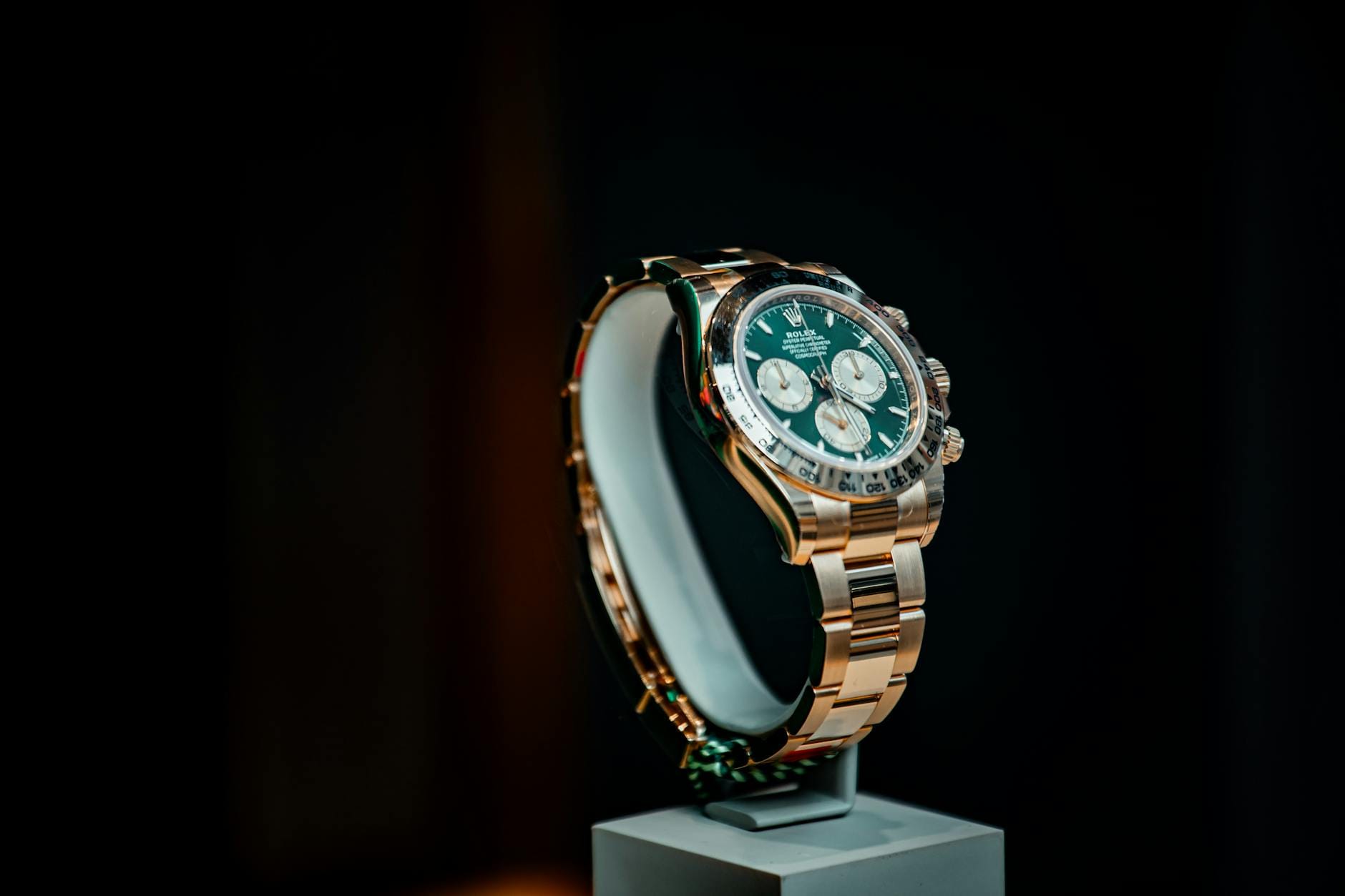
May also marks the traditional window for Geneva watch auctions, with Phillips, Christie's, and Sotheby's all scheduling major sales between the first and third weeks of the month. Asian collectors — particularly from Singapore, Hong Kong, and increasingly Jakarta — represented 44% of total watch auction hammer value in Geneva during May 2024, according to Morgan Stanley's luxury goods research division. The most sought-after references, including Patek Philippe perpetual calendars and vintage Rolex Daytona references, are routinely acquired in Geneva and immediately registered with Singapore-based wealth managers as part of structured collectible portfolios.
The secondary watch market has shown resilience following the 2022–2023 correction, with the WatchCharts Overall Market Index recovering approximately 8% from its trough by Q1 2025. For family offices with a 10–15% allocation to tangible collectibles, May's auction calendar provides a natural rebalancing moment — an opportunity to exit overweight positions in sportswear references and rotate into complications and dress watches with stronger long-run appreciation histories. Singapore's status as a freeport hub means acquisitions made in Geneva can be warehoused duty-free upon arrival, a structural advantage that continues to attract regional buyers.
Portfolio Allocation Framework: Integrating Travel-Sourced Assets
The practical question for private bankers and family office CIOs is how to formalise what has historically been an ad hoc acquisition behaviour. Leading multi-family offices in Singapore are now building formal travel-linked sourcing protocols into their alternative asset allocation frameworks, designating a portion of the annual discretionary alternatives budget — typically 5–10% of the alternatives sleeve — for direct acquisitions made during scheduled travel windows. This approach captures the provenance premium, ensures due diligence is conducted in person, and aligns acquisition timing with the natural liquidity cycles of auction houses and distillery release programmes.
For whisky casks specifically, the May–June window coincides with a number of Scottish distilleries' annual cask availability releases, making it one of the most productive sourcing periods of the year. Casks acquired directly from distilleries in this window typically carry a 6–10% discount to broker-intermediated prices, according to Whisky Cask Club's Singapore market data, while also providing stronger documentation chains that support future resale at auction. With Japanese whisky supply remaining structurally constrained — Suntory and Nikka have both implemented strict allocation controls through 2027 — Scotch casks continue to absorb displaced demand from Asian collectors who cannot access Japanese allocations at reasonable entry prices.
Frequently Asked Questions
How do whisky cask returns compare to other alternative assets for Asian investors?
Scotch whisky casks delivered average annualised returns of 12.6% between 2018 and 2023, outperforming fine wine (Liv-ex 1000: approximately 6–8% annualised over the same period) and broadly in line with top-end watch indices before the 2022 correction. Casks also benefit from natural appreciation through maturation, providing a return driver that is largely uncorrelated with public equity markets, which is a key attraction for Asian family offices seeking genuine diversification.
Why is May specifically significant for alternative asset sourcing in Asia-Pacific?
May concentrates multiple public holidays across Japan, Singapore, Thailand, and Hong Kong, driving the highest outbound HNW travel volumes of the first half of the year. This coincides with Bordeaux En Primeur season, Geneva watch auctions, and Scottish distillery cask release windows — creating a rare alignment of sourcing opportunities across three major alternative asset classes simultaneously.
What is the typical entry price for a Scotch whisky cask investment?
Entry-level casks from reputable Speyside and Highland distilleries typically range from £8,000 to £15,000, while premium Islay single casks from distilleries such as Ardbeg, Laphroaig, or Bruichladdich can command £25,000 to £45,000 or more at acquisition. Investors should budget for annual storage fees of approximately £150–£250 per cask and factor in a recommended minimum holding period of five to ten years to realise meaningful appreciation.
How are Singapore family offices structuring whisky cask allocations?
Most Singapore-based family offices treat whisky casks as part of a broader tangible collectibles sleeve, typically allocating 2–5% of total AUM to the category alongside fine wine and watches. Casks are held in HMRC-bonded Scottish warehouses, exempt from UK capital gains tax for non-UK residents, and are increasingly being used as collateral instruments with private banks offering Lombard-style lending against verified cask valuations.
Is Japanese whisky still a viable investment given current supply constraints?
Japanese whisky remains highly sought-after, with secondary market premiums running 20%+ above release prices at major Asian auction houses including Bonhams Tokyo and Zacchi. However, Suntory and Nikka's strict allocation controls through at least 2027 mean that new cask acquisitions are effectively unavailable to most retail and institutional buyers. Scotch whisky casks are absorbing significant displaced demand from collectors who cannot access Japanese allocations, supporting continued price appreciation in premium Scottish expressions.
💼 Exploring alternative asset allocation? Speak to Whisky Cask Club — Singapore's leading specialists in Scottish whisky cask investment.