TL;DR
A Miami waterfront compound famous from 'Scarface' and used by Richard Nixon lists for $237 million. This sets a new US price benchmark, highlighting ultra-prime real estate as a trophy asset attracting Asia-Pacific capital seeking scarce, culturally significant hard assets.
Ultra-Prime Real Estate as Trophy Asset: A $237 Million Benchmark
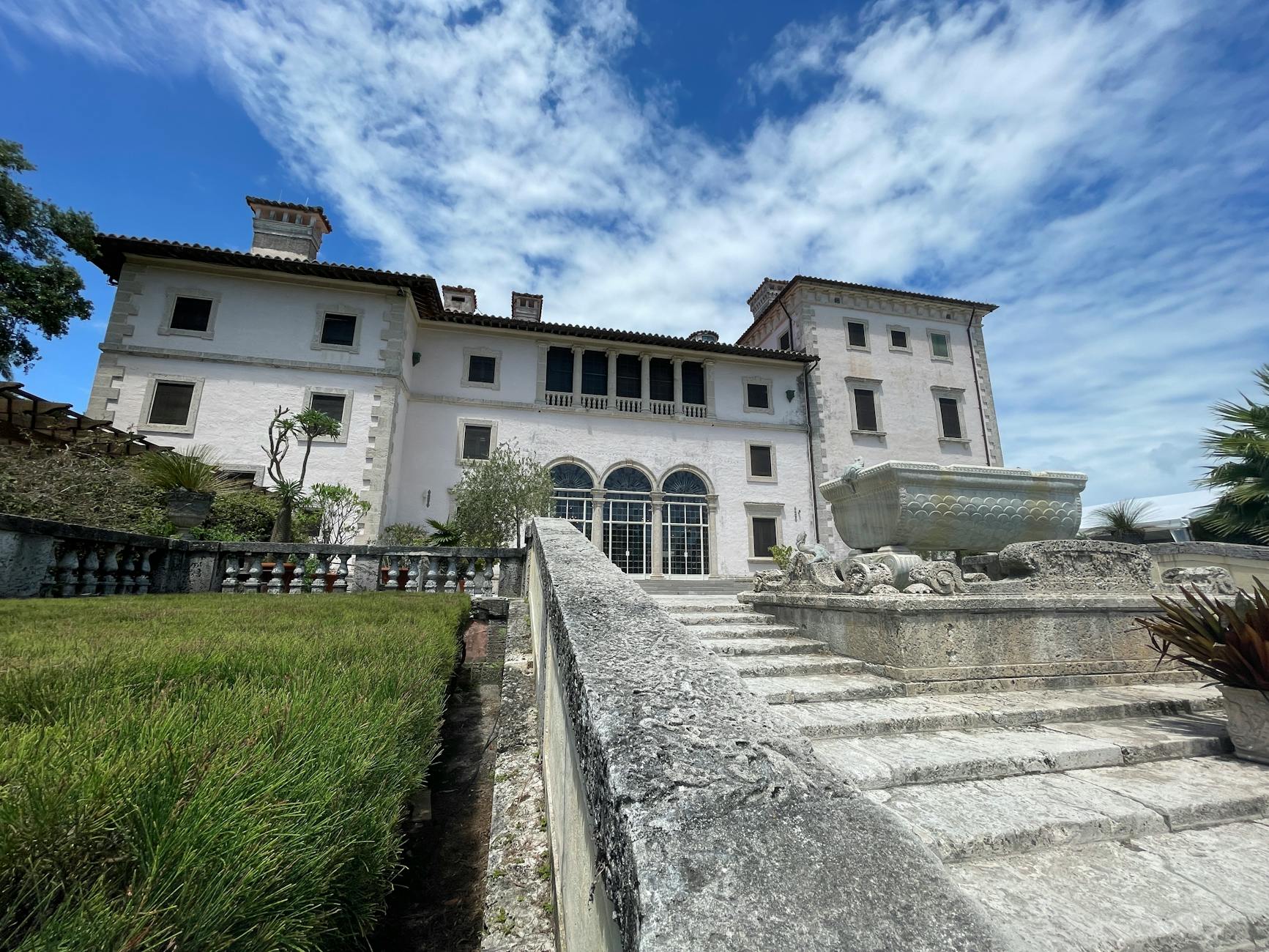
When a single residential property lists at $237 million in the United States, it does more than generate headlines — it sets a new reference point for ultra-prime real estate as an institutional-grade alternative asset. The waterfront compound on Key Biscayne, Miami, made famous as the filming location for Brian De Palma's 1983 crime epic Scarface and previously serving as Richard Nixon's so-called Winter White House during the early 1970s, has formally entered the market at that eye-catching figure. For Asia-Pacific family offices already allocating to trophy real estate, film-heritage collectibles, and tangible hard assets, this listing is a data point worth examining — not simply as a curiosity, but as a signal of where ultra-high-net-worth capital is flowing and at what valuations.
The Asset Profile: History, Scarcity, and Cultural Capital
The Key Biscayne estate spans a significant waterfront footprint on one of Miami's most exclusive barrier islands, combining genuine political provenance with cinematic iconography — two scarcity drivers that institutional collectors increasingly price into trophy assets. Nixon's use of the property as a presidential retreat through the early 1970s gives it a layer of American political history that is, by definition, non-replicable. The Scarface association adds a second, equally irreplaceable layer: the film has generated an estimated $200 million-plus in licensed merchandise revenue since its release and remains one of the most culturally referenced works in global popular media. When scarcity of physical supply meets layered cultural provenance, valuations detach from conventional price-per-square-foot metrics — a dynamic that Asian collectors of fine art, vintage watches, and rare whisky casks understand intuitively.
Comparable Transactions and the Ultra-Prime Price Ladder
To contextualise the $237 million ask, consider that the current verified record for a US residential sale stands at approximately $177 million — a Palm Beach estate that transacted in 2021. The Key Biscayne listing would, if it closes near asking, represent a roughly 34% premium over that benchmark. Globally, only a handful of residential transactions have cleared the $200 million threshold, including properties in Hong Kong's Peak district and a Monaco waterfront villa. Knight Frank's 2024 Wealth Report recorded a 2.4% average price increase across prime residential markets globally last year, with Miami specifically posting among the strongest gains in the Americas. The $237 million listing therefore sits at a valuation roughly 10 to 12 times the median price of a prime Miami waterfront home, which itself averages between $18 million and $22 million — underlining just how rarefied the trophy tier has become.
Asia-Pacific Buyer Flows and the Miami Trophy Market
Asian ultra-high-net-worth buyers — particularly from Singapore, Hong Kong, and increasingly from Indonesia and Thailand — have been systematically diversifying real estate holdings into US coastal markets since 2020. According to the National Association of Realtors, Asian buyers accounted for approximately 15% of all international residential purchases in the US in 2023, with Florida ranking among the top three destination states. Singapore family offices, many of which received regulatory approval to expand alternative asset mandates under the MAS Variable Capital Company framework, have shown particular appetite for assets that combine real estate yield with collectible premium. A property carrying both presidential heritage and film-location provenance fits neatly into the "trophy and collectible real estate" sub-allocation that several Singapore-based multi-family offices have formally introduced since 2022.
What This Signals for Hard Asset Allocation Strategy
The broader lesson for Asia-Pacific allocators is not necessarily to pursue nine-figure residential properties, but to recognise the valuation mechanics at work. Assets that carry irreplaceable provenance — whether a Key Biscayne estate, a 1926 Macallan whisky cask, a Paul Newman Daytona, or a first-edition Basquiat — command premiums that compound independently of underlying commodity or real estate cycles. The Knight Frank Luxury Investment Index recorded rare whisky as the top-performing collectible asset class over the past decade, appreciating 373% between 2013 and 2023. Fine art and classic cars followed at 236% and 193% respectively over the same period. These figures suggest that provenance-driven hard assets, across multiple categories, are behaving as genuine stores of value rather than speculative plays — a distinction that matters significantly when constructing a diversified alternative allocation.
Forward Outlook: Asian Capital and the Provenance Premium
As wealth transfer accelerates across Southeast Asia — with an estimated $2.5 trillion expected to pass between generations in the region over the next decade, according to UBS data — the next generation of Asian principals is demonstrating a markedly stronger preference for tangible, story-driven assets over purely financial instruments. The $237 million Key Biscayne listing will attract attention from sovereign-adjacent family offices in the Gulf, European trophy buyers, and a small cohort of ultra-HNWI Asian principals for whom the cultural cachet of a Nixon-era, Scarface-certified compound represents exactly the kind of irreplaceable narrative that no financial product can replicate. Whether or not this specific property transacts, it reinforces a durable thesis: in an era of abundant liquidity and scarce genuine provenance, the premium on the unrepeatable will only widen.
💼 Exploring alternative asset allocation? Speak to Whisky Cask Club — Singapore's leading specialists in Scottish whisky cask investment.