{"title":"Bordeaux En Primeur 2025: Two Critical Weeks That Could Reshape Wine Investment","html":"

Why Are the Next Two Weeks Decisive for Bordeaux En Primeur Investment?

The Bordeaux en primeur 2025 campaign has entered its most consequential fortnight, with pricing decisions by top châteaux expected to either reignite institutional confidence or cement what has already been a sluggish opening. According to Colin Hay, the Bordeaux correspondent for The Drinks Business, the releases scheduled over the coming two weeks will serve as a litmus test for whether renewed optimism in the trade is genuinely aligned with market sentiment — or simply wishful thinking. For Asian family offices and private banks that allocate to fine wine as a hard asset, the stakes are unusually high: Bordeaux futures pricing directly affects secondary market valuations, portfolio NAV calculations, and the attractiveness of the vintage relative to competing alternatives such as Burgundy, Barolo, and Champagne.

If you hold fine wine in a Singapore or Hong Kong portfolio — or are advising clients who do — the pricing decisions made in Bordeaux between now and the end of May 2025 will determine whether the 2024 vintage becomes a buying opportunity or another year to sit out. En primeur is not merely a collector's game; it is a futures market with real liquidity implications for Asia-Pacific allocators. The Liv-ex Fine Wine 1000 index fell approximately 14% over the 24 months to Q1 2025, meaning that any credible price correction from châteaux this year could trigger renewed inflows from buyers who have been waiting on the sidelines.

What Is Bordeaux En Primeur and How Does It Work as an Investment?

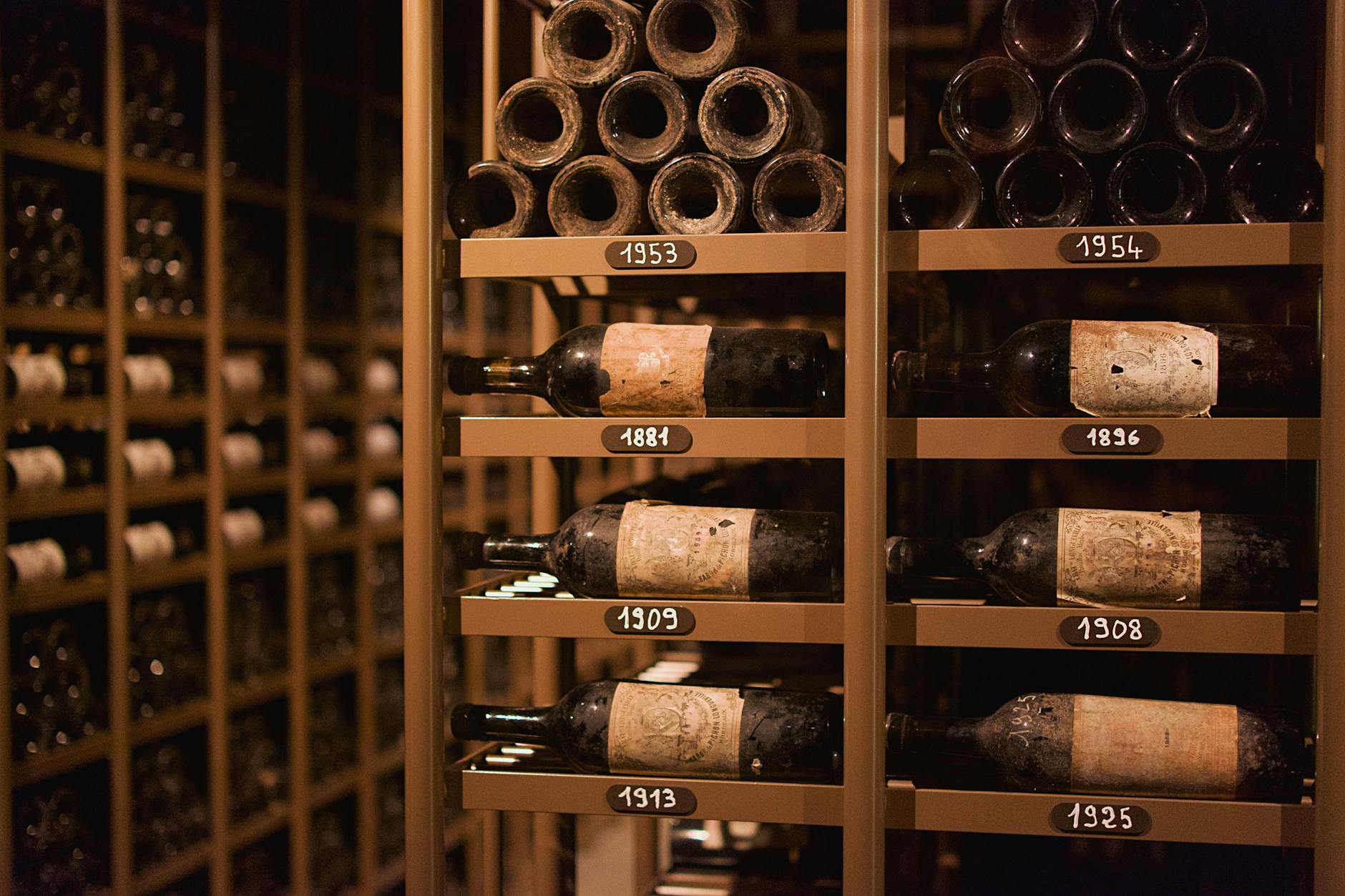
Bordeaux en primeur is a wine futures system in which buyers purchase wine from a specific vintage while it is still ageing in barrel — typically 18 to 24 months before bottling and physical delivery. The system allows châteaux to raise capital early and gives merchants and investors the opportunity to secure allocation at what are theoretically pre-market prices. Négociants in the Place de Bordeaux act as intermediaries, releasing wine in tranches through approved merchants called courtiers. The key investment thesis is simple: if the release price is sufficiently below the expected secondary market price at bottling, the buyer captures the spread.

For Asian investors, the en primeur system is accessed primarily through London-based merchants such as Berry Bros. & Rudd, Farr Vintners, and Bordeaux Index, as well as through regional specialists operating out of Singapore and Hong Kong. The Singapore-based fine wine market has grown materially since the city-state eliminated import duties on wine in 2008, making it efficient entry points for Asia-Pacific buyers. Wine stored in bond in Singapore's LePort and Vinocave facilities qualifies for bonded warehouse treatment, deferring GST and simplifying cross-border transfer to buyers in Malaysia, Thailand, and Indonesia. The Monetary Authority of Singapore does not classify fine wine as a regulated investment product, which means family offices can hold it as a physical alternative asset without the compliance overhead associated with securities.

Why Are Asian Investors Buying Bordeaux Futures Despite a Weak Market?

Contrarian allocation is a well-established strategy among ultra-high-net-worth families across Asia, and the current softness in Bordeaux pricing is attracting exactly that kind of interest. Data from Liv-ex shows that the Bordeaux 500 sub-index — tracking the 500 most-traded Bordeaux wines — declined roughly 16% from its 2022 peak to early 2025, creating entry points not seen since the post-2011 correction. Several multi-family offices in Singapore and Hong Kong have been quietly increasing their fine wine allocation from the typical 2–3% of alternative assets to closer to 5–6%, specifically targeting undervalued Bordeaux futures from the 2022 and 2023 vintages ahead of any price recovery.

The 2024 vintage itself has received mixed but broadly positive early assessments from critics. Robert Parker's successor publication, Wine Advocate, and Neal Martin at Vinous have both noted that the growing season produced wines of genuine concentration despite challenging weather in parts of the Médoc. If châteaux price the 2024 en primeur releases at a 15–20% discount to the 2023 release prices — which were themselves already lower than 2022 — analysts at Bordeaux Index suggest the vintage could represent attractive futures entry points in a decade. That would be a significant signal for Asian buyers who track Bordeaux as a store of value rather than a consumption purchase.

"A 15–20% discount on 2024 en primeur release prices relative to 2023 could represent the most compelling Bordeaux futures entry point for Asian allocators in over ten years." — Bordeaux Index analyst commentary, May 2025

What Returns Do Fine Wine Investments Generate for Portfolio Allocators?

Fine wine as an asset class has historically delivered annualised returns of between 8% and 13% over rolling ten-year periods, according to data compiled by the Wine Investment Association. The Liv-ex Fine Wine 1000, which tracks the 1,000 most-traded wines globally, returned approximately 127% over the decade to 2022 before the correction began. First-growth Bordeaux — Château Lafite Rothschild, Château Margaux, Château Latour, Château Haut-Brion, and Château Mouton Rothschild — have historically anchored institutional wine portfolios because of their deep secondary market liquidity and global name recognition among collectors in China, Japan, South Korea, and Southeast Asia.

Correlation data is also compelling for multi-asset allocators. Fine wine has demonstrated a low correlation to global equities (typically 0.1 to 0.3 on a rolling five-year basis) and near-zero correlation to fixed income, making it a genuine diversifier rather than a leveraged equity proxy. For a Singapore family office running a S$200 million portfolio with a 10–15% alternatives sleeve, a 3–5% fine wine allocation of S$6–10 million is both meaningful and manageable from a custody and liquidity standpoint. Storage costs at bonded facilities in Singapore run approximately 0.5–1% of asset value per annum, which compares favourably with the management fees charged by many alternative fund structures.

How Should Asian Investors Position Ahead of Key En Primeur Releases?

The critical releases to watch over the next two weeks are from the first growths and the leading Right Bank properties — Pétrus, Cheval Blanc, and Ausone — whose pricing typically sets the tone for the entire campaign. If these properties release at credible discounts, the broader market will likely follow, and merchant allocation lists will fill quickly. Asian buyers who have pre-registered with London or Singapore-based négociants will have priority access; those approaching the market cold after announcements are made typically find the most attractive tranches already sold.

  1. Register allocation interest now with at least two approved Bordeaux merchants — competition for top-tranche allocations is highest in the first 48 hours after release.
  2. Set a price threshold before releases are announced — determine the maximum release price at which the vintage makes investment sense relative to current secondary market comparables.
  3. Diversify across appellations — Pauillac, Saint-Émilion, and Pomerol have historically shown different price recovery trajectories; a blended approach reduces vintage-specific risk.
  4. Confirm bonded storage arrangements in Singapore or Hong Kong before committing — physical custody in a recognised bonded warehouse is essential for resale on Liv-ex or through auction houses including Christie's and Sotheby's.
  5. Model exit scenarios at 3, 5, and 10 years — en primeur is illiquid for the first 18–24 months post-purchase; allocators should size positions accordingly.

What to Watch: Key Dates and Forward-Looking Signals for Asia-Pacific Buyers

The fortnight ending approximately 30 May 2025 is the window that will define the 2024 en primeur campaign. Watch for release announcements from Château Lafite Rothschild and Château Margaux first — their pricing relative to the 2023 releases will set market expectations. If either property releases at a discount exceeding 15%, expect a rapid response from Asian merchant desks in Hong Kong and Singapore. The Singapore-based fine wine investment community, including operators such as the Wine Investment Fund's regional partners and independent specialists, will be closely monitoring Liv-ex secondary market pricing in real time to assess whether futures represent genuine value.

Beyond Bordeaux, the en primeur campaign outcome will also influence allocation decisions across the broader fine wine alternative asset class. A successful 2024 campaign — defined as strong sell-through at credible prices — would likely support recovery in the Liv-ex indices and validate the case for fine wine as a resilient alternative asset. Asian family offices that act early in a recovering Bordeaux market have historically captured the largest portion of the subsequent appreciation, as secondary market prices tend to move sharply once institutional confidence returns. The next two weeks are not just about Bordeaux; they are a real-time stress test of whether fine wine deserves its place in the 2025 alternatives allocation.

Frequently Asked Questions

What is Bordeaux en primeur and is it suitable for Asian investors?

Bordeaux en primeur is a wine futures system allowing buyers to purchase wine while it is still ageing in barrel, typically 18–24 months before physical delivery. It is suitable for Asian investors with a 5–10 year horizon who can access bonded storage in Singapore or Hong Kong and have relationships with approved négociants or specialist merchants.

What returns do fine wine investments generate for portfolio allocators?

Fine wine has historically delivered annualised returns of 8–13% over rolling ten-year periods according to Wine Investment Association data, with the Liv-ex Fine Wine 1000 returning approximately 127% in the decade to 2022. Returns vary significantly by vintage, appellation, and entry price.

Why are Asian investors buying Bordeaux futures despite a weak market?

Contrarian allocation is common among Asia-Pacific ultra-high-net-worth families. The Bordeaux 500 sub-index has declined roughly 16% from its 2022 peak, creating entry points not seen since the post-2011 correction. Some Singapore and Hong Kong multi-family offices have increased fine wine allocations from 2–3% to 5–6% of their alternatives sleeve specifically to capture this dislocation.

How does bonded wine storage work in Singapore?

Bonded wine storage in Singapore allows investors to hold wine without paying GST until the wine is removed from bond for consumption or local sale. Facilities such as LePort and Vinocave operate under Singapore Customs oversight, and wine held in bond can be transferred or resold internationally without triggering local tax events. Storage costs typically run 0.5–1% of asset value per annum.

Which Bordeaux châteaux releases should investors watch in May 2025?

The most market-moving releases will come from the five first growths — Château Lafite Rothschild, Château Margaux, Château Latour, Château Haut-Brion, and Château Mouton Rothschild — as well as leading Right Bank properties including Pétrus and Cheval Blanc. Their pricing relative to 2023 release levels will set the tone for the entire 2024 en primeur campaign.

💼 Exploring alternative asset allocation? Speak to Whisky Cask Club — Singapore's leading specialists in Scottish whisky cask investment.

","meta_title":"Bordeaux En Primeur 2025: Asia Investor Guide","meta_description":"The next two weeks will define Bordeaux en primeur 2025. Here's what Asian family offices and private banks need to know about wine futures allocation.","focus_keyword":"Bordeaux en primeur 2025","keywords":["Bordeaux en primeur investment","fine wine Asia","Liv-ex Fine Wine 1000","Singapore wine investment","wine futures allocation","Bordeaux futures returns","family office alternatives"],"tldr":"The Bordeaux en primeur 2025 campaign enters a decisive fortnight. With the Liv-ex Bordeaux 500 down 16% from its 2022 peak, Asian family offices are eyeing futures as a contrarian entry. First-growth pricing decisions in late May will set the tone for the entire vintage.","faqs":[{"q":"What is Bordeaux en primeur and is it suitable for Asian investors?","a":"Bordeaux en primeur is a wine futures system allowing buyers to purchase wine while it is still ageing in barrel, typically 18–24 months before physical delivery. It is suitable for Asian investors with a 5–10 year horizon who can access bonded storage in Singapore or Hong Kong and have relationships with approved négociants or specialist merchants."},{"q":"What returns do fine wine investments generate for portfolio allocators?","a":"Fine wine has historically delivered annualised returns of 8–13% over rolling ten-year periods according to Wine Investment Association data, with the Liv-ex Fine Wine 1000 returning approximately 127% in the decade to 2022. Returns vary significantly by vintage, appellation, and entry price."},{"q":"Why are Asian investors buying Bordeaux futures despite a weak market?","a":"Contrarian allocation is common among Asia-Pacific ultra-high-net-worth families. The Bordeaux 500 sub-index has declined roughly 16% from its 2022 peak, creating entry points not seen since the post-2011 correction. Some Singapore and Hong Kong multi-family offices have increased fine wine allocations from 2–3% to 5–6% of their alternatives sleeve specifically to capture this dislocation."},{"q":"How does bonded wine storage work in Singapore?","a":"Bonded wine storage in Singapore allows investors to hold wine without paying GST until the wine is removed from bond for consumption or local sale. Facilities such as LePort and Vinocave operate under Singapore Customs oversight, and wine held in bond can be transferred or resold internationally without triggering local tax events. Storage costs typically run 0.5–1% of asset value per annum."},{"q":"Which Bordeaux châteaux releases should investors watch in May 2025?","a":"The most market-moving releases will come from the five first growths — Château Lafite Rothschild, Château Margaux, Château Latour, Château Haut-Brion, and Château Mouton Rothschild — as well as leading Right Bank properties including Pétrus and Cheval Blanc. Their pricing relative to 2023 release levels will set the tone for the entire 2024 en primeur campaign."}],"entities":{"people":["Colin Hay","Neal Martin","Robert Parker"],"organizations":["The Drinks Business","Liv-ex","Bordeaux Index","Berry Bros. & Rudd","Farr Vintners","Wine Investment Association","Wine Advocate","Vinous","Monetary Authority of Singapore","Christie's","Sotheby's"],"places":["Bordeaux","Singapore","Hong Kong","Pauillac","Saint-Émilion","Pomerol","Médoc","LePort","Vinocave"]}}