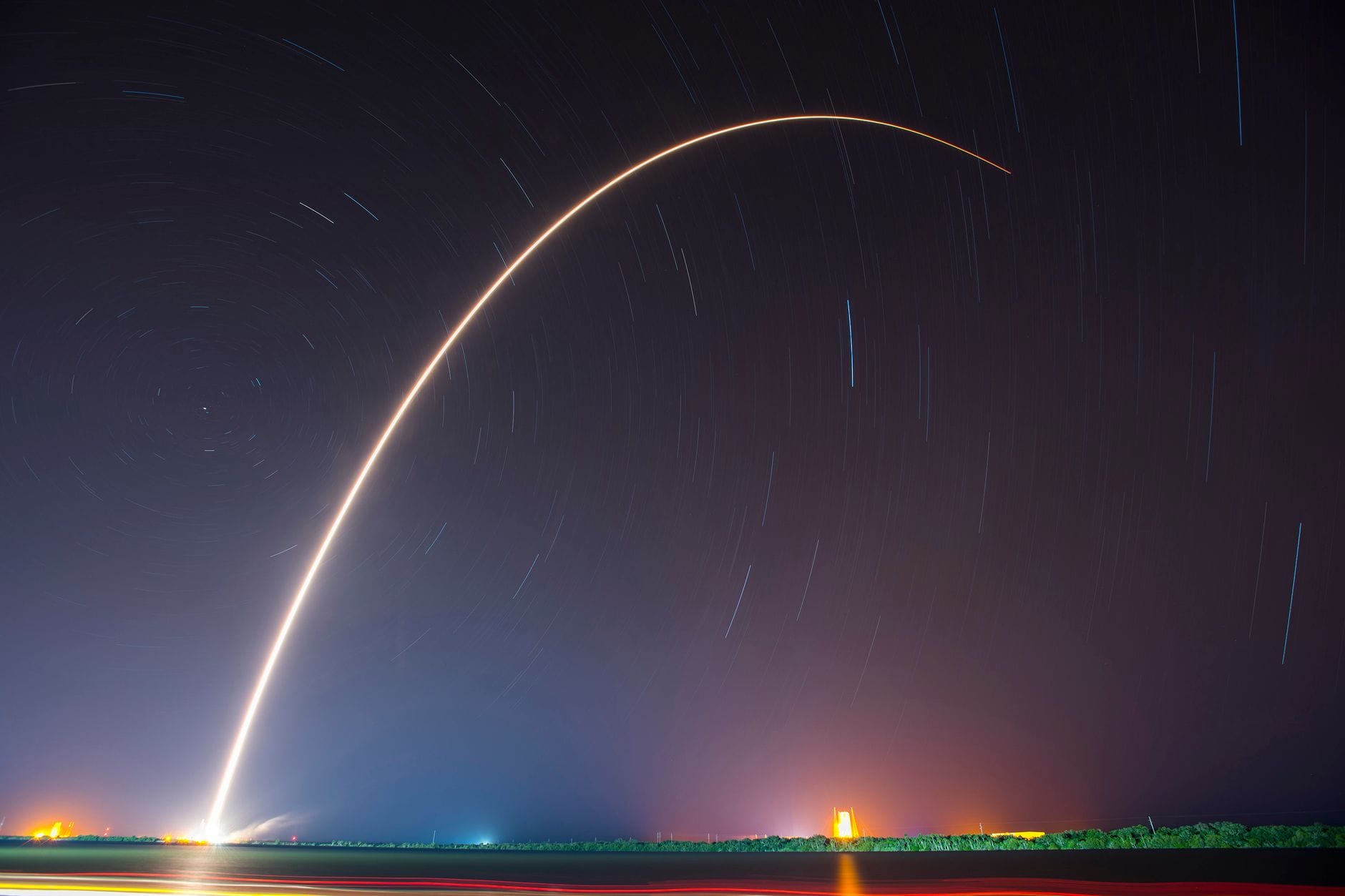
SpaceX is about to be the largest IPO in human history at a $1.75 trillion valuation. But even if it doubles, your return is only 100%. The real asymmetric wealth-generating opportunities lie in the smaller, less-followed public names inside the space ecosystem that will get revalued when SpaceX trades.
SpaceX is about to make history. When Elon Musk’s private aerospace behemoth lists on the Nasdaq on June 12 under the ticker SPCX, it will instantly become the largest Initial Public Offering (IPO) in human history.
With an expected day-one valuation hovering around $1.75 trillion—a figure larger than the annual GDP of Australia, Spain, or Saudi Arabia—the media circus will be deafening. Brokers will scramble, retail platforms will crash, and millions of retail investors will buy in, convinced they are capturing the ground floor of the multi-planetary economy.
But they aren’t. In fact, for the average retail investor, SPCX is highly likely to be the trade they regret most over the next five years.
The Mathematics of Scale
The problem isn’t SpaceX’s technology, nor is it Starlink’s dominance. The problem is pure, unyielding math.
To achieve an asymmetric, wealth-generating return of 5x or 10x on SpaceX, the company’s market capitalization would have to rise to $8.75 trillion or $17.5 trillion, respectively. For context, the entire gross domestic product of the United States is roughly $27 trillion.
When you buy SpaceX on day one of its IPO, you are not buying a "startup." You are buying a mature, fully priced, globally discovered institutional asset class. Every ounce of future growth—from Mars colonization concepts to satellite internet saturation—has already been meticulously priced into that $1.75 trillion valuation by the private equity, sovereign wealth, and venture capital funds that have funded Musk for the last decade.
The venture capitalists got the 100x. Retail gets the exit liquidity.
If SpaceX performs spectacularly well, you might double your money in five years. But if you are hunting for true, life-changing asymmetry, you must look where the institutions aren't yet looking. You must look at the public "space ecosystem"—the smaller, nimble suppliers and infrastructure plays that will experience a massive revaluation wave the moment SPCX begins trading.
Here are the four public space stocks currently sitting on my desk:
1. Velo3D (NYSE: VLD) — The Direct Engine Supplier
SpaceX’s Raptor engines require highly complex, custom metal parts designed to withstand extreme thermal and physical stress. They print those parts using Velo3D’s metal 3D printing systems.
- The Angle: SpaceX didn't just buy Velo3D's machines; they backed them early and were their first major commercial customer. Velo3D represents the cleanest, most direct manufacturing supplier play on the public markets. As SpaceX scales engine production, Velo3D's underlying technology becomes indispensable.
2. Redwire Space (NYSE: RDW) — The Picks & Shovels of Orbit
If SpaceX is building the highway, Redwire is building the gas stations and asphalt. RDW specializes in space infrastructure: manufacturing solar arrays, deployable structures, and pioneering microgravity manufacturing systems.
- The Angle: This is a pure "picks and shovels" infrastructure play. Whether a satellite is launched by SpaceX, Blue Origin, or Rocket Lab, it will almost certainly require Redwire's deployable components to function in orbit.
3. BlackSky (NYSE: BKSY) — The Real-Time Intelligence Engine
BlackSky operates a proprietary, high-revisit constellation of Earth-observation satellites capable of delivering real-time, AI-driven geospatial intelligence.
- The Angle: With a sub-billion-dollar market cap and a massive backlog of high-margin contracts from the Pentagon and international defense agencies, BlackSky is built for high operating leverage. As global geopolitical tensions rise, demand for real-time tactical satellite intelligence is growing exponentially.
4. Graham Corporation (NYSE: GHM) — The Hidden Turbopump Play
Graham Corporation is a legacy industrial engineering firm, but its crown jewel is its subsidiary, Barber-Nichols—the premier manufacturer of rocket turbopumps and specialty cryogenic pumps.
- The Angle: Barber-Nichols supplies critical fuel pump technology to multiple private and public launch players in the US. Because GHM is traditionally categorized as a legacy industrial name, Wall Street has completely failed to price in the massive space-economy tailwinds inside the business.
Finding Asymmetry
Most of these names sit in a sweet spot: between $1 billion and $4 billion in market capitalization.
From a purely mathematical standpoint, it is infinitely easier for a $1.5 billion company with a solid defense backlog to grow 5x or 10x into a $15 billion mid-cap than it is for a $1.75 trillion giant to reach $17 trillion. If an asymmetric bet fails, it goes to zero. But if it lands, the return is explosive.
At The Assembly, our team of eight analysts has one simple, focused mission: we filter out the loud, trillion-dollar hype so you can find the quiet, highly asymmetric winners early.
Make sure you turn notifications on so you do not miss our upcoming deep dives and stock alerts. In this market, timing is everything.
💼 Looking for early-stage alternative opportunities? Speak to Whisky Cask Club — Singapore's leading specialists in alternative asset brokerage.