TL;DR
TVB’s proposed 51/49 AI-computing joint venture with Gaw Capital identifies a governance map and a maximum HK$2 billion equity ceiling, but not a completed vehicle, financing package, approval, installed capacity or customer contract. Read each record separately before treating the proposed project as an operating digital-infrastructure asset.
Hong Kong has a new private-capital-backed compute proposal, but its most useful feature for an alternatives reader is the order in which the records arrive. TVB Limited’s 10 August voluntary announcement says it has entered a Heads of Agreement with Triton Square Limited, a Gaw Capital affiliate, to possibly establish a joint venture for AI-related advanced-computing services in Hong Kong. The listed company describes a proposed 51%/49% split of the JV’s ordinary voting shares, with TVB at 51% and Gaw Capital at 49%.
That is a real governance datum. It is not, by itself, a completed project, an investment drawdown, an operating facility or an income stream. The same announcement says the Heads of Agreement and a separate letter of interest with a technology group are non-binding; no final decision or agreement has been reached, and implementation remains subject to government approvals. Hong Kong Economic Journal independently reported the proposed structure and a short-term share-price reaction. Neither fact settles the investment, construction or operating case.
Start with the control map
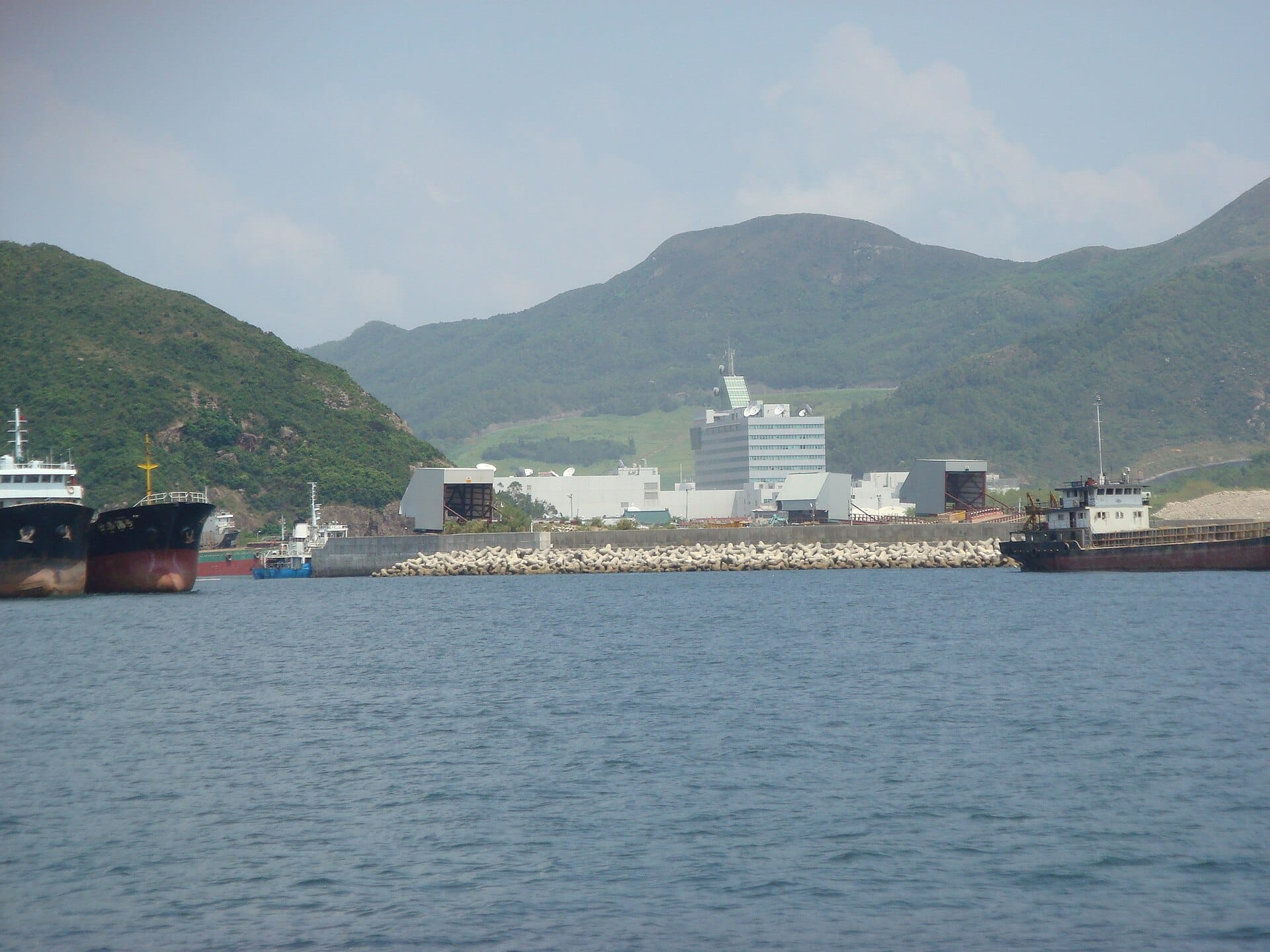
The announcement assigns proposed ordinary voting ownership before it supplies a signed capital stack. If definitive agreements are signed on the disclosed terms, TVB would hold 51% of the JV’s ordinary voting shares and Gaw Capital 49%. The proposed JV would plan, direct and fund TVB’s development of computing facilities within the broadcaster’s corporate campus in the Tseung Kwan O Industrial Estate. It would procure, configure and operate GPUs, CPUs and related equipment to supply services on a subscription basis to third parties and TVB group companies.
That supports one narrow conclusion: the announcement has identified the intended voting-control split and the intended site. It does not disclose a final shareholders’ agreement, board composition, reserved matters, veto rights, distributions, operating agreement, equipment ownership schedule or the economic waterfall between the partners. Those omissions are not adverse findings. They are simply the documents still needed to understand how a 51/49 governance split would work in practice.
Three funding labels are not one funded asset
TVB says the project would be funded through three stated channels: Gaw Capital equity investment of up to HK$2 billion into the JV, project bank financing and TVB’s internal resources. The wording matters. A maximum equity amount is a ceiling, not evidence that a matching amount has been subscribed, called, paid or deployed. The announcement supplies no amount, lender, maturity, security package, pricing, covenant, drawdown condition or repayment profile for any project bank financing. It also does not quantify TVB’s internal-resources contribution.
For that reason, a reader should keep the sources of capital separate:
- Proposed Gaw Capital equity: a stated maximum of HK$2 billion, conditional on the wider project moving from a Heads of Agreement to definitive documents.
- Project debt: a stated possible source of finance, without a disclosed facility agreement or terms.
- TVB resources: a stated possible contribution, without a disclosed amount or financing source.
- Potential TVB securities subscription: the announcement contemplates shares, warrants or convertible notes on terms yet to be agreed, subject to definitive JV agreements and applicable Listing Rules, including shareholder approval where required.
Collapsing those labels into one committed HK$2 billion-plus project would overstate the public record. The correct present-tense description is a proposed financing architecture around a possible JV.
Capacity is a target; offtake is still a discussion
TVB targets an initial Phase 1A with planned computing power of approximately 10,000 PetaFLOPS from the fourth quarter of 2027. That is a proposed capacity and timing marker, not a measure of installed, commissioned or sold compute. TVB says it is applying for the relevant government approvals, discussing power supply with CLP Holdings and talking with international and domestic equipment vendors about GPUs and other hardware.
There is also a separate 15 July letter of interest with an unnamed leading global technology group for a subscription of advanced-computing services. Technical and commercial terms, as well as procurement and financing options, remain under negotiation. A letter of interest can be an important demand signal in a development process, but it is not the same thing as a signed service agreement with disclosed minimum commitments, pricing, credit support, service levels, ramp schedule or termination terms.
The public attention is real but bounded. When reopened for this preparation run, unwire’s exact-topic article displayed 290 likes and linked to 111 comments. That is evidence of current reader attention to this specific development, not evidence of customer demand, capital commitments or future utilisation.
The gap after the competitor coverage
Mingtiandi’s specialist coverage already provides substantial reporting: the proposed share split, the maximum Gaw Capital equity, the 2027 target, the non-binding status and Gaw’s wider data-centre activity. Its history is useful context. The remaining reader-service gap is a disciplined sequence for deciding what the announcement establishes today and which later records would change that assessment.
For an allocator or adviser, the sequence is:
- Definitive JV documents: confirm incorporation, final ownership, governance, board and reserved-matter arrangements.
- Capital evidence: separate equity subscription and drawdown evidence from signed debt terms and any TVB contribution.
- Development permissions and utilities: verify the relevant approvals, power allocation and procurement commitments rather than inferring them from discussions.
- Customer commitments: distinguish a letter of interest from a signed offtake agreement, then inspect term, credit, pricing, ramp and termination provisions.
- Operating proof: treat installed capacity, commissioning, availability and revenue as later operational evidence, not as consequences of a PetaFLOPS target.
The proposed project is therefore more than a media-company AI headline: it is a Hong Kong digital-infrastructure development in which a private-capital affiliate has proposed equity alongside the broadcaster’s site and resources. But the proposed JV, its funding and its offtake are separate layers. Respecting that order preserves the difference between an announced structure and an operating asset.
Frequently Asked Questions
What is agreed between TVB and Gaw Capital?
TVB says it entered a non-binding Heads of Agreement with a Gaw Capital affiliate for a possible Hong Kong AI-computing joint venture. The announcement proposes 51% of the JV’s ordinary voting shares for TVB and 49% for Gaw Capital. It says definitive agreements are still being pursued.
Has Gaw Capital invested HK$2 billion in the project?
No public source reviewed for this article establishes an investment or drawdown. TVB describes equity investment of up to HK$2 billion by Gaw Capital as one proposed funding source, alongside project bank financing and TVB internal resources.
Is the 10,000 PetaFLOPS capacity operating?
No. TVB describes approximately 10,000 PetaFLOPS as the planned computing power for an initial Phase 1A targeted to operate from the fourth quarter of 2027. The announcement says approvals, utility discussions, equipment discussions and definitive agreements are still in progress.
Does the letter of interest prove a customer contract?
No. TVB says it and Gaw Capital signed a non-binding letter of interest with an unnamed global technology group and are negotiating technical and commercial matters. The public announcement does not disclose a signed service agreement, pricing, minimum commitment or credit support.
Does this article recommend TVB, Gaw Capital or an AI-infrastructure allocation?
No. This is public-source editorial analysis of a proposed transaction structure. It is not investment, financial, legal or tax advice and does not recommend any company, security, manager, project or allocation.
This article is general editorial analysis based on public sources. It is not investment, legal, tax or financial advice, and it does not recommend any company, security, manager, project or allocation.