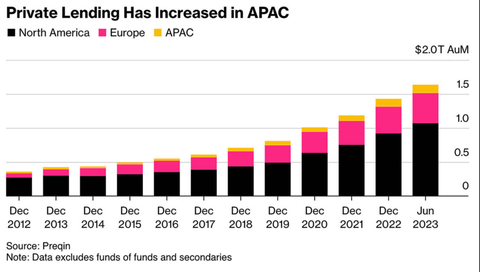

Hong Kong banks have expanded dedicated SME lending pools in 2026, with relief provisions tied to oil price volatility. For APAC private credit allocators, the formalization of these structures creates clearer co-lending benchmarks and potential entry points in trade finance and manufacturing credit.
Multiple Hong Kong banks have raised dedicated lending pools for small and medium-sized enterprises in 2026, extending relief measures as oil price volatility continues to compress operating margins across trade-dependent sectors. The move signals a coordinated effort among lenders to shore up SME balance sheets at a time when external financing conditions remain uneven across the region.
For APAC allocators watching credit and private debt opportunities, the expansion of structured SME lending in Hong Kong carries direct portfolio implications. Banks offering ring-fenced SME credit facilities create a cleaner risk-separation mechanism, which in turn opens space for private credit funds and family office mandates to co-invest alongside or subordinate to senior bank tranches. The relief overlay tied to commodity price swings also suggests lenders are pricing in sector-specific stress rather than applying blanket tightening, a more nuanced signal for credit underwriters.
The practical shape of the support includes several components worth tracking:
- Increased dedicated lending envelopes specifically earmarked for SME borrowers, separating these exposures from general corporate loan books
- Relief provisions linked to oil price benchmarks, offering payment flexibility to logistics, shipping, and manufacturing SMEs
- Coordinated rollout across multiple banking institutions, suggesting regulatory encouragement rather than isolated commercial decisions
- Continued availability of trade finance lines for import-export SMEs navigating commodity input cost volatility
Hong Kong's SME sector accounts for a substantial share of private-sector employment and sits at the intersection of mainland China supply chains and global trade routes. When banks formalize dedicated lending structures rather than managing SME exposure through discretionary relationship lending, it creates a more legible credit market, one where yield-seeking private debt managers can benchmark pricing, assess covenant structures, and identify co-lending entry points. Oil price sensitivity as an explicit trigger for relief terms is also notable: it reflects lender acknowledgment that macro commodity shocks are a systemic rather than idiosyncratic risk for this borrower cohort.
Why it matters: For Hong Kong-focused private credit allocators and family offices with regional mandates, the formalization of SME lending support by multiple banks in 2026 is a structural signal, not a cyclical footnote. As bank balance sheets set clearer SME credit parameters, private lenders gain better reference data for pricing subordinated or mezzanine exposure in the same segment. Allocators building out alternative credit sleeves in APAC should monitor whether this coordinated lending expansion translates into bankable deal flow for non-bank participants, particularly in logistics, light manufacturing, and cross-border trade finance where SME stress and opportunity tend to cluster simultaneously.