RBI and SEBI have jointly launched a pilot that lets Indian companies issue and settle corporate bonds as digital tokens on a blockchain-based ledger, with three issuers already testing it.
TL;DR
- India's central bank and market regulator launched "Demat 2.0," a pilot for tokenised corporate bonds, at Global Fintech Fest 2026 in Mumbai on 10 September.
- Three issuers, REC, L&T and IIFL, have raised a combined ₹1,025 crore (roughly $116 million) through tokenised bonds settled via RBI's digital rupee.
- The bonds carry the same legal rights and obligations as ordinary bonds; only the settlement layer changes, with secondary trading and retail access planned for later, unscheduled phases.
What did India just launch, and why now?
On 10 September, Reserve Bank of India (RBI) Governor Sanjay Malhotra and Securities and Exchange Board of India (SEBI) Chairman Tuhin Kanta Pandey jointly launched "Demat 2.0" at the Global Fintech Fest in Mumbai, a regulatory sandbox pilot that tests issuing, holding, trading and settling corporate bonds as digital tokens rather than conventional electronic entries. Regulators describe it as India's first tokenised corporate bond pilot, and say the framework could eventually extend beyond bonds to equities, mutual fund units and electronic gold receipts.
How does the tokenised bond pilot actually work?
Corporate bonds are recorded as digital tokens on a distributed ledger, a shared electronic record maintained by market infrastructure institutions and owned by India's depositories. That ledger connects to RBI's wholesale central bank digital currency, the digital rupee, through what SEBI calls the Unified Market Interface. The link enables atomic settlement, where the bond and the corresponding payment move simultaneously, instead of the multi-step process used for conventional bond settlement. SEBI has said the technology should make issuance, settlement and servicing faster and less error-prone, and that interest payments and redemptions can be automated through smart contracts.
Who has issued tokenised bonds so far?
Three companies have used the pilot to date, raising a combined ₹1,025 crore, roughly $116 million. State-owned lender REC was the first issuer on 7 September, raising ₹500 crore from 18 investors. Engineering conglomerate L&T followed on 9 September with another ₹500 crore from four investors, and IIFL raised ₹25 crore. All three issuances were institutional. SEBI Chairman Pandey said corporate bonds were chosen for the first phase because the investor base is concentrated and trading is relatively infrequent, making the instrument easier to pilot safely.
What changes for investors, and what stays the same?
SEBI has been explicit that tokenisation is a settlement-layer change, not a change to the underlying instrument. "The bond remains the same instrument in law, the company's obligation to repay is unchanged, and the rights of investors are unchanged," the regulator said, adding that requirements around credit rating, debenture trustees, listing and disclosures continue to apply in full. Investors hold tokenised bonds in their existing demat accounts, with no separate account or fresh KYC required. What is new, for now, is confined to institutional issuance. SEBI has indicated that secondary-market trading through existing request-for-quote platforms, followed by retail access, will come in later phases, though it has not confirmed a timeline.
Why it matters for APAC alternative-asset investors
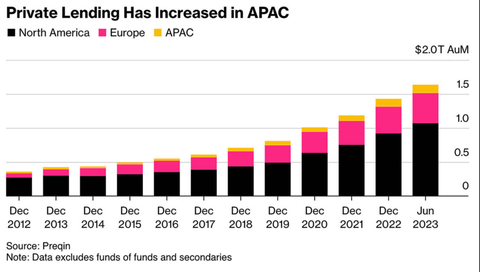
For allocators watching Asia's private markets, the pilot is a live test of whether tokenisation can be layered onto existing regulatory and custody infrastructure rather than requiring a parallel crypto-market structure, an approach regulators in Singapore and Hong Kong have also been exploring through their own digital-bond and wholesale CBDC work. If India's phased rollout reaches secondary trading, it would offer an early read on whether tokenised settlement meaningfully improves liquidity and cost for Asian corporate debt, a market APAC family offices and credit funds have leaned on more heavily as bank lending has tightened (see our coverage of https://altassetasia.com/the-rise-of-apac-private-credit-how-family-offices-and-funds-are-plugging-the-regional-bank-lending-gap/ and https://altassetasia.com/filling-the-void-how-private-credit-is-powering-mid-market-expansion-across-asean/). It also lands alongside a broader wave of institutional capital moving into Asia's digital and technology infrastructure, including https://altassetasia.com/kkrs-2-2-billion-bet-on-sk-horizon-is-a-preview-of-asias-ai-infrastructure-playbook/. This remains an early-stage, small-scale pilot, and how it performs once trading volumes rise has not yet been demonstrated.
Frequently Asked Questions
Is a tokenised bond a cryptocurrency?
No. SEBI has stressed that the underlying bond is the same regulated instrument as a conventional corporate bond, with unchanged legal rights and obligations. Only the record-keeping and settlement layer uses distributed ledger technology and RBI's digital rupee.
Can retail investors buy these bonds yet?
Not yet. The pilot's first phase covers institutional issuance only. SEBI has said secondary trading and retail access are planned for later phases, but it has not confirmed a timeline.
What is Demat 2.0?
Demat 2.0 is SEBI's name for the next-generation securities infrastructure this pilot is testing, building on India's existing dematerialised, or demat, account system by adding tokenised issuance and blockchain-based settlement.
Sources and Method
This article is based on reporting from Business Standard and IANS (via SocialNews.XYZ) on the 10 September 2026 launch of the Demat 2.0 pilot at Global Fintech Fest 2026 in Mumbai, including direct statements from SEBI Chairman Tuhin Kanta Pandey and RBI Governor Sanjay Malhotra, cross-checked against multiple independent reports of the same event. Figures on issuance size and investor counts are as reported at the time of the pilot's launch and may be updated as the pilot progresses. This article is for information only and is not financial, legal or tax advice.